Small-apartment living becomes easier when every part of the room has a clear job. The goal is not to make the space feel packed with clever solutions. It is to remove friction: furniture should leave useful walking paths, storage should be easy to reach, and everyday items should have a natural place to land.
These seven ideas focus on flexible layouts and simple habits that help a compact home feel calmer without requiring a renovation.
01. Create Clear Walking Paths
Start with movement before shopping for storage. Notice the routes you use most often—from the entry to the kitchen, from the sofa to the bathroom, and around the bed. Keep these paths open and avoid placing furniture where it creates a sharp turn or forces you to squeeze past another piece.
Pull furniture slightly away from walls when the room allows it, but do not sacrifice circulation just to create a centered arrangement. In a small apartment, a practical layout is usually more comfortable than one that looks symmetrical in a photograph.
Use painter's tape to mark the footprint of a new piece before buying it. Walk around the outline with doors, drawers, and cupboards fully open. This quick test can reveal whether a piece fits the room as well as it fits the measurements.
02. Choose Furniture That Does More Than One Job
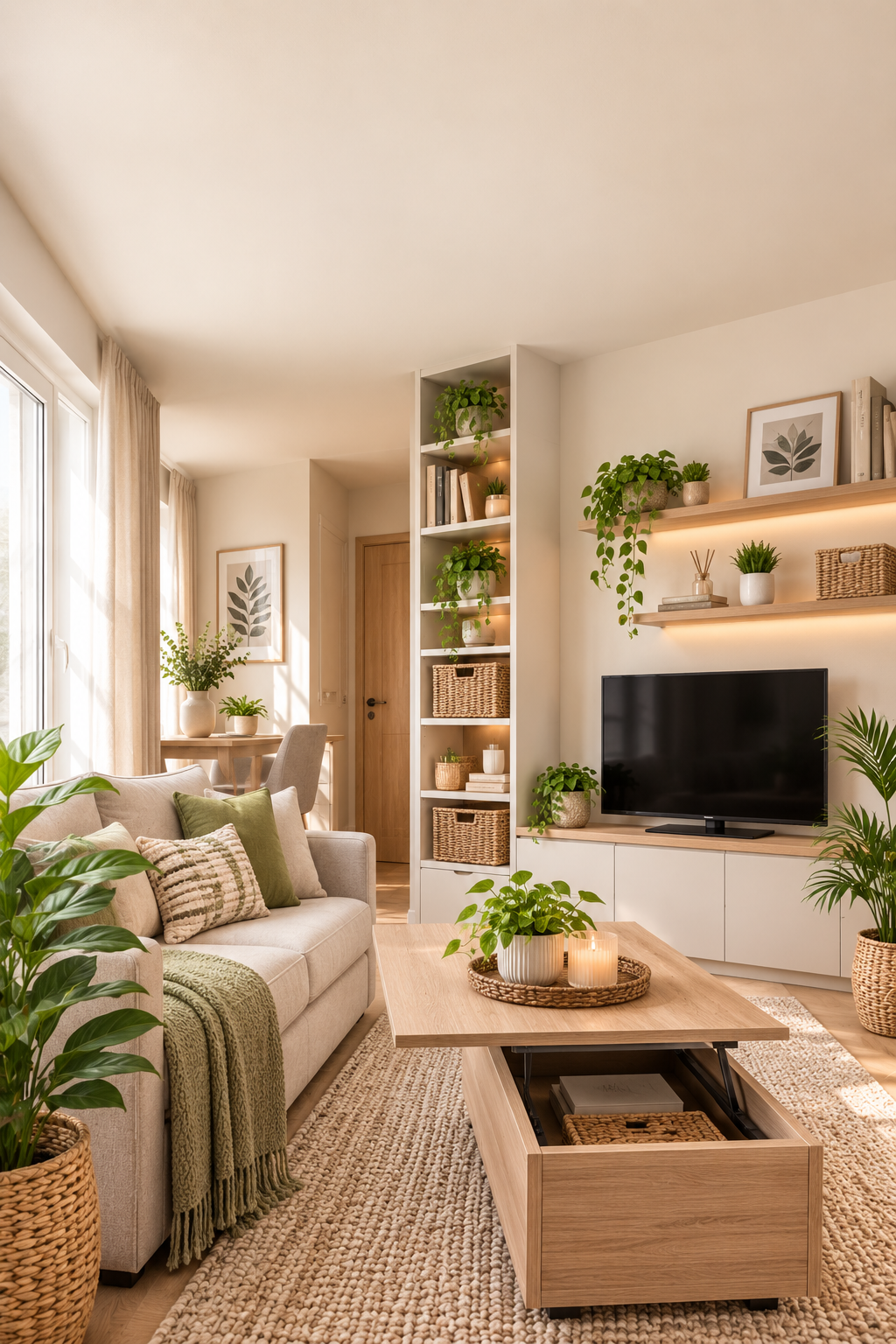
Flexible furniture earns its place in a compact home. A dining table can double as a desk, a storage ottoman can serve as extra seating, and a console can work as an entry drop zone or a narrow work surface.
Look for pieces that change quickly and remain useful in their everyday position. A drop-leaf table is more practical when it can stay partially open, and a nesting table is more useful when the smaller table is easy to pull out without moving the larger one.
Before choosing a multi-purpose piece, picture the transition you will make most often. If converting it requires several steps or moving heavy furniture, the flexibility may not survive the first week.
03. Use the Walls for Light-Duty Storage
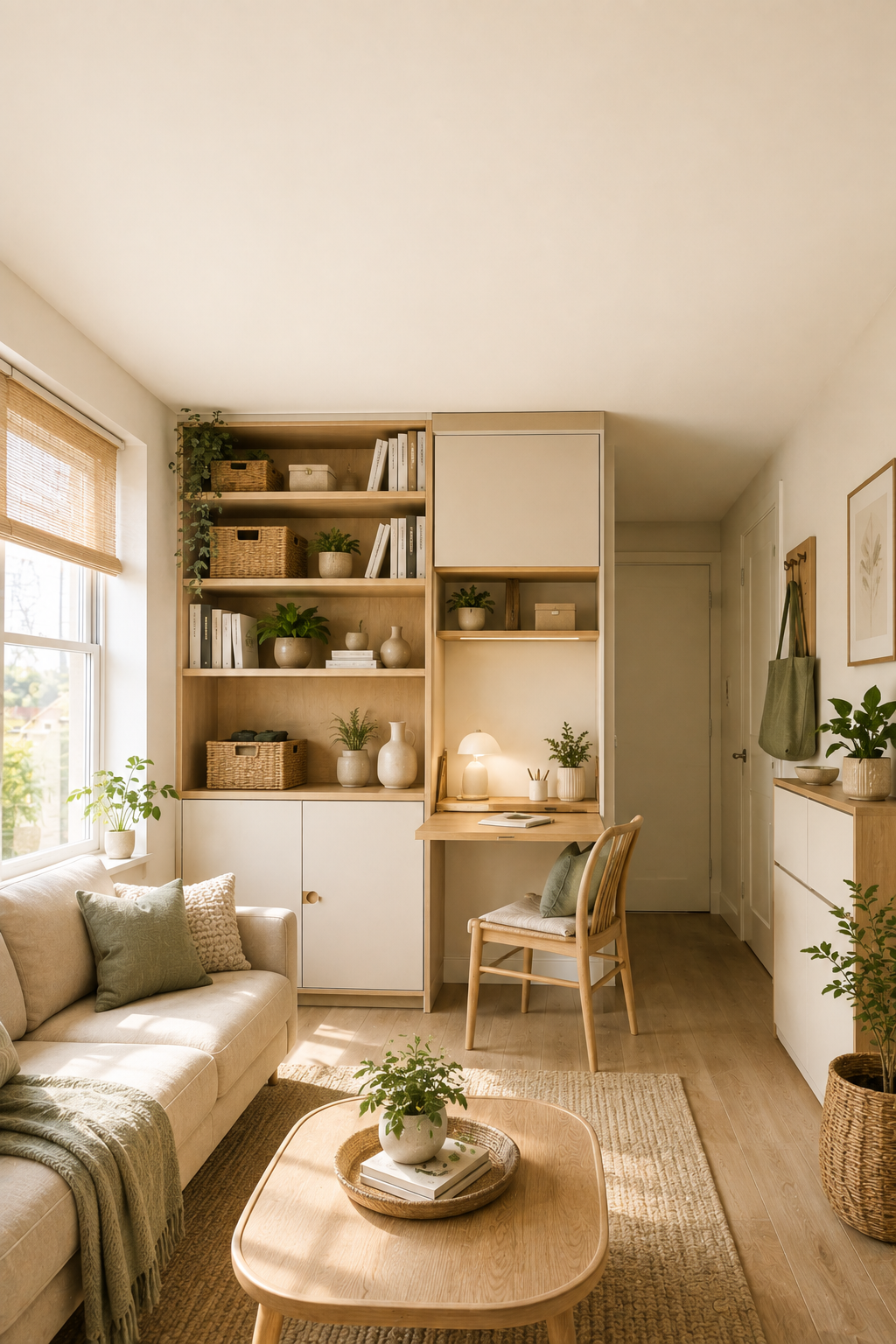
Walls can carry everyday items without taking up valuable floor area. A few well-placed hooks near the entry, a narrow shelf above a desk, or a rail in the kitchen can keep frequently used belongings accessible while leaving counters and floors clearer.
Keep wall storage edited. One small grouping for one category—keys and bags, cooking tools, or a few books—usually feels more intentional than covering every available wall. Leave clearance around switches, doors, vents, and heating equipment, and use fixings appropriate for the wall and the expected load.
Renters should check the terms of their lease before drilling. Removable hooks can be useful for lighter items, but follow the manufacturer's weight guidance and do not use them for anything that could cause injury if it fell.
04. Make the Entryway Work Harder
The entry is often the first place a small apartment starts to feel crowded. Give it a compact landing zone for the things that come and go: keys, shoes, bags, coats, and mail.
A narrow bench with room underneath, a small tray, or a short row of hooks can be enough. The important part is keeping the system close to the door so it matches the habit you already have. If mail tends to collect on the kitchen counter, add one simple destination near the entry rather than creating several new sorting stations.
Limit the visible items to what you use regularly. Seasonal coats, spare shoes, and occasional accessories can move to a higher closet shelf or another less prominent storage area.
05. Give Furniture Breathing Room
Too many small pieces can make an apartment feel more cramped than one or two larger, better-proportioned pieces. Repeatedly adding little tables, baskets, and stands often reduces the open floor area that makes a small room feel comfortable.
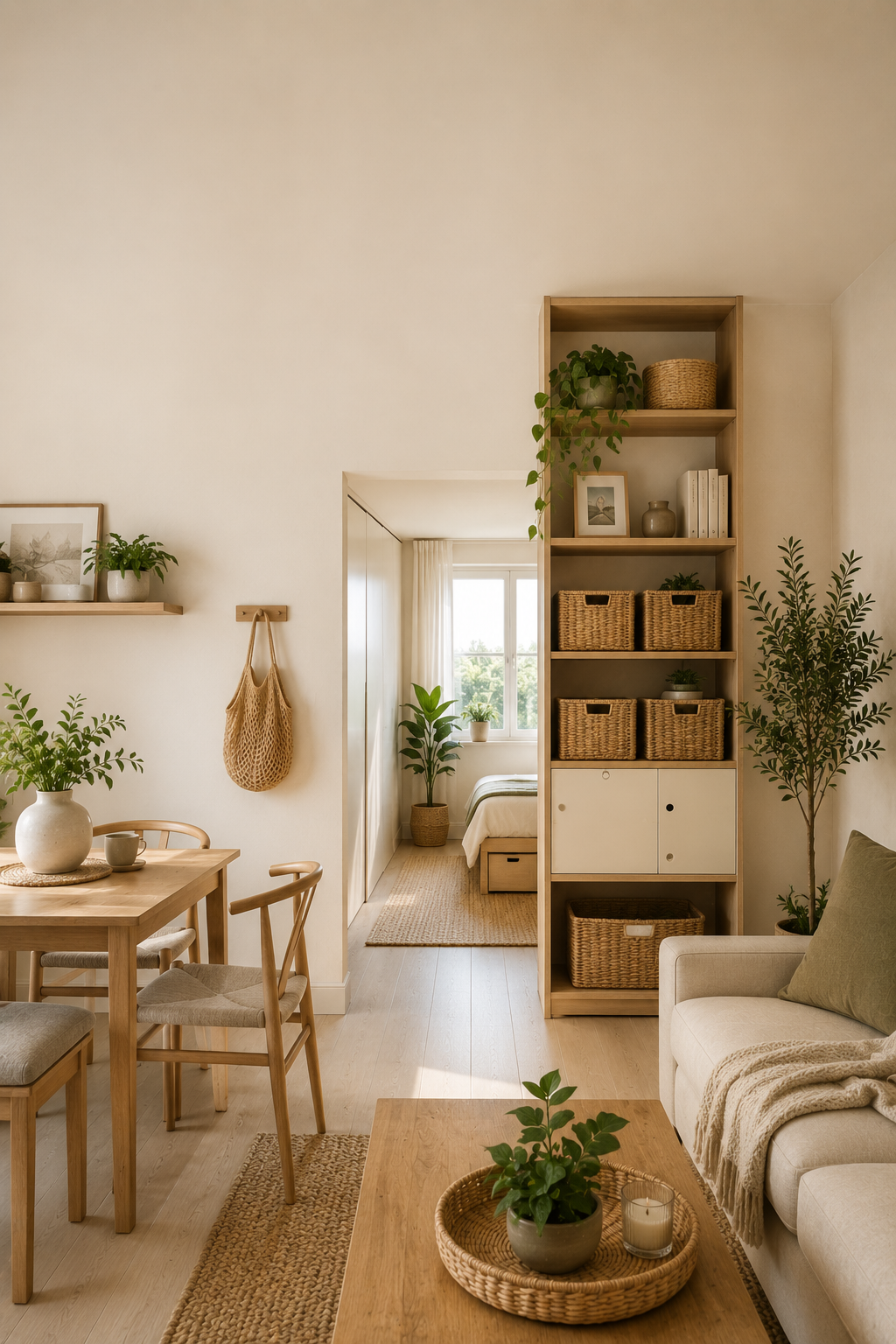
Try grouping similar functions together. A single sideboard can hold media equipment, serving pieces, and paperwork more cleanly than several small storage units. A properly sized rug can also define a living area without requiring extra furniture to mark its edges.
Leave some surfaces and floor space intentionally empty. Visual breathing room is part of the design, not wasted space.
06. Use Overlooked Areas Carefully
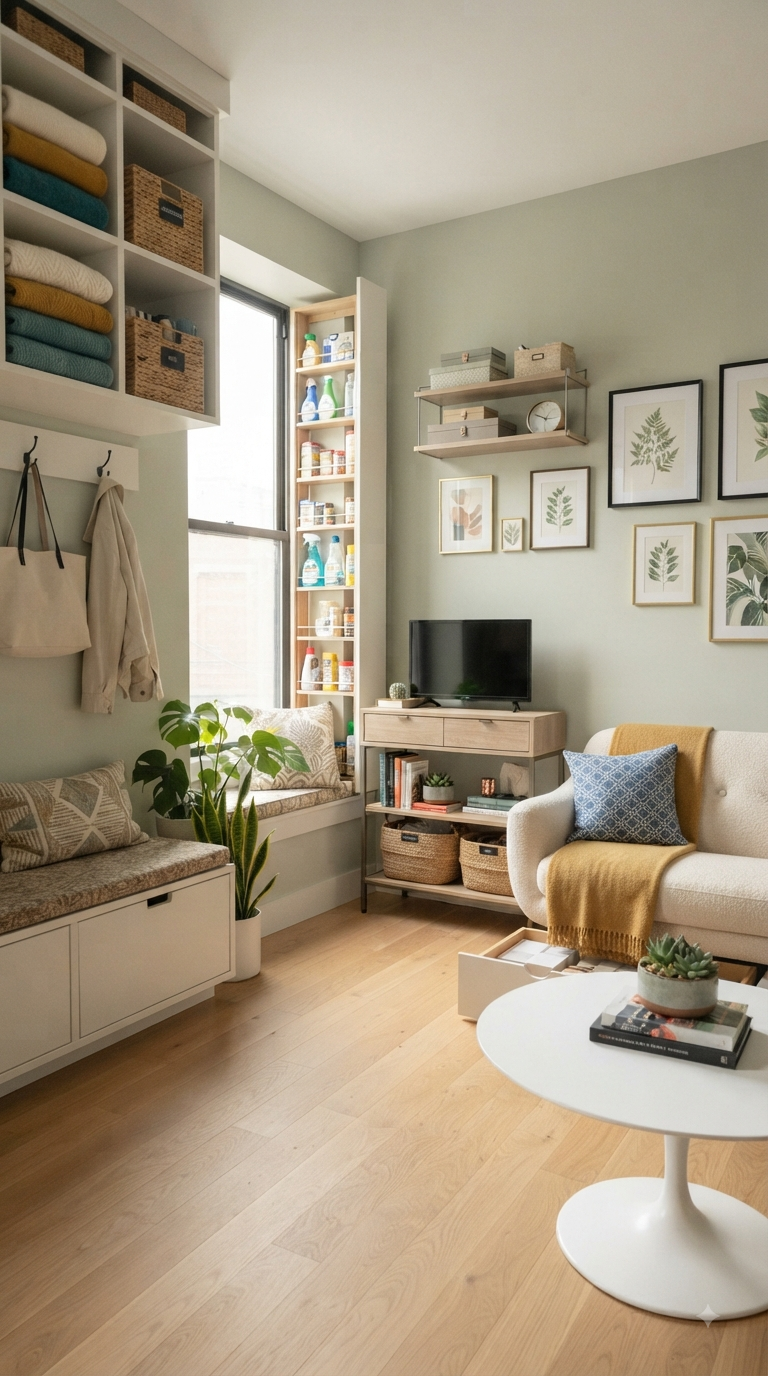
The space beneath a bed, the back of a door, the top shelf of a wardrobe, and the gap beside an appliance can all be useful—but only when the stored items remain accessible.
Measure each area at its narrowest point, including trim, handles, hinges, and baseboards. Choose low containers with handles under the bed, slim organizers for doors, and a narrow trolley only where it will not block ventilation or access to an appliance.
Store items by purpose rather than filling every gap at random. A container for spare linens or a rack for baking trays is easier to maintain than a general-purpose corner that becomes difficult to search.
07. Design a Daily Reset That Takes Minutes
The most space-saving habit may be returning things before they spread. A small apartment can feel cluttered quickly because there are fewer surfaces to absorb everyday drift.
Choose one short reset at the end of the day. Return cups to the kitchen, clear the entry tray, fold away a work surface, and put loose items back in their assigned homes. A basket can temporarily collect objects that belong in other rooms, but empty it regularly so it does not become permanent storage.
Keep the reset realistic. A routine that takes five minutes and happens most days is more useful than an ambitious whole-home system that is difficult to repeat. The aim is not a perfectly empty apartment; it is a home that returns to a comfortable baseline.
Make the Apartment Feel More Spacious
Space-saving design is less about finding one magical piece of furniture and more about making small decisions agree with one another. Keep routes clear, choose flexible pieces, use walls selectively, and make storage easy enough to maintain.
Start with the area that creates the most daily frustration. Measure before buying anything, remove one unnecessary piece if the room feels crowded, and test a new arrangement for a few days before committing to it.
For more ideas in the same spirit, continue with 10 genius small-space storage ideas, or explore Small Space Ideas, Home Organization, and 10 small bedroom organization ideas.