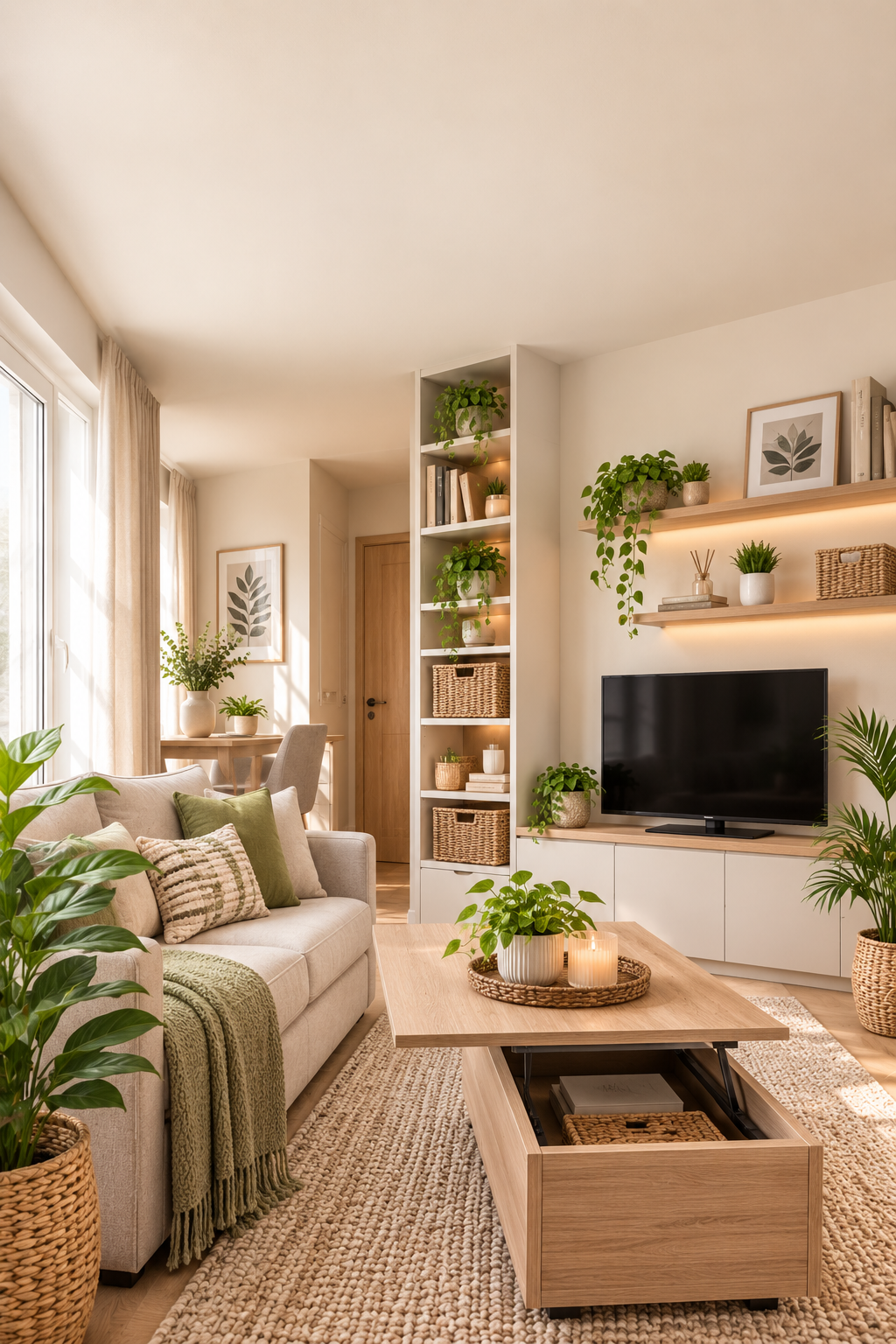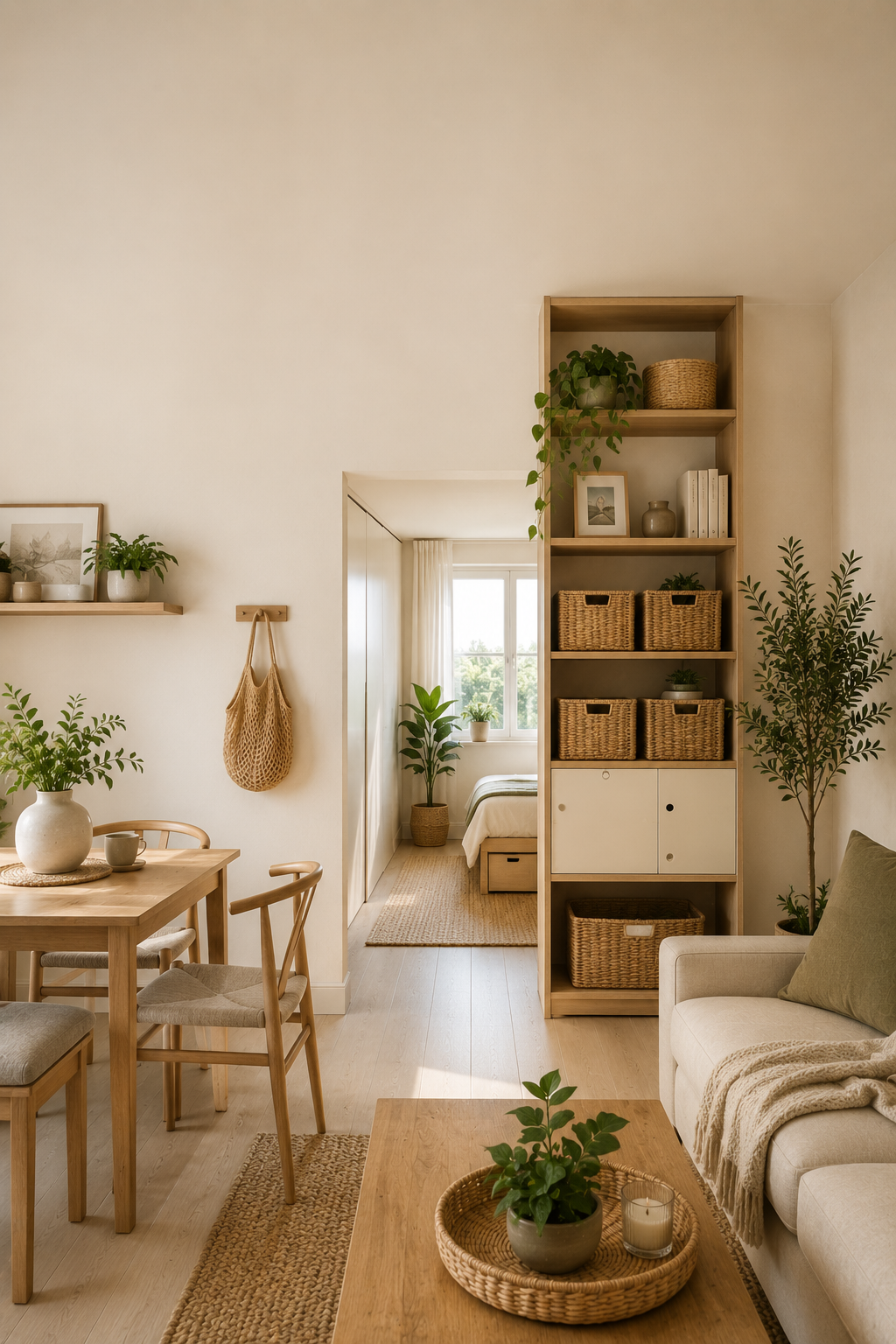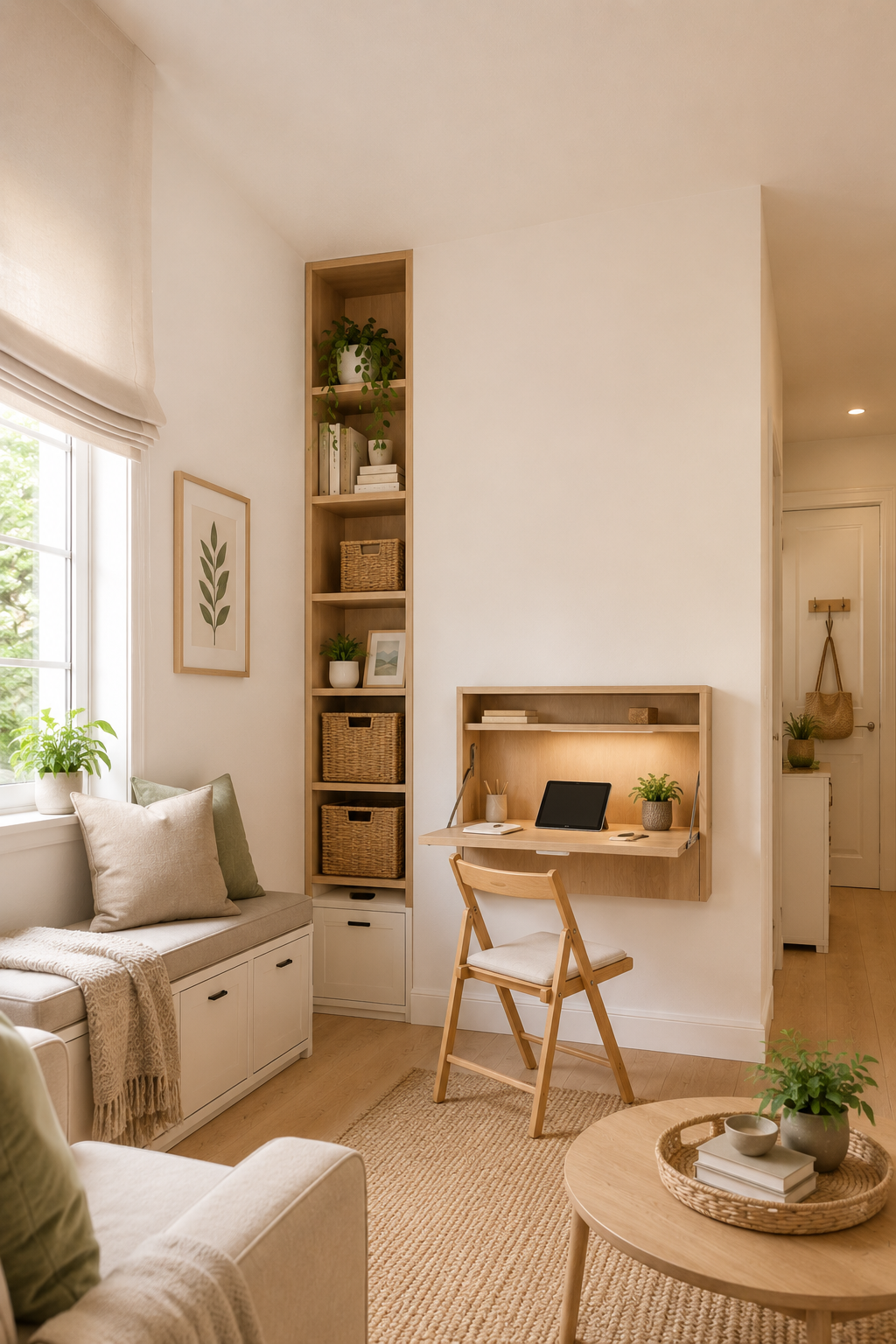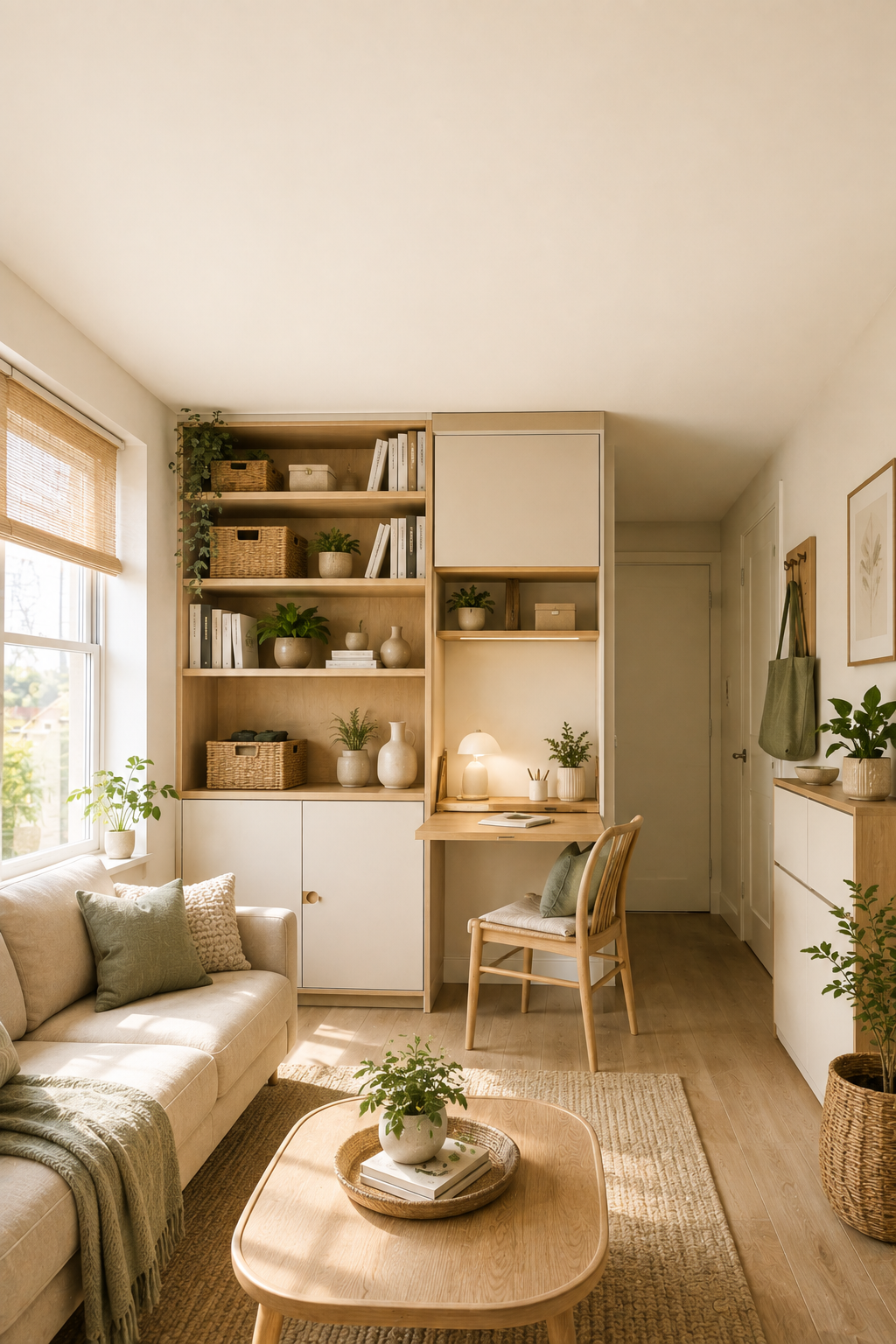
One of the biggest challenges of living in a small home is finding enough storage without making the home feel even smaller.
When cupboards start overflowing, the obvious solution can be to buy another cabinet, shelving unit or chest of drawers. But there’s a problem: every additional piece of floor-standing furniture takes away valuable floor space.
And in a compact apartment, that can quickly make the room feel crowded.
The good news is that you don’t always need more floor space to create more storage.
Your walls, doors, cabinet interiors, the space underneath furniture and even the sides of existing pieces can all provide opportunities for organization.
The trick is to start looking at your home vertically and creatively.
Here are 11 practical ways to create additional storage while keeping your floors as open as possible.
01. Use the Height of Your Walls
If your home has unused wall height, you’re leaving storage capacity on the table.
Tall shelving units and cabinets can provide considerably more storage than short furniture without taking up much additional floor width.
For example, instead of using a wide bookshelf that spreads across an entire wall, you could use a taller, narrower shelving unit.
This can be particularly useful for:
- Books
- Baskets
- Decorative items
- Linens
- Office supplies
- Household storage
Make the upper shelves work for you
The highest shelves should generally be reserved for things you don’t need every day.
Seasonal items, spare bedding and occasional-use belongings can live higher up, while everyday essentials stay within easy reach.
If a tall unit could tip, follow the manufacturer’s instructions for anchoring it appropriately.
Smart Space Finds tip
Vertical storage is most effective when you use the height without making the room feel visually heavy. A combination of closed cabinets and a small amount of open shelving can create a cleaner look.
02. Add Floating Shelves
Floating shelves are one of the simplest ways to add storage without introducing another piece of furniture onto the floor.
They can work in almost every room.
In the bedroom
Use them for:
- Books
- Small plants
- Accessories
- Decorative objects
In the kitchen
They can hold:
- Mugs
- Jars
- Everyday dishes
- Cooking ingredients
In the bathroom
They can provide space for:
- Towels
- Toiletries
- Baskets
- Spare supplies
The important thing is not to overload them.
An overcrowded shelf can create visual clutter even though you’ve technically gained storage.
Use baskets or coordinated containers for smaller items and leave some open space between objects.
03. Turn Suitable Doors Into Storage
A door is more than an entry point.
The back of a suitable door can become an additional vertical storage surface.
Depending on the room, you could use an appropriate over-door organizer for:
- Shoes
- Cleaning supplies
- Toiletries
- Accessories
- Pantry items
- Small household products
This can be particularly valuable in bathrooms, bedrooms and utility areas.
But check the door first
Not every door is suitable for every organizer.
Check:
- Weight capacity
- Door thickness
- Clearance
- Hinge limitations
- Whether the door can still close properly
You don’t want a storage solution that prevents the door from functioning normally.
04. Make Better Use of Under-Bed Space
The space beneath your bed is already there.
Why not use it?
Under-bed storage is ideal for belongings that you don’t need every day.
For example:
- Winter clothing
- Spare bedding
- Luggage
- Shoes
- Blankets
- Seasonal accessories
You can use built-in drawers, low storage boxes or suitable containers.
Keep it organized
One of the biggest problems with under-bed storage is that it can easily become a dumping ground.
Instead, divide the space into categories.
For example:
- Container 1: Spare bedding
- Container 2: Seasonal clothing
- Container 3: Bags and accessories
If containers are opaque, labels can make them much easier to identify.
05. Use Drawer Dividers
Sometimes you don’t need another drawer.
You simply need to make the drawer you already have work better.
Drawer dividers can transform a messy drawer into several useful sections.
They’re especially useful for:
- Underwear
- Socks
- Accessories
- Kitchen utensils
- Makeup
- Stationery
- Small bathroom items
Instead of opening a drawer and seeing everything mixed together, you create defined spaces for different categories.
Don’t over-organize
There’s no need to create a separate compartment for every individual item.
The purpose of dividers is to make things easier to find—not to create a complicated system that takes longer to maintain.
06. Put Hooks Where You Actually Need Them
Hooks are incredibly simple, but they’re one of the most effective ways to add vertical storage.
You can use suitable hooks for:
- Bags
- Coats
- Towels
- Robes
- Hats
- Cleaning tools
- Kitchen utensils
- Accessories
The best place for a hook is usually where the item naturally gets used.
For example, a bag hook near the entrance is more useful than one hidden in a bedroom cupboard if you always drop your bag by the front door.
Think about the routine
Good organization follows behavior.
Don’t force yourself to change your habits completely just to make a storage system work.
Instead, make the storage fit the habit.
07. Use the Sides of Existing Furniture
Look at the sides of your wardrobes, cabinets, shelving units and other tall furniture.
Some of these surfaces may be wide enough for a narrow organizer.
Depending on the furniture, you could add:
- Hooks
- Rails
- Hanging pockets
- Magnetic storage where appropriate
- Slim organizers
This can be particularly useful for lightweight items.
For example, the side of a wardrobe could hold bags or accessories.
The side of a kitchen cabinet could hold lightweight utensils or towels.
Keep the depth minimal
Remember that this storage is next to a walkway or another piece of furniture.
If it sticks out too far, your new storage solution may make the room harder to navigate.
08. Use Baskets to Upgrade Open Storage
Open shelving gives you storage, but small loose items can make it look chaotic.
This is where baskets become useful.
A few well-chosen baskets can turn an open shelf into an organized storage system.
They can hold:
- Blankets
- Toys
- Accessories
- Cables
- Cleaning cloths
- Towels
- Household supplies
Woven baskets also bring texture into a room, making them a practical décor element rather than simply a storage container.
Use baskets strategically
Don’t buy a basket for every object you own.
Group similar items together and choose a basket size that actually fits the shelf.
09. Create a Hidden Utility Storage Zone
Cleaning products and household supplies can take up a surprising amount of space.
Instead of allowing them to spread across several cupboards, create one dedicated utility zone.
This could be:
- An under-sink cabinet
- A narrow utility cupboard
- A slim rolling cart
- A tall storage cabinet
- A suitable laundry-area organizer
Keep the products you use most frequently easy to access.
Less frequently used items can go higher or farther back.
Safety comes first
Cleaning products should always be stored according to their labels and kept away from children and pets where required.
Never mix cleaning chemicals unless the product instructions specifically confirm that the combination is safe.
10. Store Items According to How Often You Use Them
Not every belonging deserves prime storage space.
This is one of the easiest ways to make existing storage feel larger.
Think about your belongings in three groups:
Everyday items
Keep these at comfortable, easy-to-reach heights.
Occasional items
These can go into higher shelves, deeper cabinets or less accessible storage.
Seasonal items
These can often go under beds, at the top of wardrobes or in other long-term storage areas.
When you organize according to frequency, the storage you already have becomes more efficient.
You stop wasting prime space on items you only use a few times a year.
11. Declutter Before Buying More Storage
This may be the most important idea on the list.
Before buying another organizer, ask:
“Do I actually need more storage, or do I have too many things?”
Sometimes a cupboard isn’t overflowing because it is too small.
It is overflowing because it contains:
- Duplicates
- Items you no longer use
- Broken belongings
- Clothes you haven’t worn in years
- Expired products
- Things that belong somewhere else
You don’t need to become a minimalist.
But reducing unnecessary belongings can dramatically improve the storage capacity you already have.
Try this simple approach
Choose one small area.
Don’t attempt to organize your entire home in one day.
Empty the space, group similar items together and decide what you actually use.
Then return only the things that belong there.
Once you’ve done that, you may discover that you don’t need another storage unit after all.
How to Add Storage Without Making a Room Feel Smaller
More storage doesn’t automatically mean a better-organized home.
The wrong storage can make a room feel visually heavy.
Here are a few principles worth keeping in mind.
Combine open and closed storage
Open shelving is useful for attractive or frequently used items.
Closed storage is better for belongings that create visual clutter.
Using both creates balance.
Choose storage that matches the room
A storage solution doesn’t have to look like an office filing system.
Baskets, natural wood, neutral containers and coordinated finishes can make practical storage feel like part of your décor.
Keep walkways clear
Never sacrifice a comfortable walkway simply to gain another storage compartment.
Your home needs to function as a living space first.
Don’t organize just for the photograph
A beautiful storage system that takes five minutes to maintain every time you use it won’t last.
Choose systems that are easy to use on a normal, busy day.
Final Thoughts
Creating more storage doesn’t always mean adding more furniture.
In a small home, some of the best storage opportunities are already there—you just have to look differently.
Look upward.
Look behind doors.
Look underneath furniture.
Look inside drawers.
Look at the sides of cabinets.
And look at the belongings you already own.
The goal isn’t to fill every available surface with organizers.
It’s to create a home where the things you use regularly have a logical place and where putting something away is easy.
Smart Space Finds takeaway
Before adding another cabinet, make the space you already have work harder.
A few shelves, hooks, dividers, baskets and smarter storage habits can create significantly more usable capacity while keeping your floors open and your home feeling calm.
For more ideas in the same spirit, keep going with our guide to 10 genius small-space storage ideas, or explore the small spaces and organization sections.