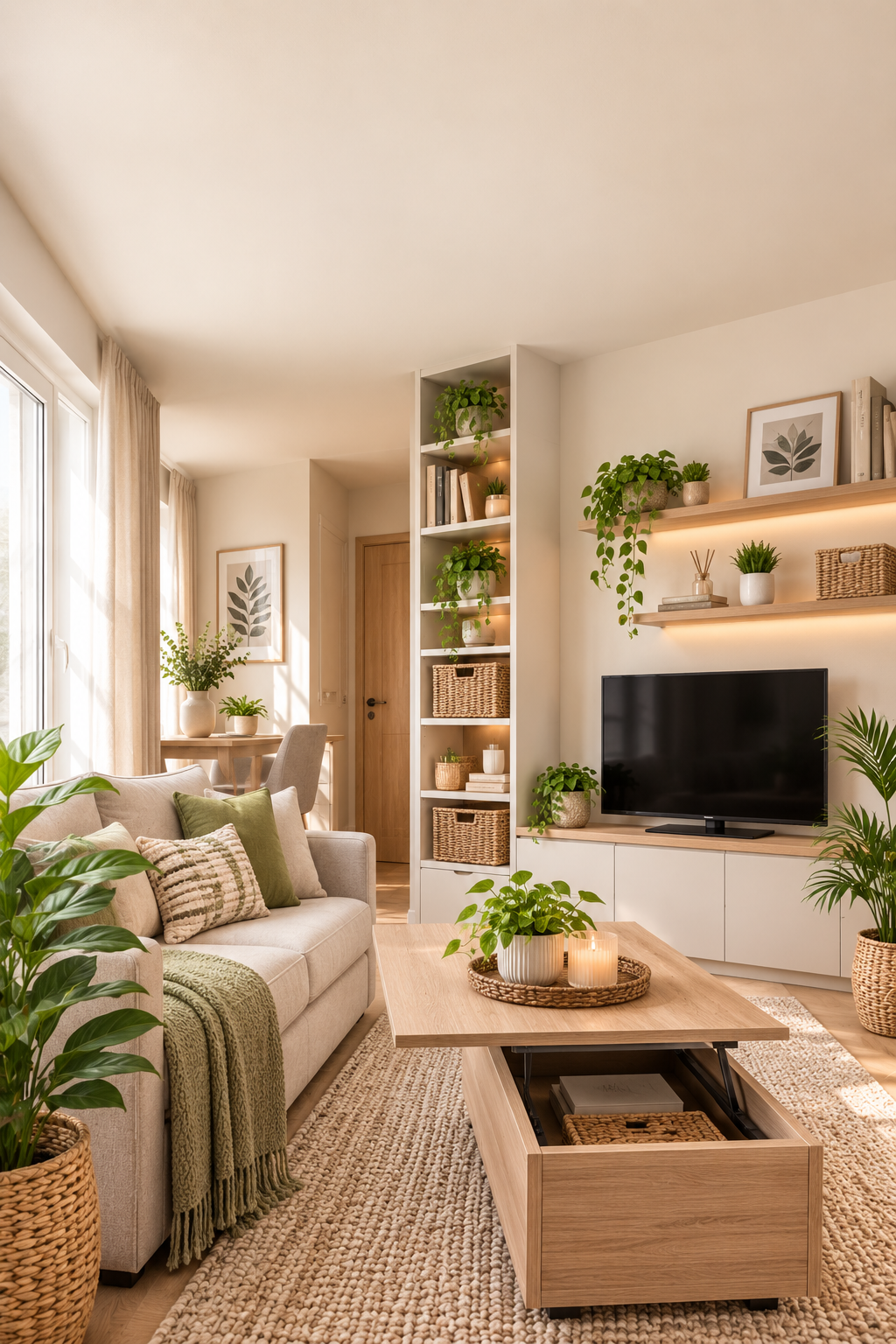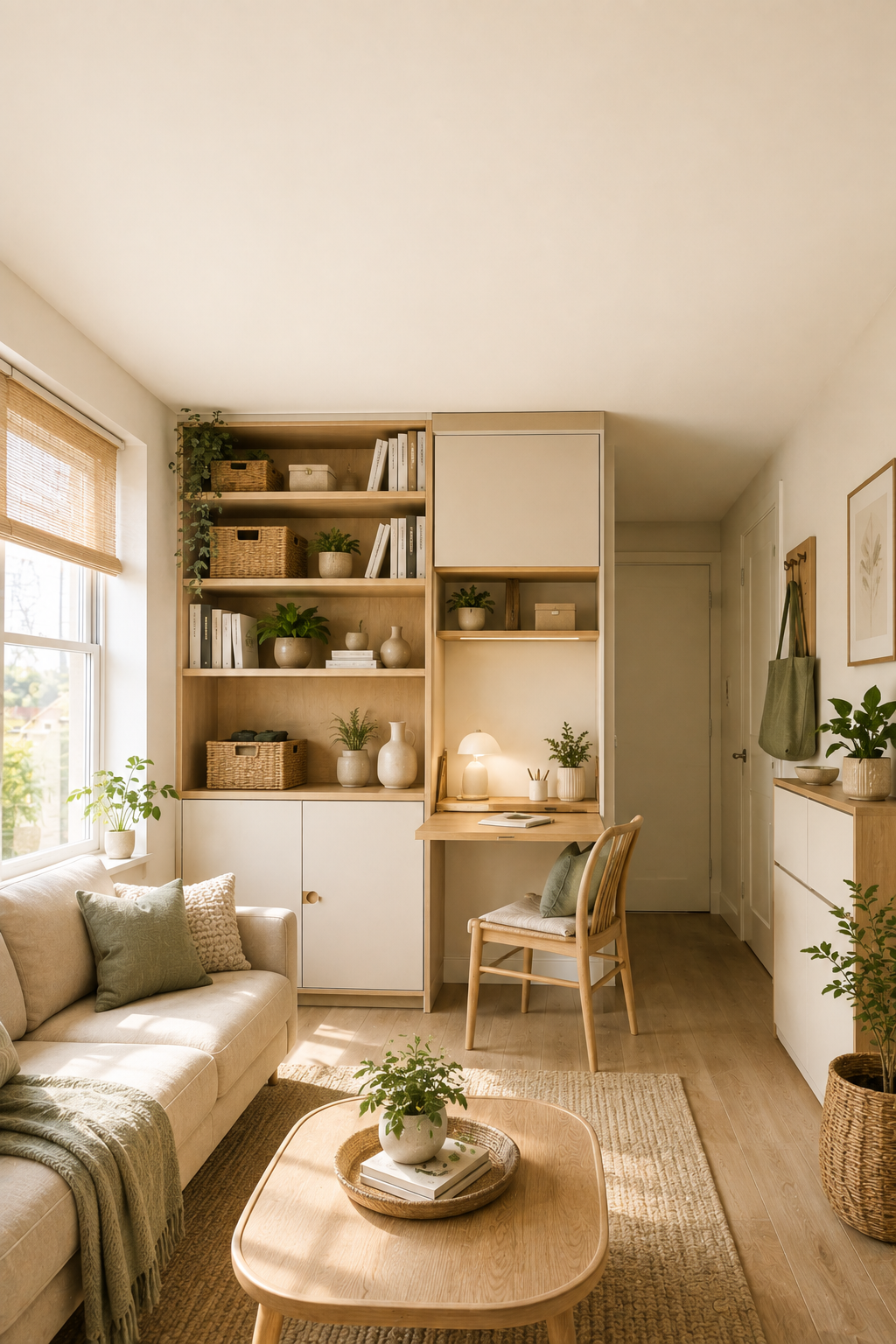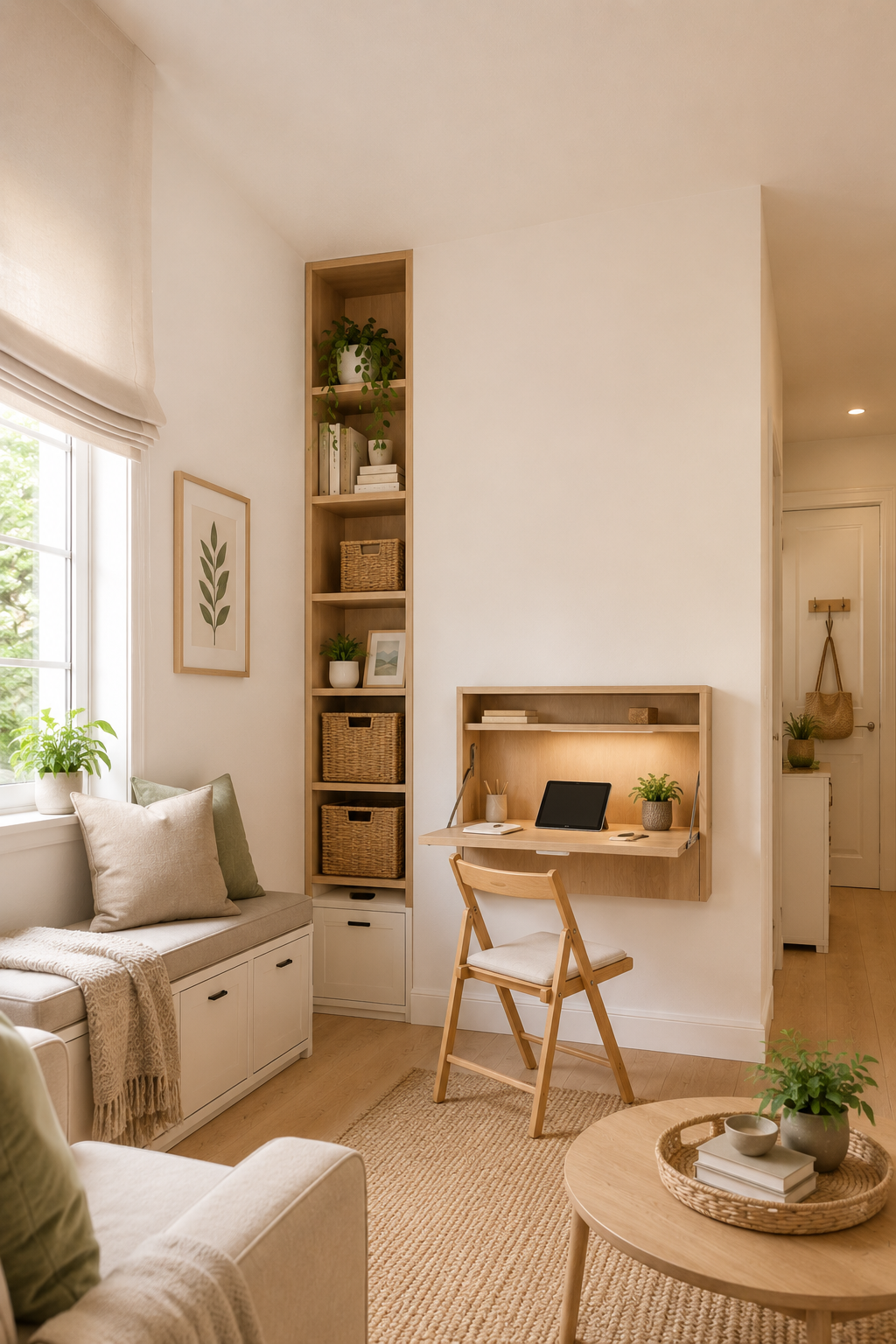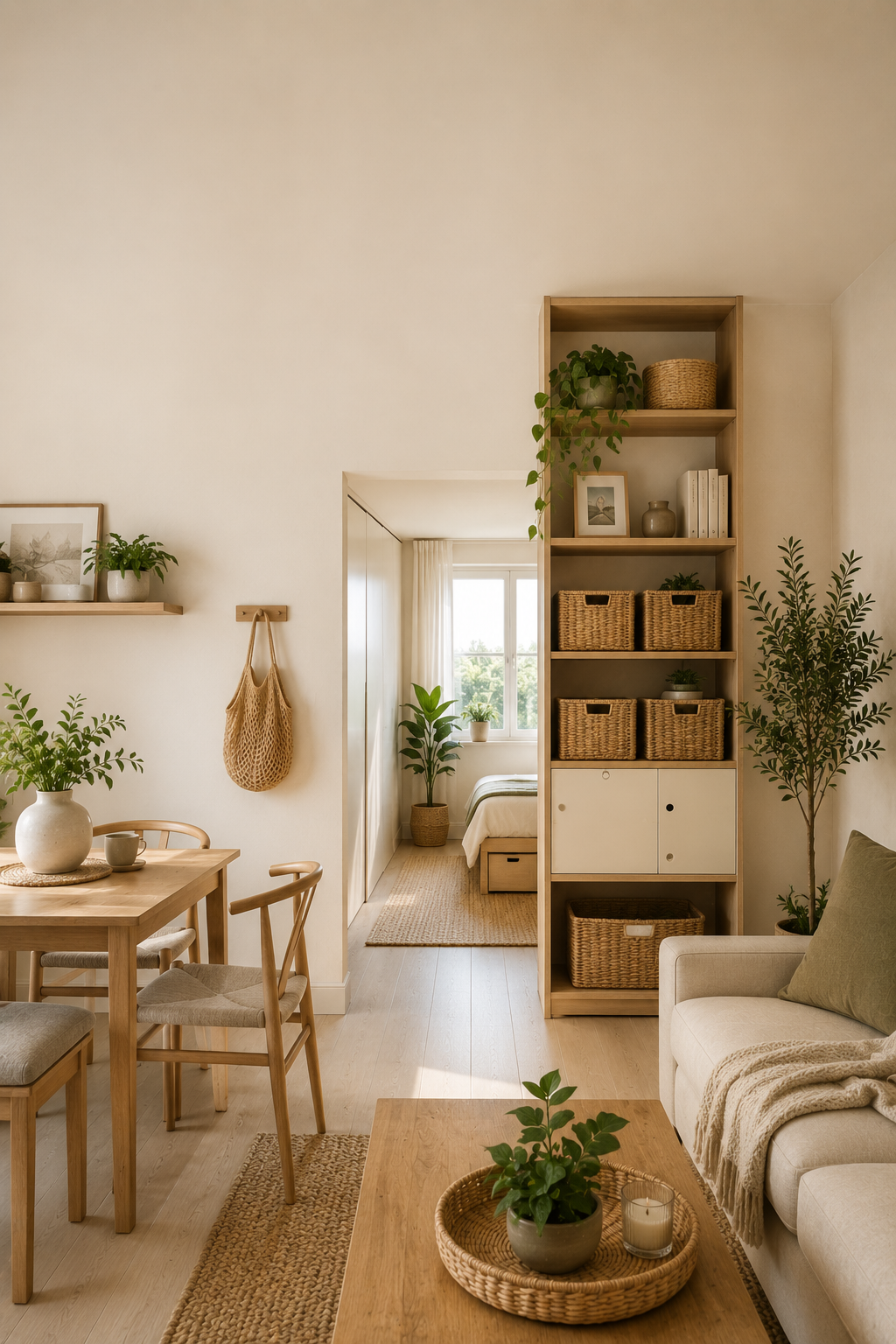
Every small home has them.
That narrow gap beside the refrigerator. The empty corner next to the wardrobe. The wall behind a door. The strange space underneath a staircase. The little area that seems too small for furniture but too useful to ignore.
These awkward spaces are easy to overlook because they don’t immediately look useful. But when you’re working with limited square footage, they can become some of the most valuable areas in your home.
The key isn’t to force a large piece of furniture into a tiny space. Instead, look at the dimensions you have and ask:
“What problem could this space solve?”
A narrow gap might become pantry storage. An empty wall could become a vertical organization zone. A bedroom corner could become a reading nook. Even the back of a door can provide useful storage.
Here are 10 clever ways to make those overlooked spaces work harder.
01. Turn the Space Behind a Door Into Storage
The back of a door is one of the most overlooked storage opportunities in a home.
Because the door already occupies that area, adding a suitable organizer doesn’t necessarily require sacrificing additional floor space.
Depending on the room, an over-door organizer could hold:
- Cleaning supplies
- Toiletries
- Hair accessories
- Shoes
- Scarves
- Bags
- Pantry items
- Small household essentials
For example, the back of a bathroom door could hold lightweight toiletries or towels, while a bedroom door could become a convenient accessory station.
Make sure it actually fits
Before purchasing an over-door organizer, check:
- The thickness of the door
- Available clearance
- Whether the door can still close
- The weight capacity
- Whether the hinges can handle the additional load
The goal is to gain storage without creating a new problem.
Smart Space Finds tip
Choose a slim organizer when the room is particularly tight. A bulky one can make the doorway feel cramped.
02. Use the Narrow Side of a Cabinet
Have you ever looked at the side of a wardrobe or kitchen cabinet and realized it is completely unused?
That narrow vertical surface can sometimes become a surprisingly useful organization area.
You could use:
- Hooks
- A slim rail
- Magnetic storage where appropriate
- A narrow hanging organizer
- A shallow shelf
In a kitchen, the side of a cabinet could hold cooking utensils or lightweight kitchen towels.
In a bedroom, it could become a place for bags, hats or frequently worn accessories.
In a utility area, it could hold lightweight cleaning tools.
Keep it shallow
This is important.
You don’t want your clever storage solution sticking so far into the room that it interferes with walking.
The best side-of-cabinet storage is often the kind you barely notice until you need it.
03. Make the Gap Beside an Appliance Useful
Small homes often have narrow gaps between appliances and cabinets.
Instead of allowing that space to become a dust-collecting strip, measure it carefully to see whether a slim rolling cart or narrow storage unit could fit.
This can be particularly useful in a kitchen.
A narrow cart could hold:
- Spices
- Cooking oils
- Pantry items
- Baking supplies
- Cleaning products
- Kitchen towels
The rolling design is particularly useful because you can pull it out when needed and slide it back afterward.
Measure carefully
Don’t measure only the width.
Also consider:
- Handles
- Skirting boards
- Door openings
- Appliance ventilation requirements
- How far the cart needs to come out
Never block an appliance’s required ventilation area simply to gain extra storage.
04. Give an Empty Corner a Specific Purpose
An empty corner isn’t necessarily wasted space.
The problem is that people often fill corners randomly instead of deciding what function the space should serve.
Start by asking:
What does this room need?
If you need somewhere to read, a compact chair and floor lamp could transform the corner into a small reading nook.
If you need storage, a tall narrow shelving unit could work.
If you need a work area, a compact desk might be enough.
If you simply need to soften the room, a tall plant could make the corner feel intentional.
The important part is that the corner should have a purpose.
05. Use the Wall Above Your Desk
A small desk can quickly become overwhelmed by notebooks, stationery, chargers and electronics.
Instead of making the desk wider—which costs valuable floor space—look upward.
A wall above the desk can accommodate:
- Floating shelves
- Peg-style organization
- Small wall cabinets
- Suitable rails
- Document holders
- Pinboards
Keep the things you use frequently within easy reach.
Less frequently used items can go higher.
Keep the work surface clear
The purpose of vertical organization is not to create another clutter wall.
Use it to free the desk.
A clear workspace often feels much larger and makes it easier to concentrate.
06. Use the Space Above Kitchen Cabinets
If your kitchen cabinets don’t reach the ceiling, you may have a strip of unused space above them.
This can be useful for items that aren’t needed every day.
For example:
- Seasonal serving pieces
- Extra baskets
- Entertaining supplies
- Decorative kitchen items
- Occasionally used appliances
Woven baskets are particularly useful because they can hide miscellaneous items while making the area look intentional.
But don’t store everything up there
If you need something every morning, climbing or reaching into a high space isn’t practical.
Use high storage for infrequently used items.
And always make sure anything stored there can be retrieved safely.
07. Turn the Space Under a Console Into Storage
A slim console table can already be useful in a small home because it provides a surface without taking up much depth.
But the space underneath can work too.
Place attractive baskets underneath to store:
- Blankets
- Shoes
- Bags
- Accessories
- Books
- Small household items
This works particularly well in entryways.
The top can hold a lamp, mirror or decorative tray while the lower section provides hidden organization.
The result is essentially one piece of furniture performing several jobs.
08. Use the Small Space Beside Your Bed or Wardrobe
A bedroom may have a narrow gap beside the bed or wardrobe that is too small for a conventional bedside cabinet.
That doesn’t mean it has to remain empty.
Depending on the available width, you might use:
- A very narrow shelf
- Wall hooks
- A slim vertical organizer
- A small floating shelf
- A hanging pocket
This could provide a home for books, a phone charger, a robe, handbag or a few everyday accessories.
Protect your walking space
The bedroom should still feel comfortable.
Don’t install storage that forces you to squeeze past furniture every time you walk around the bed.
Sometimes a wall-mounted solution is better than floor-standing storage.
09. Make Use of the Space Under the Stairs
If your home has stairs, the area underneath can be incredibly valuable.
Depending on the layout, it could become:
- Closed storage
- A small home office
- A reading area
- A shoe zone
- Cleaning storage
- Shelving
- A compact utility area
For homeowners, built-in cabinetry can create a polished solution.
For renters or people who don’t want construction work, modular shelving, baskets or a small desk may provide a simpler alternative.
Think about accessibility
The deepest part of the space may not be convenient for everyday items.
Use the easiest-to-reach areas for things you use frequently and reserve awkward sections for less-used belongings.
10. Stop Treating Every Awkward Space as Storage
This might sound strange after discussing storage throughout the article, but not every empty space needs to become storage.
Sometimes an awkward area is valuable simply because it creates breathing room.
If a corner makes the room feel balanced, leave it alone.
If adding a cabinet would make a walkway narrower, don’t add it just because the space is available.
If you already have enough storage, don’t buy another organizer simply because you found an empty gap.
The best small-space decision isn’t always “add more.”
Sometimes it is:
“Leave it open.”
That empty area may be helping the room feel calmer and larger.
How to Decide What to Do With an Awkward Space
Before buying anything, use this simple five-step process.
Step 1: Measure it
Record the:
- Width
- Height
- Depth
Also consider doors, drawers and walkways.
Step 2: Identify the problem
What does your home actually need?
- More storage?
- A workspace?
- A place for bags?
- Better organization?
- Or simply more visual breathing room?
Step 3: Choose the smallest solution that solves the problem
Don’t automatically choose the biggest storage unit that fits.
Start with the simplest option.
Step 4: Consider how often you’ll use it
Everyday items need easy access.
Occasional items can go into higher, deeper or less convenient storage.
Step 5: Make sure it doesn’t create another problem
- Does it block a walkway?
- Does a door still open?
- Can you clean around it?
- Can you safely reach the items?
If the answer is no, rethink the solution.
Final Thoughts
Small homes reward creativity.
The space beside your refrigerator, behind your door or underneath your stairs might look insignificant on its own, but these little areas can collectively make a major difference to how your home functions.
The trick is to stop thinking only in terms of conventional furniture.
Look at walls. Look upward. Look behind doors. Look underneath existing furniture. Look at narrow gaps.
But also remember that empty space has value.
A beautifully organized small home isn’t one where every corner is filled. It’s one where the available space is used intentionally.
Smart Space Finds takeaway
Before you buy more furniture, look at the spaces you’re already overlooking. A narrow shelf, a few hooks, a basket or a simple rolling cart may solve a problem without taking away the floor space you need.
For more ideas in the same spirit, keep going with our guide to 10 genius small-space storage ideas, or explore the small spaces and organization sections.