Living in a small apartment doesn’t mean you have to feel surrounded by your belongings. With the right layout, furniture choices, storage solutions and decorating approach, even a compact home can feel comfortable, organized and surprisingly spacious.
The secret isn’t trying to make your apartment look like something it isn’t. Instead, it’s about using the space you already have more intelligently.
A small room can feel much larger when there is a clear walkway, furniture is appropriately scaled, everyday clutter has a home, and the eye has places to rest.
Whether you’re furnishing your first apartment, moving into a smaller home or simply trying to make your current space work better, these ideas can help you create a home that feels open without sacrificing comfort.
01. Keep Your Windows as Clear as Possible
Natural light can completely change the way a small room feels.
When windows are blocked by large furniture, heavy curtains or too many decorative objects, the room can immediately feel darker and more enclosed.
Instead, keep the area around your main windows relatively open.
Choose lightweight curtains that allow natural light to enter during the day. You can also mount curtain rods slightly higher than the window frame to create the impression of greater ceiling height.
If privacy allows, avoid covering the entire window during daylight hours.
Smart Space Finds tip
Don’t think of your window as just a source of light. Treat it as one of the room’s biggest visual assets.
02. Choose Furniture That Does More Than One Job
In a small apartment, furniture has to earn the space it occupies.
A piece that performs two or three functions can be much more useful than several separate pieces.
For example:
- A storage ottoman can provide seating and hidden storage.
- A bed with drawers can store bedding and clothing.
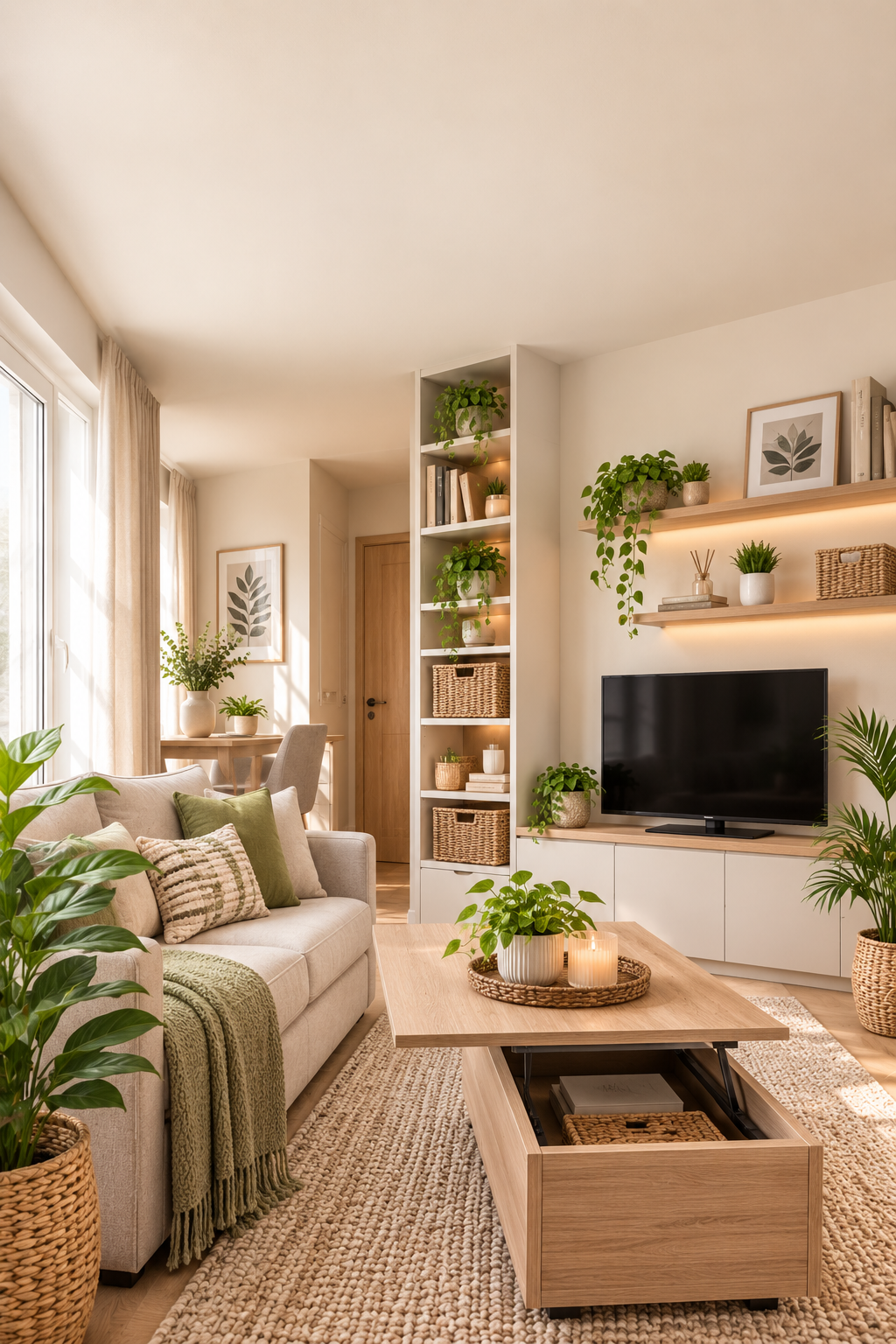
- A coffee table with storage can hide books, blankets or everyday items.
- A foldable dining table can become a workspace.
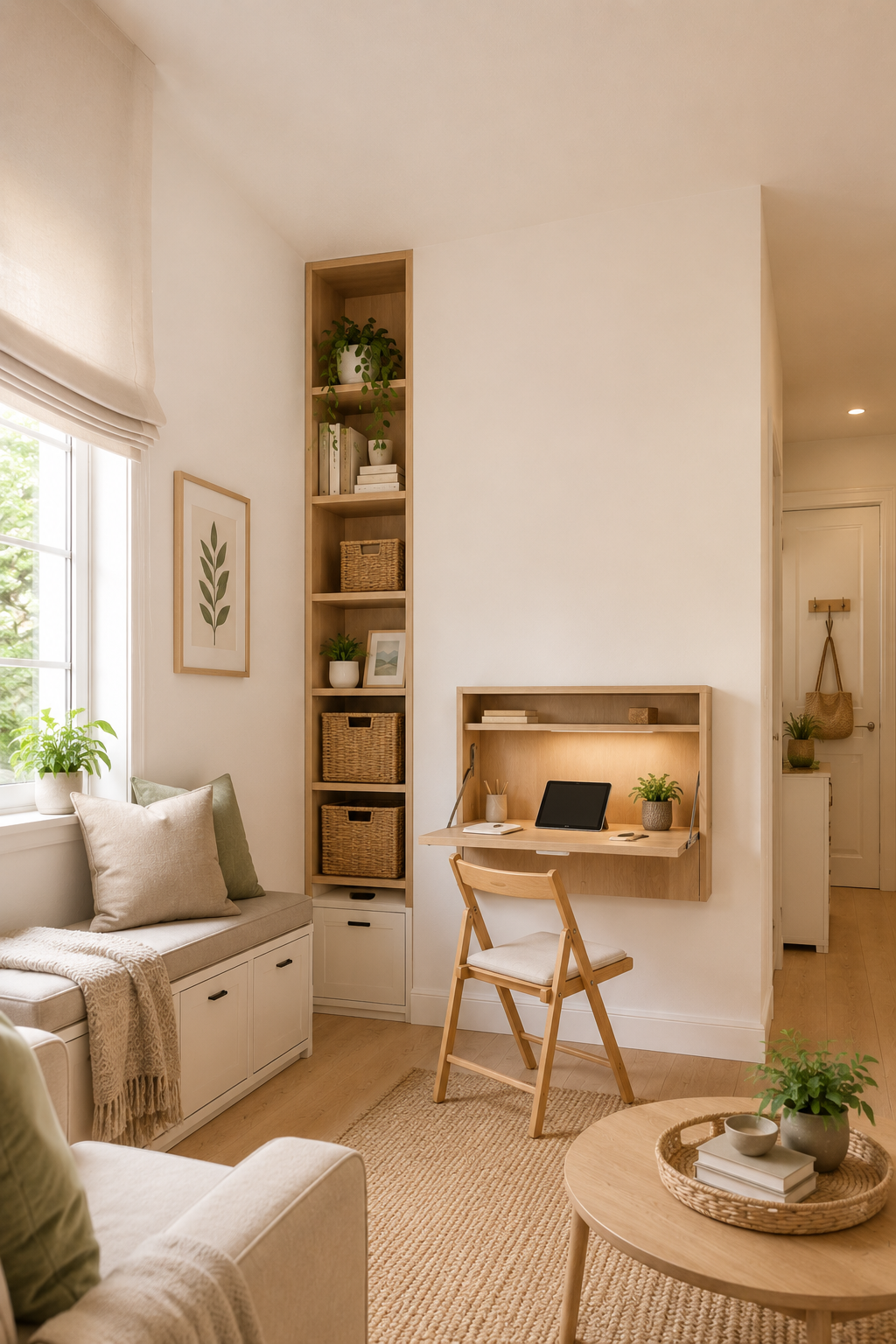
- A bench with storage can provide seating and organization.
This doesn’t mean every piece of furniture needs to be multifunctional. Too many complicated pieces can make a room feel busy.
Instead, identify the areas where you’re struggling for space and look for furniture that solves that particular problem.
03. Make Better Use of Vertical Space
One of the biggest mistakes people make in small homes is thinking only about floor space.
Look up.
The wall above your furniture is often valuable unused space.
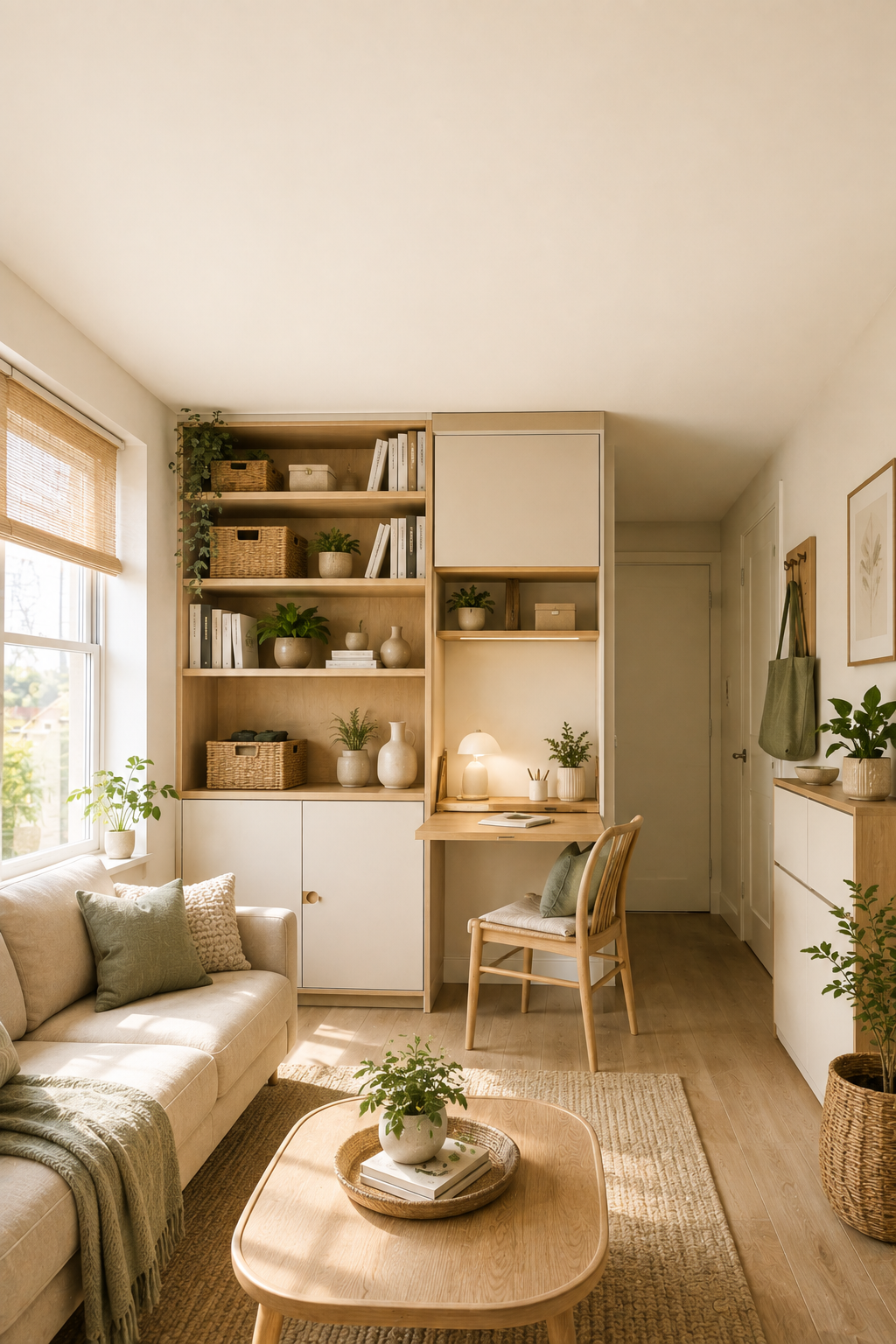
Tall shelving units, vertical cabinets and wall-mounted storage can give you considerably more capacity without taking up much additional floor area.
For example, instead of using a wide bookcase that spreads across the room, a taller and narrower shelving unit can provide similar storage while keeping more floor visible.
Use the upper sections for items you don’t need every day and keep frequently used belongings within easy reach.
Smart Space Finds tip
When choosing between a wide storage unit and a tall one, consider which option gives you more storage while preserving your main walking path.
04. Keep More of the Floor Visible
You don’t need completely empty floors, but keeping some floor visible can make a compact room feel considerably lighter.
Furniture that sits directly on the floor tends to create a heavier visual block.
Where appropriate, choose pieces with visible legs or wall-mounted furniture.
A sofa with raised legs, for example, allows you to see more floor underneath it. A floating bedside table can create a similar effect in a bedroom.
The difference may seem small, but several pieces of furniture with visible floor underneath can make the entire room feel less crowded.
05. Create Clear Zones
Small apartments often require one room to perform several different jobs.
Your living room might also be:
- a dining room
- a home office
- a reading area
- an entertainment space
Trying to physically divide these areas with large furniture can make the apartment feel even smaller.
Instead, create visual zones.
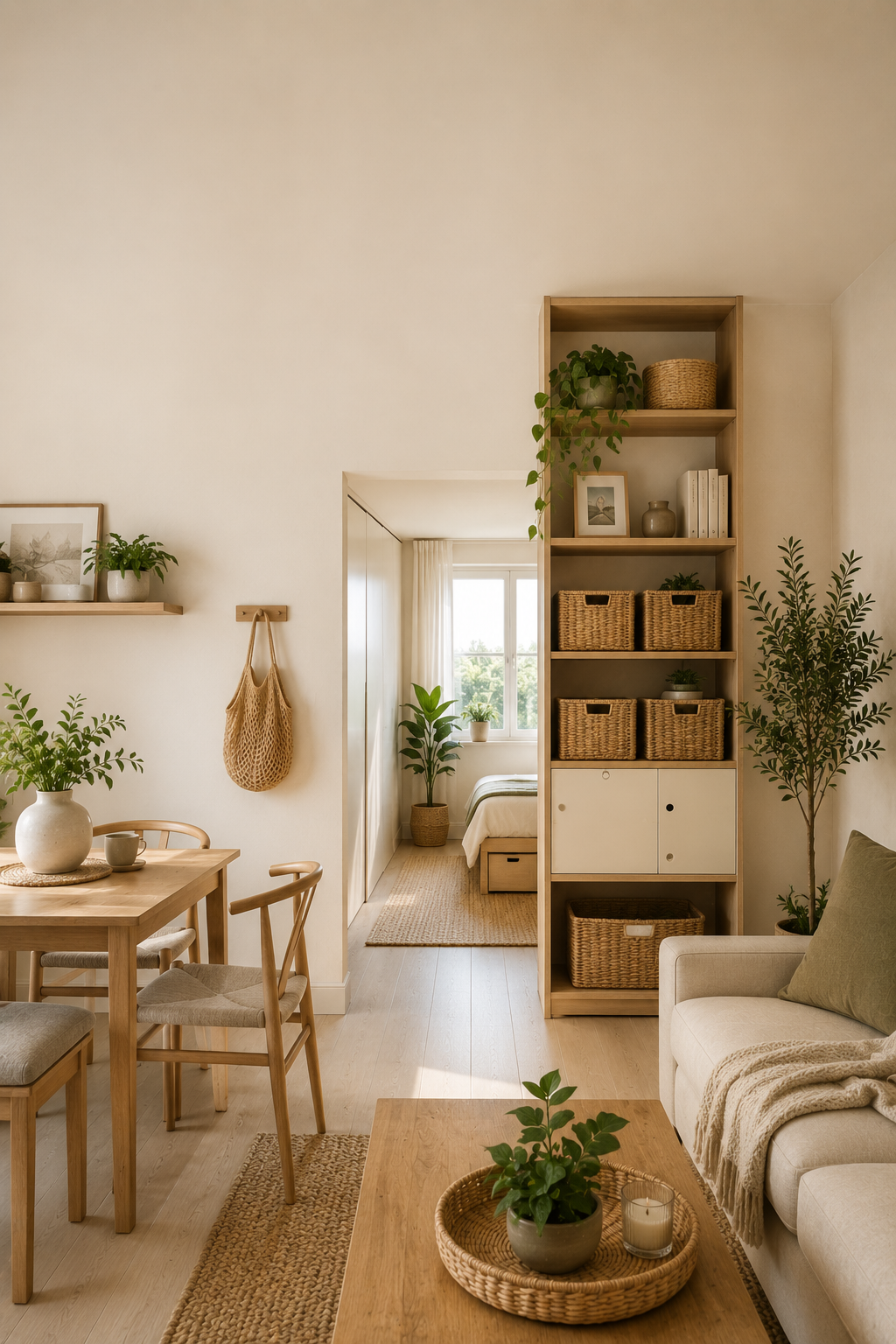
A rug can define the sitting area. A small desk can establish a work zone. A pendant light or compact dining table can identify the eating area.
The goal is to make it obvious what each part of the room is for without building physical walls.
This creates structure while preserving openness.
06. Keep Your Color Palette Consistent
You don’t have to decorate your entire apartment in white to make it feel spacious.
What matters more is visual consistency.
A calm base palette of warm white, cream, beige, light wood and soft neutral tones can help different areas of a small apartment feel connected.
You can absolutely add personality through:
- artwork
- cushions
- plants
- rugs
- decorative objects
- muted accent colors
The trick is to avoid giving every area a completely different visual identity.
When colors and materials relate to one another, the eye moves more easily through the apartment.
07. Turn Awkward Corners Into Useful Spaces
Small apartments often contain awkward corners that are too narrow for conventional furniture.
Don’t automatically assume these spaces are useless.
A narrow corner could become:
- a reading nook
- a small workspace
- vertical storage
- a plant display
- a compact dressing area
- a charging station
For example, a small chair paired with a floor lamp can turn an empty bedroom corner into a comfortable reading area.
A narrow shelving unit can turn another awkward space into useful storage.
Before adding anything, ask:
“What does my home currently need?”
Then see whether that awkward space can help solve the problem.
08. Make Open Storage Look Intentional
Open shelving can be extremely useful in a small home, but it can also make the room look cluttered if every item is simply placed wherever there is space.
This is where baskets and coordinated storage boxes can help.
Woven baskets can hide smaller belongings while adding warmth and texture to a room.
You can also group similar items together rather than scattering them across several shelves.
For example, one basket could hold accessories, another could contain cables and electronics, while books and decorative objects remain visible.
The result is storage that feels like part of the décor rather than an emergency response to clutter.
09. Edit Your Surfaces
Small surfaces become clutter magnets very quickly.
Think about:
- coffee tables
- bedside tables
- kitchen counters
- bathroom counters
- desks
- entryway consoles
You don’t necessarily need another organizer for every surface.
Sometimes you simply need fewer things sitting there.
Choose the items that genuinely belong on each surface and give everything else a home inside a drawer, cabinet or basket.
A small tray can be useful for containing everyday essentials, but don’t let the tray become another place where everything accumulates.
The goal isn’t organized clutter. It’s less clutter.
10. Measure Before Buying Furniture
This sounds obvious, but it’s one of the most important rules for small-space living.
A piece of furniture can look perfect online and still be completely wrong for your apartment.
Before buying, measure:
- width
- depth
- height
- doorways
- hallways
- stairways
- nearby furniture
- available walking space
Don’t just ask whether the furniture technically fits.
Ask:
“Can I still move comfortably around it?”
A sofa that leaves only a tiny walkway can make the entire room feel cramped, even if it fits perfectly according to the measurements.
11. Don’t Fill Every Empty Space
This is one of the hardest small-home lessons.
When space is limited, it can feel logical to use every available corner.
But filling every empty area can actually make your apartment feel smaller.
Empty space is useful.
It gives the eye somewhere to rest. It makes important furniture stand out. It can also make cleaning and moving around the home easier.
So don’t feel pressured to buy something simply because you have an empty corner.
Sometimes the best design decision is to leave it empty.
12. Choose Furniture That Can Adapt
Your apartment needs to work for real life, and real life changes.
You might work from home one day, have guests another day, or need additional storage during a particular season.
Flexible furniture can help.
Consider pieces that:
- fold away
- expand
- move easily
- provide hidden storage
- serve multiple purposes
- can be rearranged
A small apartment becomes much more functional when the layout can adapt instead of being permanently fixed.
Final Thoughts
Making a small apartment feel bigger isn’t about getting rid of everything you own or turning your home into a minimalist showroom.
It’s about being intentional with the space you have.
Use your walls. Keep pathways clear. Choose furniture carefully. Create simple zones. Hide unnecessary visual clutter. And most importantly, give yourself permission to leave some areas empty.
A well-designed small apartment isn’t one where every inch is occupied.
It’s one where every inch works for you.
Smart Space Finds takeaway
Small space doesn’t have to mean small living. With thoughtful storage, flexible furniture and a calm layout, a compact apartment can feel organized, comfortable and genuinely spacious.
For more ideas in the same spirit, keep going with our guide to 10 genius small-space storage ideas, or explore the small spaces and organization sections.