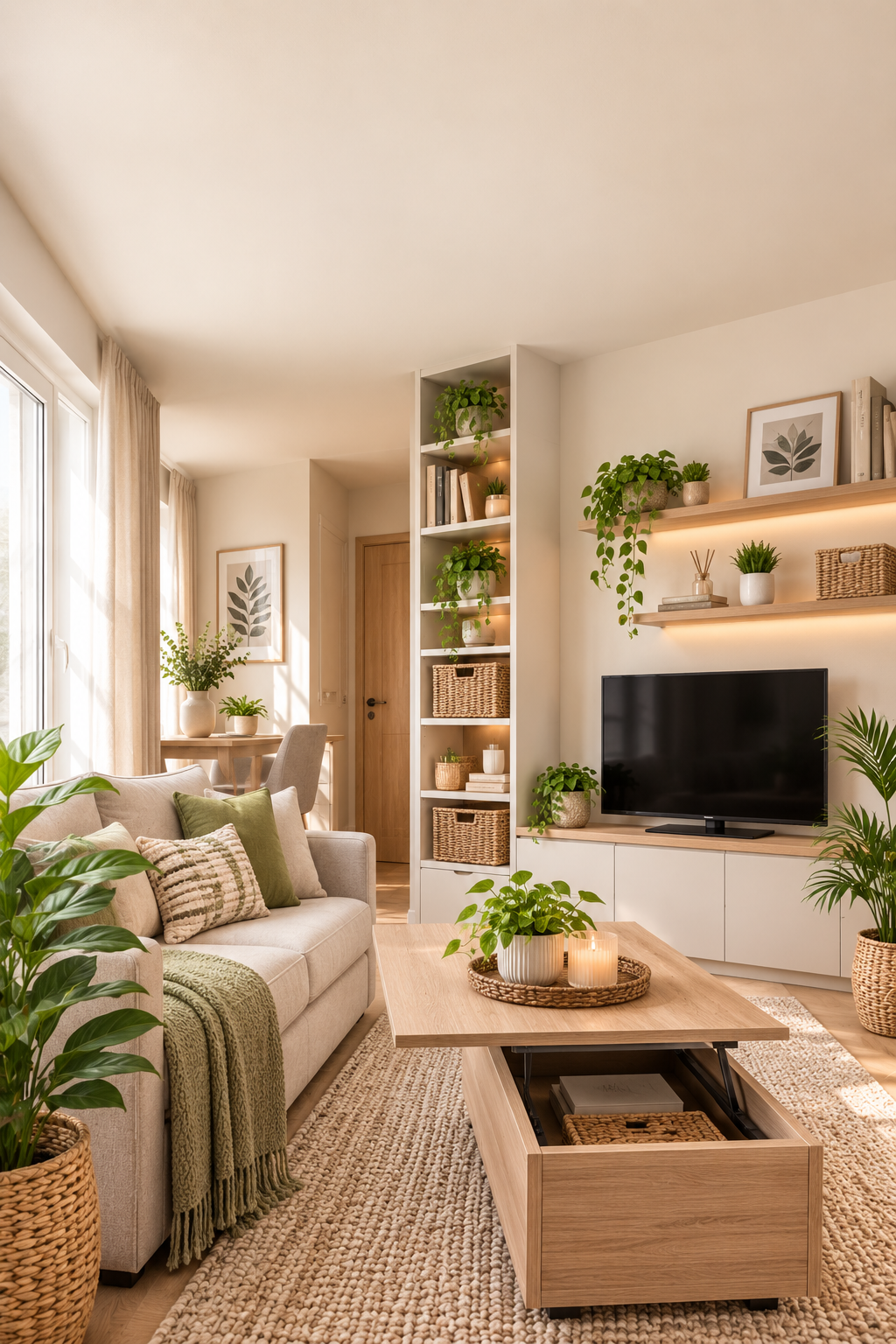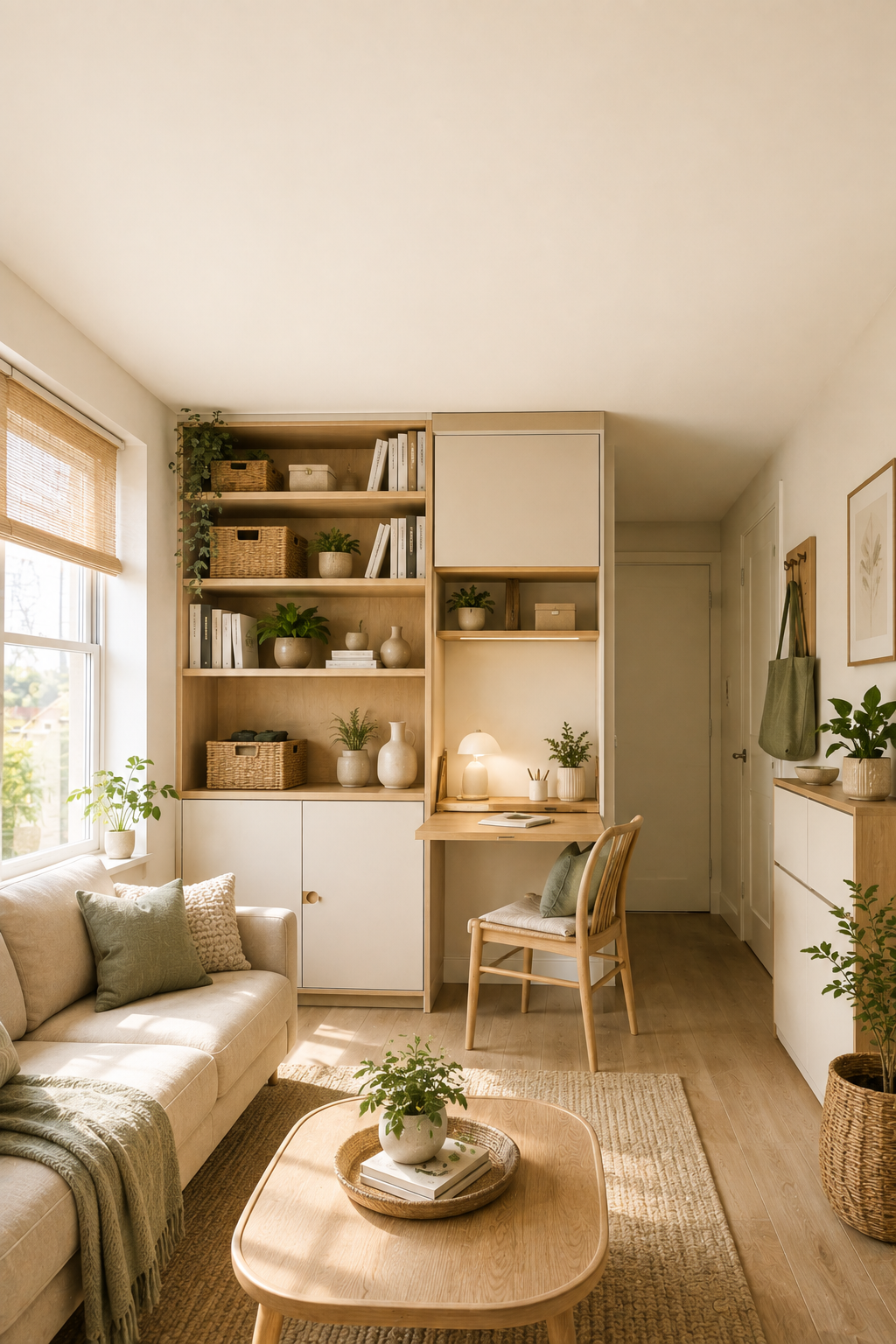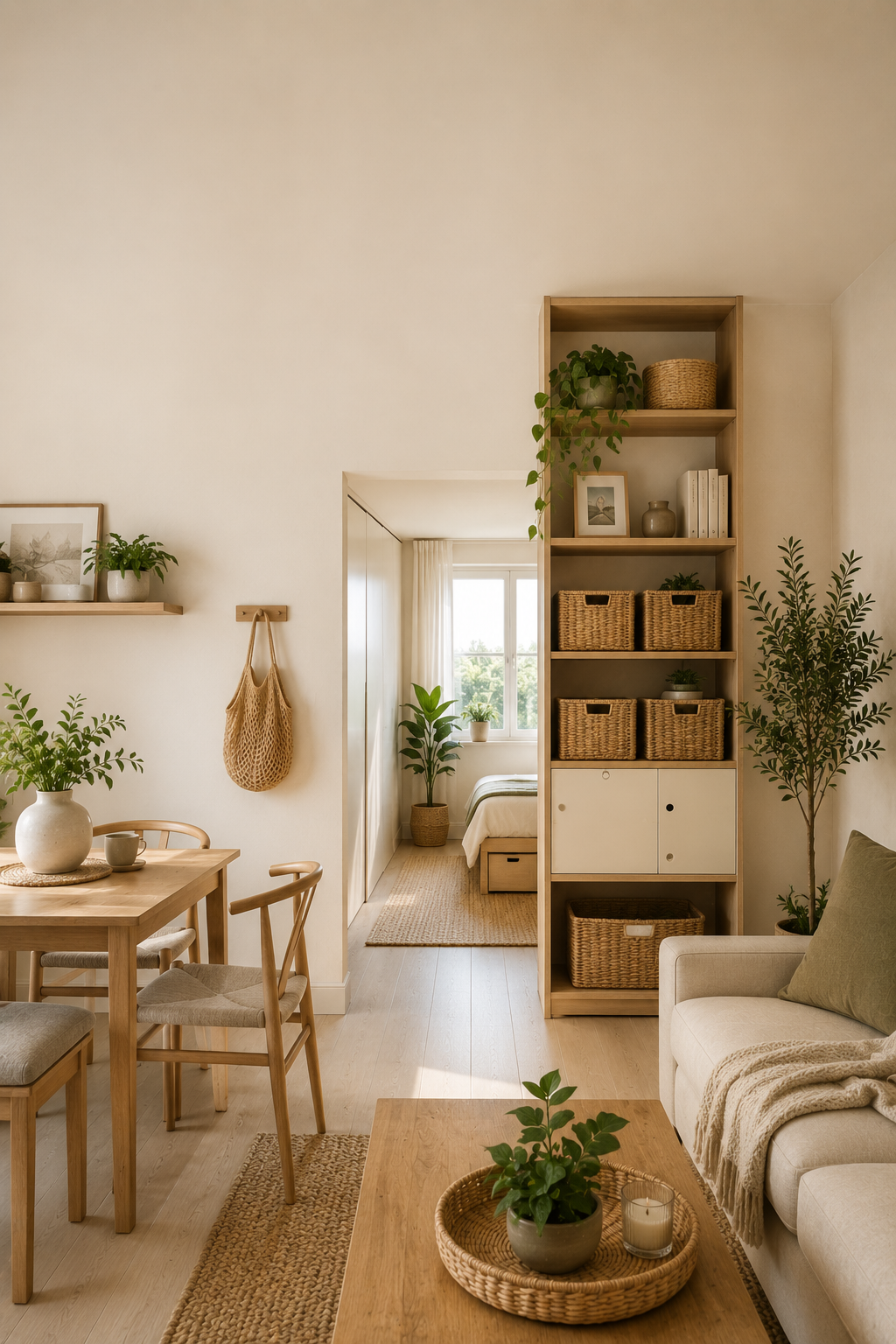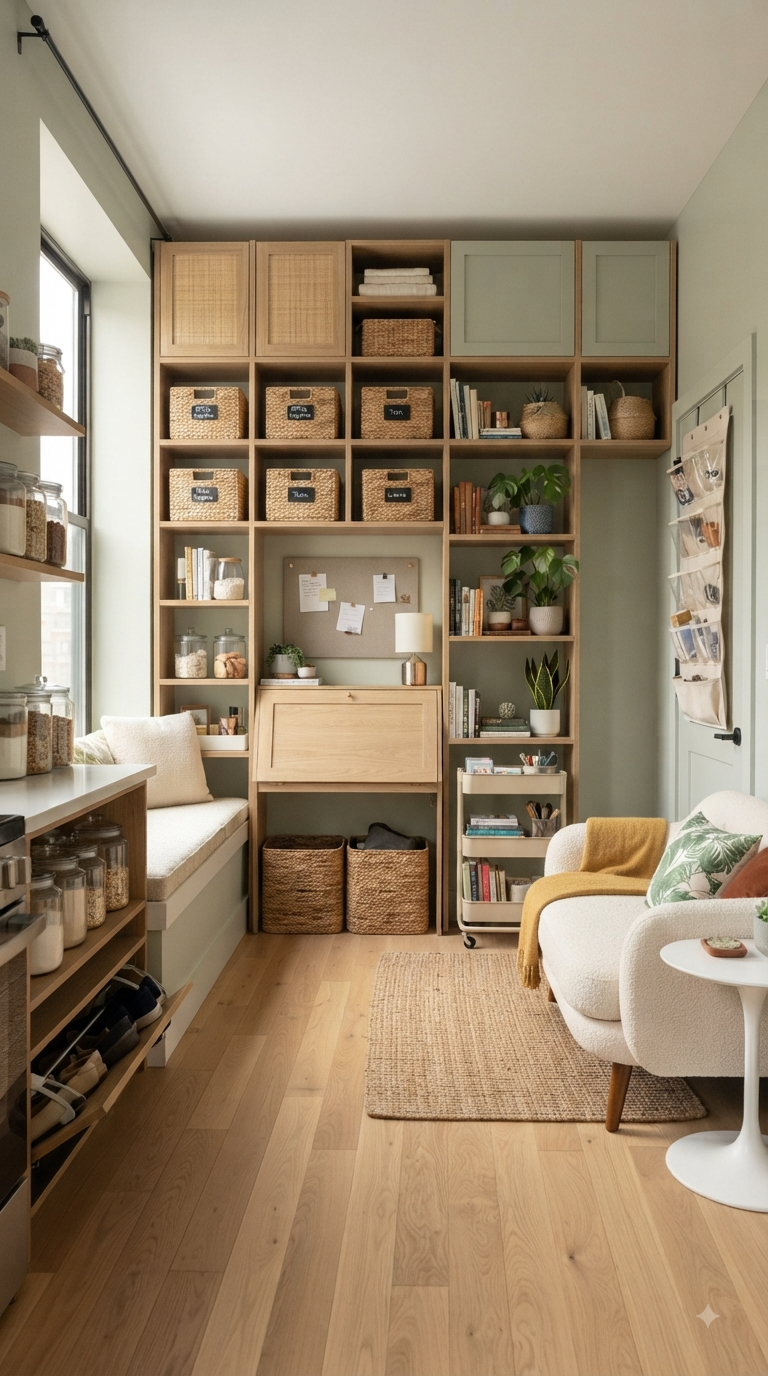
Small-space storage works best when it is planned around how you move through your home. Before buying bins or shelving, notice where clutter collects, what you reach for every day, and which areas are currently doing no useful work. The goal is not to fill every empty inch. It is to create enough easy-to-use storage that the room can still feel open.
01. Use Vertical Wall Space
When floor space is limited, look upward. A tall bookcase, wall-mounted rail, or series of shelves can hold more than a low cabinet while using a similar footprint. Keep frequently used items between waist and eye level, place lighter or decorative objects higher up, and avoid overfilling every shelf. Leaving some breathing room keeps vertical storage from becoming a wall of clutter.
Measure ceiling height, baseboards, switches, and door clearance before choosing a solution. In a rental, confirm which wall fixings are permitted and always use hardware suited to the wall type and expected load.
02. Choose Furniture With Hidden Storage
An ottoman, bench, coffee table, or bed with an enclosed compartment can give one piece of furniture two jobs. Hidden storage is particularly useful for bulky items that are needed regularly but do not need to remain visible, such as spare bedding, exercise accessories, or board games.
Choose pieces that are easy to open in the room. A lift-up bed may offer generous capacity, but it is only practical if there is enough clearance and the mechanism is comfortable to use. Storage you avoid opening quickly becomes forgotten storage.
03. Make Use of Under-Bed Space
The area beneath a bed can hold off-season clothing, extra linens, or rarely used items. Measure the actual clearance before selecting containers, including any center supports. Low containers with handles are easier to retrieve, while enclosed or zippered options help limit dust.
Group items by purpose and label the end facing outward. Avoid using this space as a random holding zone; a simple inventory note can prevent buying duplicates or losing track of what is stored there.
04. Use the Back of Doors
Doors can provide useful shallow storage without taking up floor area. Over-door hooks, slim pocket organizers, and properly mounted racks can work for cleaning supplies, accessories, pantry packets, or wrapping materials.
Check that the organizer does not stop the door from closing, damage the frame, or create too much weight on the hinges. In visible areas, choose a simple design and limit it to one category so it feels intentional rather than crowded.
05. Add Floating Shelves
Floating shelves fit above desks, toilets, radiators with safe clearance, and other spots where a floor-standing unit would be awkward. They are ideal for small groups of books, everyday glassware, or attractive storage boxes.
Plan the shelf depth around the room. A narrow shelf can be more useful in a tight walkway than a deep one that becomes a bump hazard. Install shelves securely and respect the manufacturer's load guidance.
06. Use Narrow Spaces Wisely
The gap beside a refrigerator, washing machine, wardrobe, or sofa may be wide enough for a slim trolley or vertical rack. Start by measuring the narrowest point, including handles and trim, and leave enough clearance for ventilation or appliance access where required.
Narrow storage works best for similarly shaped items: trays, cutting boards, cleaning tools, or a small group of pantry staples. If a solution makes the neighboring appliance harder to service, it is not a good use of the gap.
07. Use Multi-Purpose Furniture
Look for furniture that changes with the task: a drop-leaf table, nesting side tables, a desk that closes away, or stools that can serve as occasional tables. The best multi-purpose pieces are quick to transform and useful in both modes.
Be realistic about setup. If converting a table requires moving several heavy objects each day, it may create more friction than flexibility. Favor simple mechanisms and proportions that suit the room even when the piece is fully extended.
08. Organize Your Kitchen Vertically
Inside cabinets, shelf risers can separate plates from bowls, while vertical dividers keep pans, trays, and cutting boards easier to remove. Wall rails or magnetic systems may also free counter space when they are installed safely and kept away from heat or water hazards.
Put heavy items low and everyday items within easy reach. Do not stack so tightly that removing one pan requires unloading the whole cabinet; accessibility matters more than theoretical maximum capacity.
09. Use Attractive Storage Baskets
Baskets can soften open shelving and gather small items into clear categories. Choose sizes based on the shelf—not the other way around—and allow enough room to pull each basket out without scraping your hands.
Natural textures can add warmth, but wipe-clean materials may be better in kitchens, bathrooms, or children's areas. A basket is most effective when it contains one understandable group, such as cables, pet supplies, or evening-reading essentials.
10. Keep Frequently Used Items Accessible
Good storage reduces effort. Keep daily items near the place they are used and reserve high, deep, or hard-to-open storage for occasional belongings. A simple “one-motion” test helps: if you can reach an item without moving several other things first, the system is likely to last.
Review the arrangement after a week. If the same objects keep landing on a counter or chair, they probably need a more convenient home. Let your routines shape the storage rather than forcing your routines to fit the containers.
More Smart Space Finds
Continue with 7 Space-Saving Ideas for Small Apartments, 10 Small Bedroom Organization Ideas That Actually Work, or 10 Clever Kitchen Storage Ideas. Planned guides remain transparent editorial previews until their full articles are prepared.