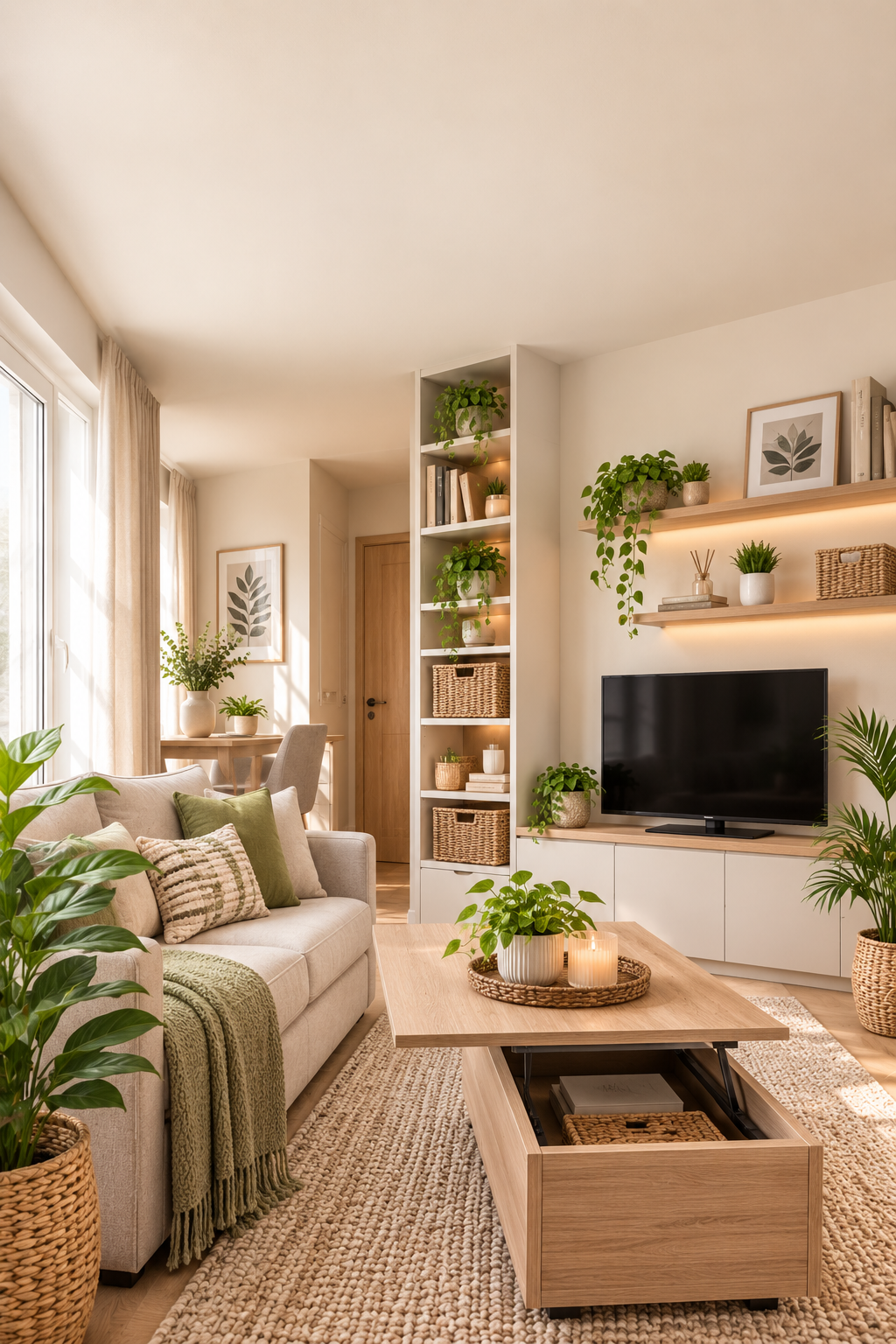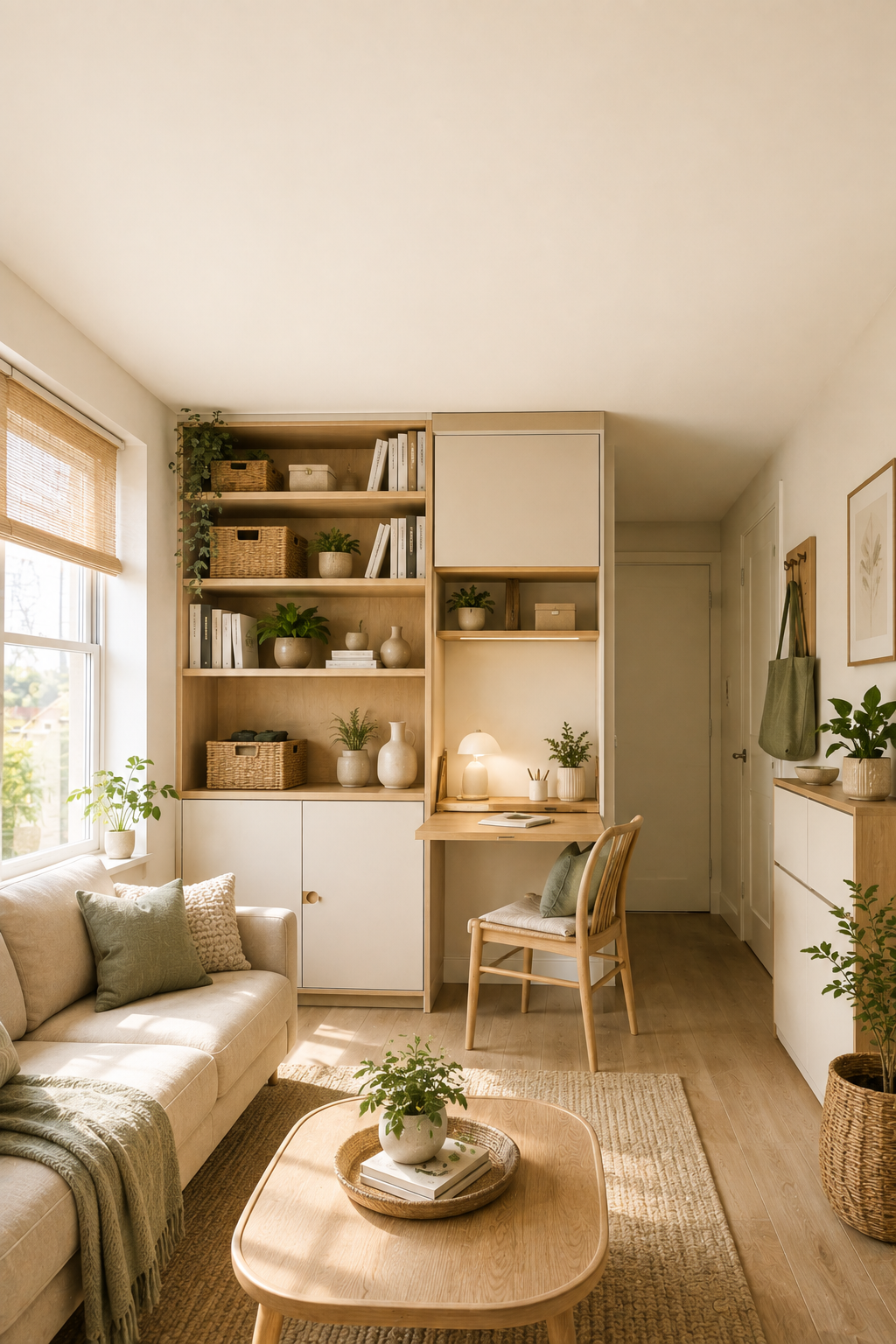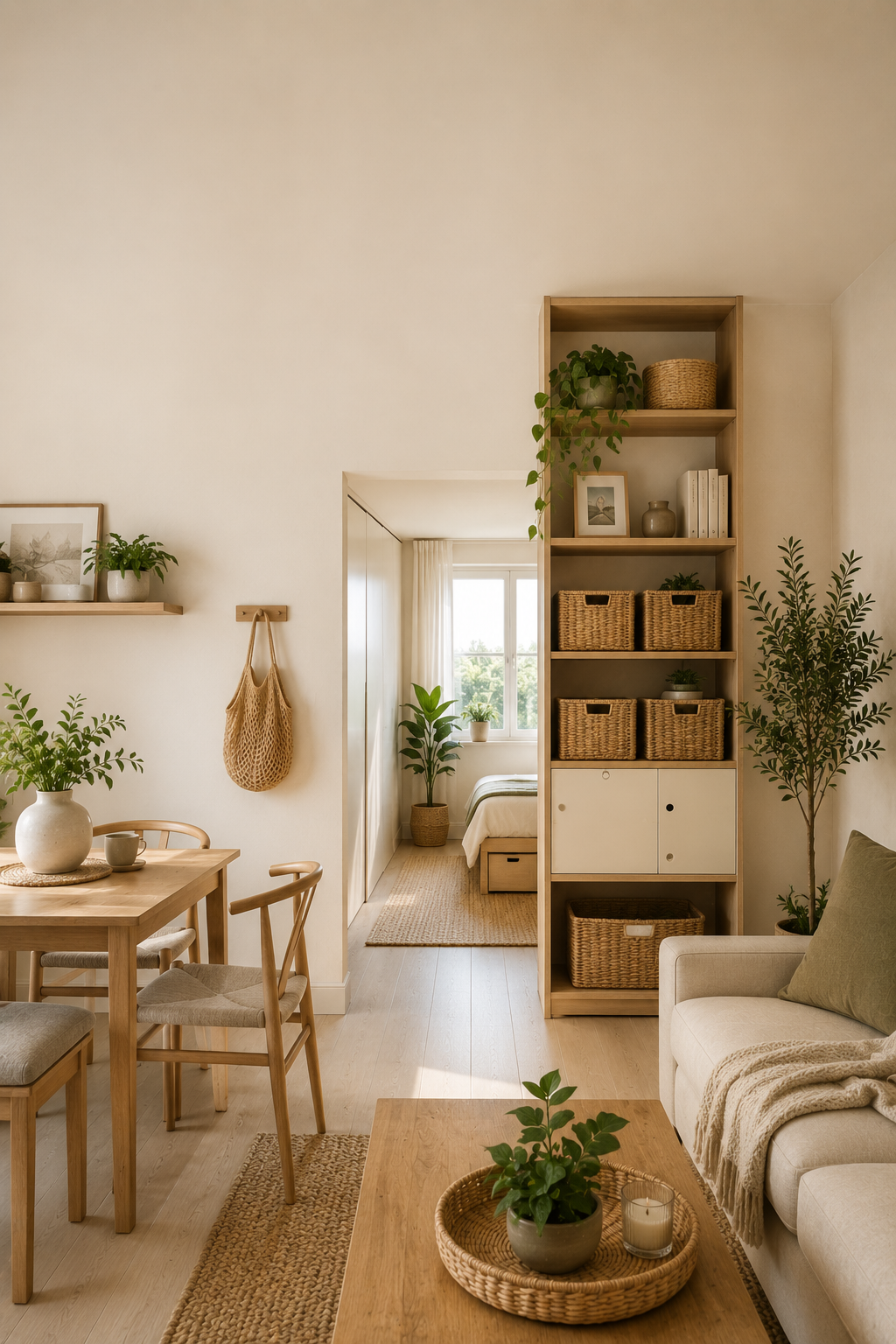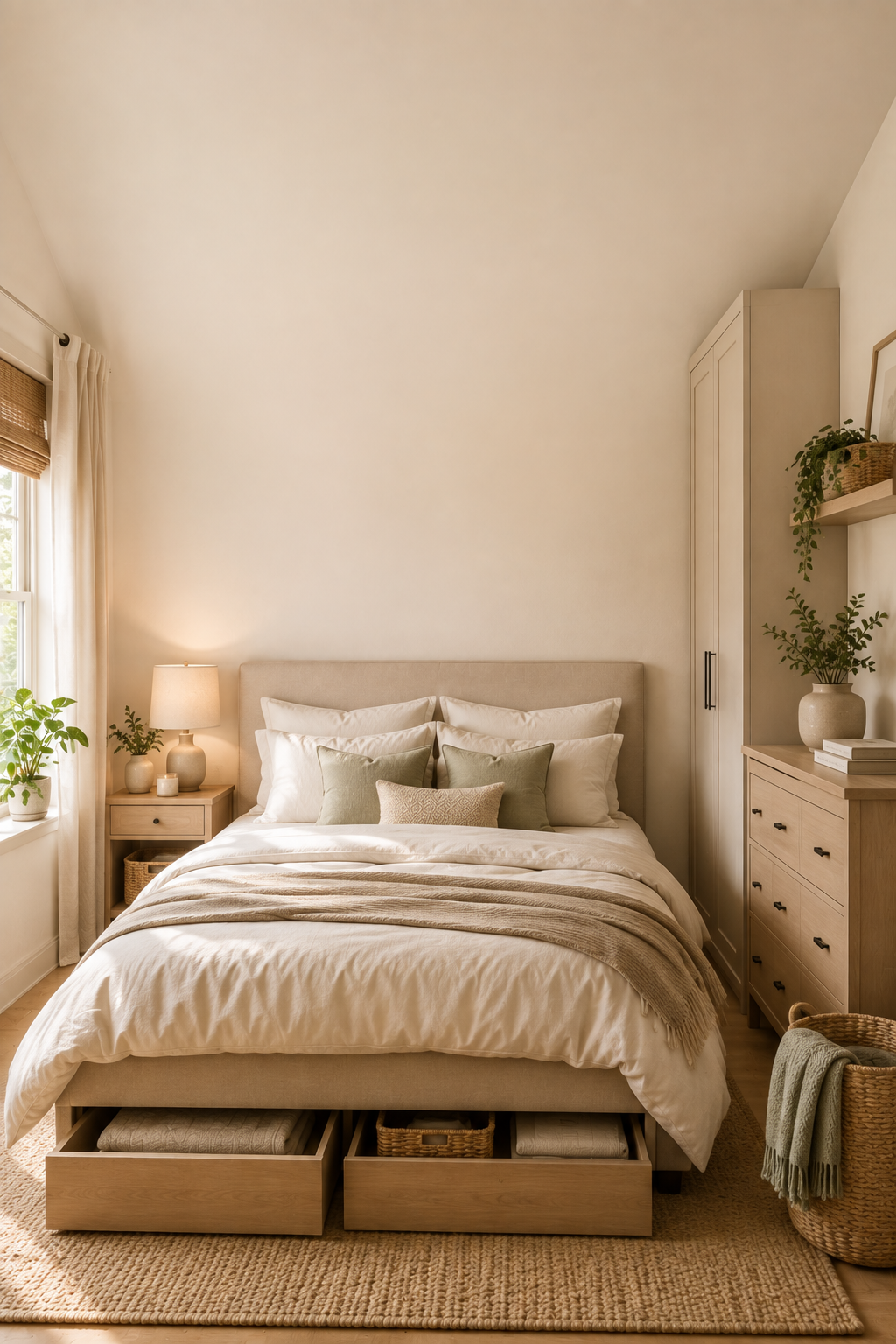
A small bedroom doesn’t have to feel cramped, crowded or difficult to keep tidy.
In fact, a smaller room can feel incredibly comfortable when everything has a purpose and the layout allows the space to breathe.
The challenge is that every decision matters more in a small bedroom.
A large piece of furniture can quickly make the room feel crowded. Too many decorative objects can create visual noise. Poor lighting can make the space feel smaller, while inefficient storage can leave belongings scattered across every available surface.
The solution isn’t necessarily to remove all personality from the room.
Instead, focus on creating a bedroom that feels simple, comfortable and intentional.
From choosing the right furniture to making better use of natural light, here are nine ideas that can help turn a small bedroom into a calmer space.
1. Keep the Main Furniture Proportional to the Room
One of the easiest ways to make a small bedroom feel crowded is to fill it with furniture that’s too large for the available space.
A bedroom needs a bed, but the bed shouldn’t necessarily take up almost the entire room.
When choosing furniture, consider:
- The width of the bed
- Wardrobe depth
- Bedside table size
- Walking clearance
- Door and drawer opening space
The goal isn’t simply to fit everything into the room.
It’s to leave enough clear floor space to move comfortably.
Think about the entire footprint
A wardrobe may technically fit beside your bed, but what happens when you open the wardrobe doors?
A bedside table may fit between the bed and wall, but can you still walk past it comfortably?
Think about how furniture will actually be used rather than measuring only whether it technically fits.
2. Give the Bed a Clear Visual Position
The bed is usually the largest object in a bedroom, so it naturally becomes the visual focal point.
Instead of placing it wherever there happens to be space, consider how its position affects the entire room.
Where possible, position the bed so that:
- The walking route remains clear
- Doors can open properly
- Windows aren’t unnecessarily blocked
- Bedside areas remain usable
- The room feels balanced
A clear and intentional bed position can make even a small room feel more organized.
Don’t force symmetry
A small bedroom may not allow identical bedside tables on both sides.
That’s okay.
A narrow shelf on one side and a compact drawer unit on the other can still create a balanced and functional arrangement.
3. Use a Calm, Restrained Color Palette
Color can have a significant effect on how a small bedroom feels.
You don’t have to use an entirely white room.
Soft neutrals, warm whites, muted greens, gentle beige tones and other understated colors can create a peaceful atmosphere without making the room feel visually busy.
The key is consistency.
Instead of introducing many unrelated colors, choose a small group of tones that work together.
For example:
A cohesive palette
Warm white + natural wood + soft beige + muted green
This combination can create warmth while keeping the overall appearance cohesive.
Add contrast carefully
A few darker or richer accents can add depth.
The idea isn’t to eliminate contrast.
It’s to avoid having too many competing visual elements in a limited space.
4. Let Natural Light Do Some of the Work
Natural light can make a small bedroom feel more open and inviting.
If your room has a window, avoid unnecessarily blocking it with bulky furniture.
Use curtains that allow you to control privacy while still allowing daylight into the room when appropriate.
Light-colored or semi-sheer window treatments can help maintain a bright appearance.
Keep the window area relatively clear
You don’t need to decorate every inch around the window.
A small plant, simple lamp or minimal decorative object can be enough.
The more unobstructed the window feels, the more naturally bright the room can appear.
5. Use Layered Lighting Instead of One Bright Light
A single ceiling light can make a bedroom functional, but it doesn’t necessarily make it feel relaxing.
Layered lighting allows you to create different levels of illumination for different activities.
Consider combining:
- Ambient lighting — General illumination for the room.
- Task lighting — A bedside lamp or reading light for specific activities.
- Accent lighting — Subtle lighting that highlights shelving or architectural features.
This gives you more control over the atmosphere.
Warm lighting can help create a relaxing feel
For a bedroom intended for winding down, warmer-toned lighting is often more comfortable than harsh, cool illumination.
You can also use dimmable fixtures where appropriate to adjust the atmosphere throughout the evening.
6. Keep Surfaces Intentionally Uncluttered
A small room has limited visual space.
When every surface becomes a storage area, the bedroom can quickly feel chaotic.
Try to give important surfaces a specific purpose.
For example, your bedside table might only need:
- A lamp
- Your current book
- Your phone
- One small decorative item
Everything else can have a designated storage location.
Don’t confuse empty space with wasted space
A clear bedside table isn’t wasted space.
A mostly empty dresser isn’t wasted space.
Clear surfaces can make the room feel calmer and easier to maintain.
Vertical space, used without being filled
08
7. Choose Furniture That Provides More Than One Function
Multifunctional furniture is particularly valuable in smaller bedrooms.
Instead of adding another piece of furniture every time you need storage, look for pieces that combine functions.
Examples include:
- Storage beds
- Bedside tables with drawers
- Storage benches
- Ottomans
- Dressing tables with drawers
- Mirrors with concealed storage
This can reduce the total number of furniture pieces in the room.
And fewer bulky pieces can create more breathing room.
Prioritize the functions you actually need
Don’t buy multifunctional furniture simply because it sounds clever.
If you don’t need the additional function, you’re potentially paying for something that takes up unnecessary space.
Choose based on your actual routine.
8. Use Vertical Space Without Overloading It
When floor space is limited, walls can become useful.
Wall-mounted shelves, hooks and other appropriate storage solutions can provide additional functionality without requiring another floor-standing cabinet.
Vertical storage can be particularly useful for:
- Books
- Small baskets
- Accessories
- Bags
- Decorative objects
However, there’s an important distinction between using vertical space and covering every wall with storage.
Leave some wall area clear.
That visual breathing room can be just as valuable as physical storage.
9. Make the Bedroom Easy to Reset
Perhaps the most important idea is to create a room that’s easy to maintain.
A beautiful bedroom that takes 30 minutes to tidy every morning isn’t necessarily practical.
Instead, create simple systems.
For example:
- Clothes → wardrobe or laundry basket
- Shoes → shoe storage
- Books → bedside shelf
- Chargers → drawer
- Extra blankets → storage basket
- Everyday accessories → designated organizer
When every common item has an obvious home, tidying becomes much easier.
Use the five-minute reset
At the end of the day, spend a few minutes:
- Putting clothes away
- Returning items to their places
- Clearing bedside surfaces
- Straightening the bedding
- Removing anything that doesn’t belong
You don’t need to perform a complete bedroom makeover every evening.
A small daily reset can prevent clutter from accumulating.
How to Make a Small Bedroom Feel Bigger Without Renovating
You don’t necessarily need to knock down walls or change the room itself.
A few design decisions can influence how spacious it feels.
Keep walking paths clear
Furniture should not unnecessarily interrupt the main route through the room.
Use appropriately sized furniture
Oversized pieces can dominate a small space.
Keep colors cohesive
Too many competing colors can create visual busyness.
Use mirrors thoughtfully
A strategically placed mirror can reflect light and create a greater sense of depth.
Keep storage contained
Baskets, drawers and closed storage can help prevent smaller belongings from visually spreading across the room.
Let some areas remain empty
A room doesn’t need to be completely filled to feel finished.
What to Avoid in a Small Bedroom
Sometimes knowing what not to do is just as useful.
Avoid oversized furniture
A huge wardrobe or bulky bedside table can consume valuable floor space.
Avoid too many decorative objects
Every additional object contributes to the room’s visual density.
Avoid blocking natural light
Large furniture directly in front of a window can make a room feel darker.
Avoid storage without a system
Buying storage containers doesn’t automatically create organization.
Avoid filling every corner
Some empty space is necessary for the room to feel comfortable.
Creating a Calm Bedroom on a Budget
You don’t have to replace everything.
Start with the changes that cost little or nothing.
1.First, declutter
Remove belongings you no longer use.
2.Second, rearrange
Experiment with furniture placement before buying anything.
3.Third, clear surfaces
Reduce the number of objects sitting on dressers and bedside tables.
4.Fourth, improve lighting
A well-positioned bedside lamp can make a noticeable difference.
5.Fifth, organize what remains
Use the storage you already have more effectively.
Only after these steps should you decide whether you actually need new furniture or storage products.
A Simple Small-Bedroom Formula
If you’re unsure where to start, think of your room in five layers:
1.Function
What does the bedroom need to do?
2.Furniture
What pieces are genuinely necessary?
3.Storage
Where does everything belong?
4.Lighting
How will the room feel during the day and evening?
5.Decoration
What can you add without creating unnecessary visual clutter?
This order matters.
Function first. Decoration last.
That helps prevent you from buying beautiful pieces that ultimately make the room less practical.
Final Thoughts
A calm bedroom isn’t created simply by buying expensive furniture or copying a perfectly styled room online.
It’s created through thoughtful decisions.
Choose furniture that fits.
Keep important surfaces clear.
Use storage intelligently.
Let natural light in.
Layer your lighting.
And make everyday belongings easy to put away.
A small bedroom can still feel warm, stylish and comfortable when the space is designed around the way you actually live.
Smart Space Finds takeaway
You don’t need a bigger bedroom to create a calmer bedroom. You need a better relationship between the space, the furniture and the things you keep in it.
Start small. Clear what you don’t need, improve the layout, then add only the pieces that genuinely make the room work better.
For more ideas in the same spirit, explore the bedroom section, or keep going with our guide to 10 genius small-space storage ideas and the home décor and small spaces sections.