Smart-home technology does not have to mean turning your entire house into a complicated system.
The best smart-home devices are often the simplest ones—products that solve a specific everyday problem and quietly make your routine easier.
From lighting and climate control to security and convenience, here are eight categories of smart-home gadgets worth considering.
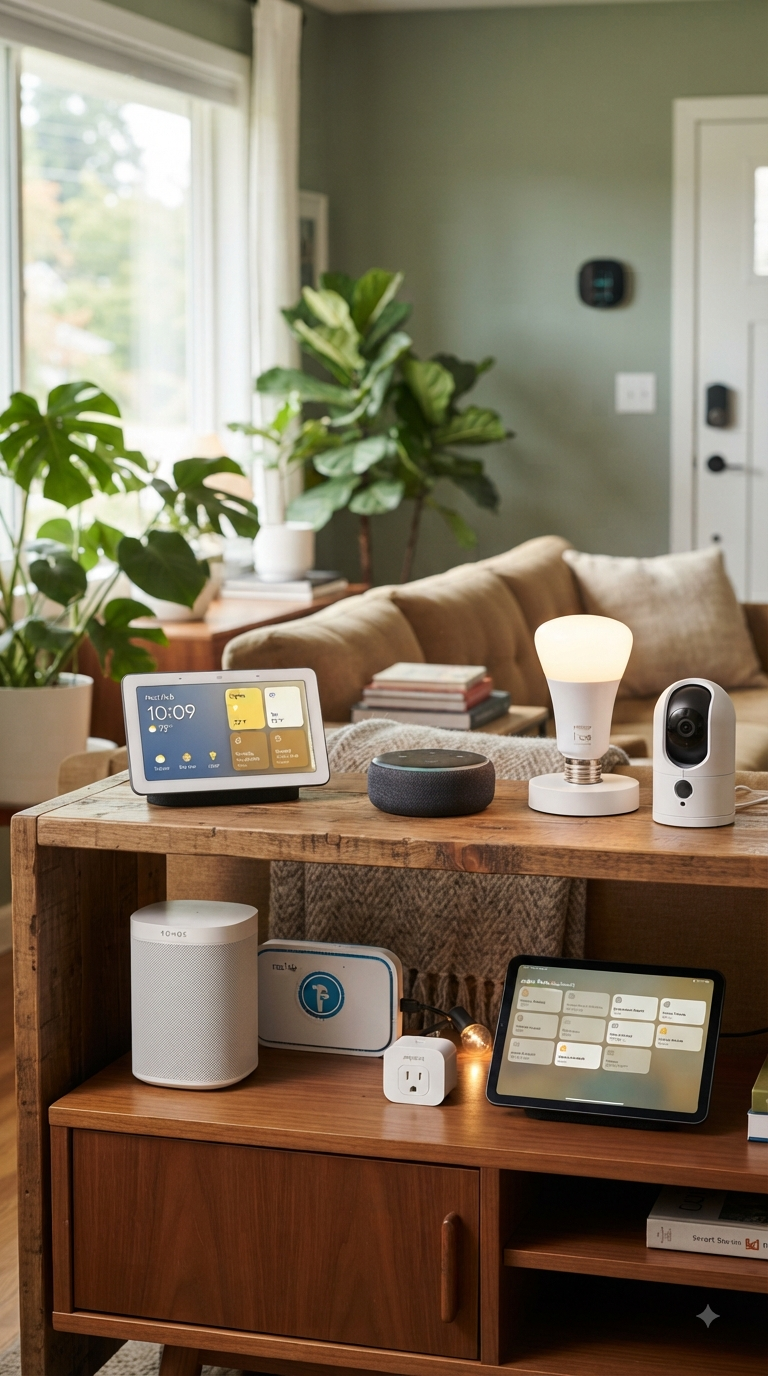
01. Smart Light Bulbs
Smart bulbs can give you more control over your home's lighting.
Depending on the model, you may be able to control brightness, create schedules, or adjust the lighting from your phone or through a compatible voice assistant.
They're particularly useful in bedrooms, living rooms, and other areas where you regularly change the atmosphere.
02. Smart Plugs
A smart plug can add basic automation to an existing appliance.
For example, you might use one to schedule a lamp or turn a compatible device on or off remotely.
The important thing is to check the manufacturer's compatibility and safety requirements before connecting an appliance. Do not use a smart plug with a device that the manufacturer says should not be remotely switched or with a load that exceeds the plug's rating.
03. Smart Speakers
Smart speakers can provide hands-free access to music, timers, reminders, and compatible smart-home controls.
They can be particularly useful in kitchens and living areas where you may want to interact with a device without reaching for your phone.
Before setting one up, review its microphone controls, voice-history settings, and the permissions granted to connected services.
04. Smart Doorbells
A smart doorbell can provide notifications when someone approaches your door and, depending on the model, may offer video or two-way communication.
When considering one, pay attention to privacy settings, video storage, local recording options, and whether a subscription is required for certain features. Check local rules and be considerate of neighbors when positioning a camera.
05. Smart Cameras
Indoor and outdoor smart cameras can provide an additional way to check what's happening around your home.
Features vary significantly between products, so consider image quality, storage options, privacy controls, security updates, and whether the camera requires a monthly subscription.
Use strong, unique account credentials and enable multi-factor authentication when the manufacturer offers it. Place cameras thoughtfully, especially indoors, and avoid recording private spaces or areas that do not belong to you.
06. Smart Thermostats or Temperature Controls
Where supported by your home's heating system, smart temperature controls can make it easier to manage heating schedules and monitor your home's temperature.
Compatibility is particularly important here, so always check whether a device works with your existing heating system before purchasing. If installation involves wiring or you are unsure about the system, use the manufacturer's guidance or a qualified professional.
07. Smart Motion Sensors
Motion sensors can trigger useful automations.
For example, compatible systems can turn lights on when movement is detected or send an alert when activity occurs in a monitored area.
They can be useful for convenience as well as certain home-automation routines. Place them where they can detect the movement that matters without creating unnecessary alerts from pets, windows, or busy walkways.
08. Smart Sensors for Everyday Awareness
There are smart sensors designed to monitor things such as doors, windows, temperature, or water leaks.
These devices can be useful because they provide information about something you might otherwise overlook. A water-leak sensor near a washing machine, sink, or water heater can provide an early alert, but it should support—not replace—regular maintenance and appropriate safety equipment.
The best sensor is the one that addresses a real problem in your home.
What Should You Look For in a Smart-Home Gadget?
Before buying any smart-home device, consider:
- Compatibility: Does it work with your existing ecosystem, network, and hardware?
- Privacy: What information does the device collect, and where is it stored?
- Security: Does the manufacturer provide software updates, account protections, and a way to change default credentials?
- Subscriptions: Are important features locked behind a monthly fee?
- Reliability: Does it continue to offer useful controls if the internet connection is interrupted?
- Real usefulness: Does it solve an actual problem?
Final Thoughts
A smarter home is not necessarily a home filled with technology.
It's a home where technology is used intentionally.
Start with one routine that could genuinely be easier, choose a device that solves that problem, and build from there. Keep device software updated, use strong account security, and revisit permissions when you add a new integration.
For more ideas in the same spirit, explore the smart home section, keep going with our guide to 10 genius small-space storage ideas, or browse the kitchen and small spaces sections.