Fresh herbs can make a small kitchen feel more useful without asking it to hold a full garden. A few basil leaves for pasta, mint for tea, or parsley for a weeknight meal are easier to reach when they are growing close to where you cook. For apartment dwellers and anyone with limited outdoor space, an indoor herb garden can also turn an overlooked ledge or compact counter corner into a productive part of the room.
Affiliate disclosure: Smart Space Finds may earn a commission when you purchase through qualifying affiliate links. This does not affect the price you pay, and we only include products that are relevant to the article. We have not personally tested or reviewed the product mentioned below.
The best setup is the one that matches your available light, counter space, and willingness to maintain it. Here are seven practical approaches to consider.
1. Start with a Sunny Windowsill
A windowsill is the simplest place to begin growing herbs indoors because it uses space that already exists. Look for a bright location near the kitchen sink or prep area, then choose a few compact pots rather than trying to fill the entire ledge.
Basil, parsley, chives, mint, and thyme can all be useful choices, but the right herbs depend on the light and temperature in your home. Keep pots clear of cold drafts, direct contact with a hot radiator, and a window that becomes excessively warm. A saucer under each pot helps protect the sill from water marks.
Before buying anything, watch the area for a day. Notice when the sunlight arrives, whether nearby cabinets cast shade, and whether the window is convenient enough that you will remember to check the plants.
2. Choose a Compact Countertop Herb Garden
When the windowsill is too narrow or shaded, a countertop herb garden can make better use of a small section beside the coffee maker, prep area, or sink. The key is to protect your actual work surface: reserve one defined zone, leave room to chop and set down hot cookware, and keep the setup away from splashes and stovetop heat.
Use a tray to visually contain pots, pruning scissors, plant labels, and a small watering vessel. That makes the garden easier to move when you need the counter and prevents small gardening items from becoming another form of kitchen clutter. For more ideas on keeping a compact kitchen functional, see 10 clever kitchen storage ideas.
3. Grow Up with a Vertical Herb Setup
Vertical growing is useful when floor and counter space are limited but a wall, narrow shelf, or sturdy freestanding frame is available. A slim tiered stand can hold several small pots while keeping the footprint modest, and a wall-mounted arrangement can make use of an otherwise empty vertical surface.
Measure before choosing a setup. Check the width of the available area, the depth of the pots, the height needed for the herbs to grow, and the clearance around cabinets and doors. Use hardware and containers appropriate for the wall or shelf, and keep water from dripping onto outlets, appliances, or food-preparation surfaces.
The most successful vertical herb gardens are easy to reach. If watering requires a step stool or moving several objects first, the arrangement may look efficient while becoming difficult to maintain.
4. Create a Small Kitchen Herb Station
A small kitchen herb garden works best when it has a clear home. Instead of scattering pots across the room, pair the plants with a narrow shelf, rolling cart, or a dedicated corner near—but not directly beside—the cooking area.
Keep the station practical:
- Place the herbs where you can see them during everyday cooking.
- Leave enough space to turn or remove each pot without disturbing the others.
- Keep a small pair of clean scissors nearby for harvesting.
- Use a tray or waterproof mat to catch drips.
- Label herbs if several varieties look similar.
This kind of station can feel intentional rather than improvised, especially when its container, tray, and nearby storage share a simple visual language. It is also easier to reset after watering or cleaning.
5. Consider a Smart Indoor Growing System
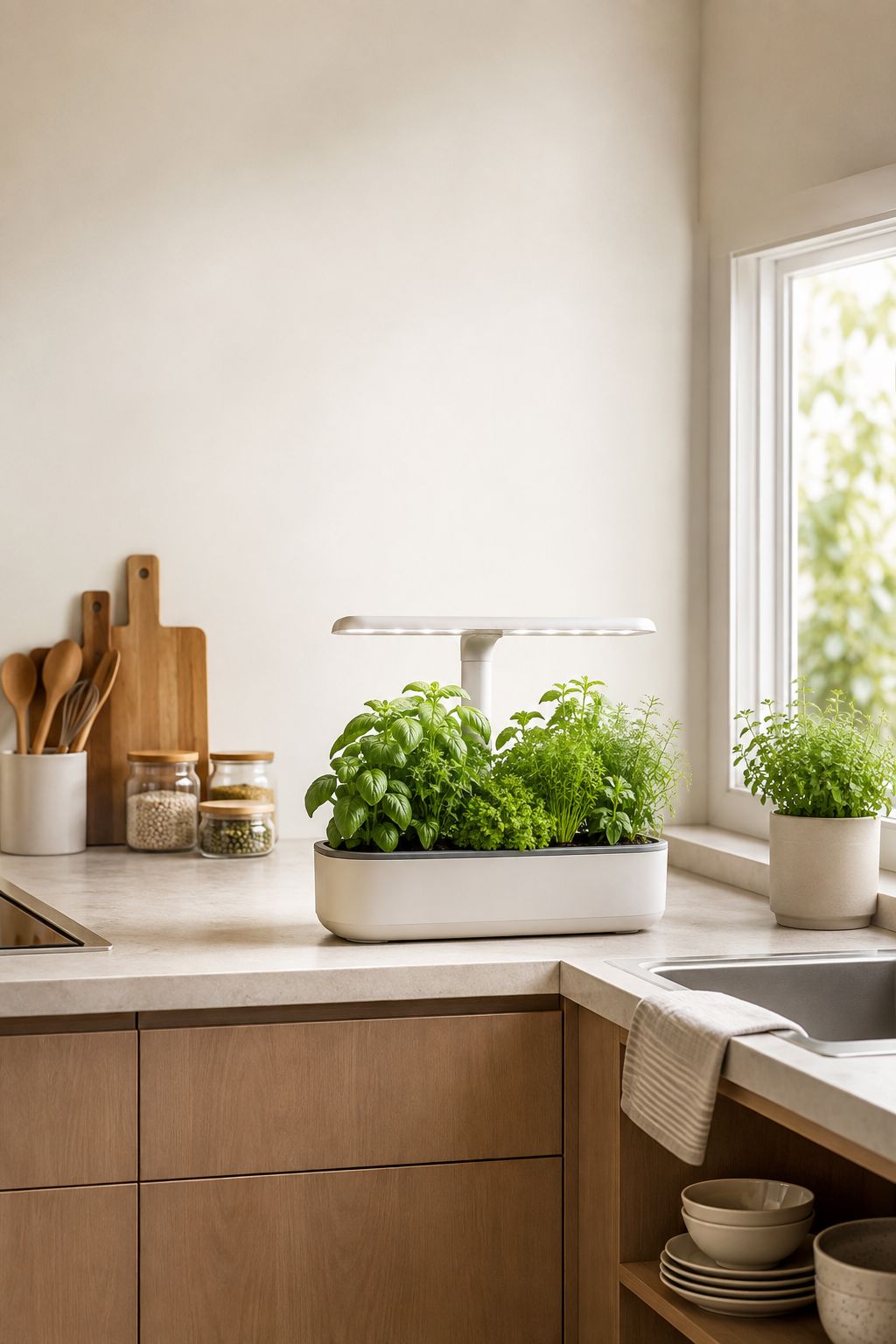
A smart indoor garden may suit someone who wants fresh herbs at home but does not want to manage a traditional garden. These compact systems can be an option when natural light is inconsistent, the kitchen has no suitable windowsill, or a reader prefers a more contained setup with fewer separate pots to arrange.
The tradeoff is that a smart growing system still needs an appropriate location and an ongoing routine. It should not block a walkway, crowd the cooking surface, or sit where steam and splashes are constant. Review the current product information, care requirements, dimensions, and included materials before choosing any system for your kitchen.
A Compact Recommendation: Click & Grow Smart Garden 3
The Click & Grow Smart Garden 3 is one compact option to explore if you want an indoor herb garden with a more contained format than individual pots. It may be worth considering for an apartment kitchen, small home, or busy household that wants to keep growing herbs indoors without building a larger garden setup.
This is a recommendation to investigate, not a personal review. Smart Space Finds has not tested or verified the product. Read the current details from the retailer before making a purchase, and compare the system with a simple windowsill or countertop arrangement based on your available space, light, and routine.
6. Combine Herbs with Kitchen Organization
An indoor herb garden does not have to compete with the rest of the kitchen. Treat it as part of the room’s organization by grouping the plants near the tools and ingredients you use with them, while still leaving safe clearance from heat, water, and food-preparation mess.
A narrow shelf can hold herbs above a small tray of everyday seasonings. A cart can pair plants with tea supplies or breakfast items. A clear counter zone can keep a few frequently used herbs accessible while less-used pots move to a brighter nearby location.
The goal is a useful relationship between the garden and the kitchen—not a crowded display. If adding herbs makes your main prep area harder to use, reduce the number of plants or move the setup to a shelf, windowsill, or separate stand.
7. Build a Low-Maintenance Indoor Herb Routine
Even the most convenient indoor herb garden needs simple, repeatable care. Tie the routine to something you already do, such as making coffee, wiping the counters, or planning the week’s meals.
Once or twice a week, check the growing medium and follow the care guidance for the specific herb or system. Remove yellowing leaves, harvest lightly and regularly, rotate pots if the light is uneven, and clean up any spilled water. Avoid watering by habit alone: too much moisture can be as unhelpful as too little, so check the plant and its container first.
Start with two or three herbs you genuinely use. A smaller garden that stays healthy and easy to reach is more valuable than a larger collection that becomes another chore. As your routine settles in, you can add varieties that fit the same light and care conditions.
Find the Right Indoor Herb Garden for Your Space
Growing herbs indoors is less about creating a perfect miniature farm and more about making fresh ingredients easy to reach. A windowsill may be enough for one home, while a countertop garden, vertical setup, or smart indoor garden may better fit another.
Measure the space, observe the available light, and choose a level of maintenance you can sustain. For more small-home ideas, continue with 7 space-saving ideas for small apartments, or explore Kitchen Finds and Smart Home.