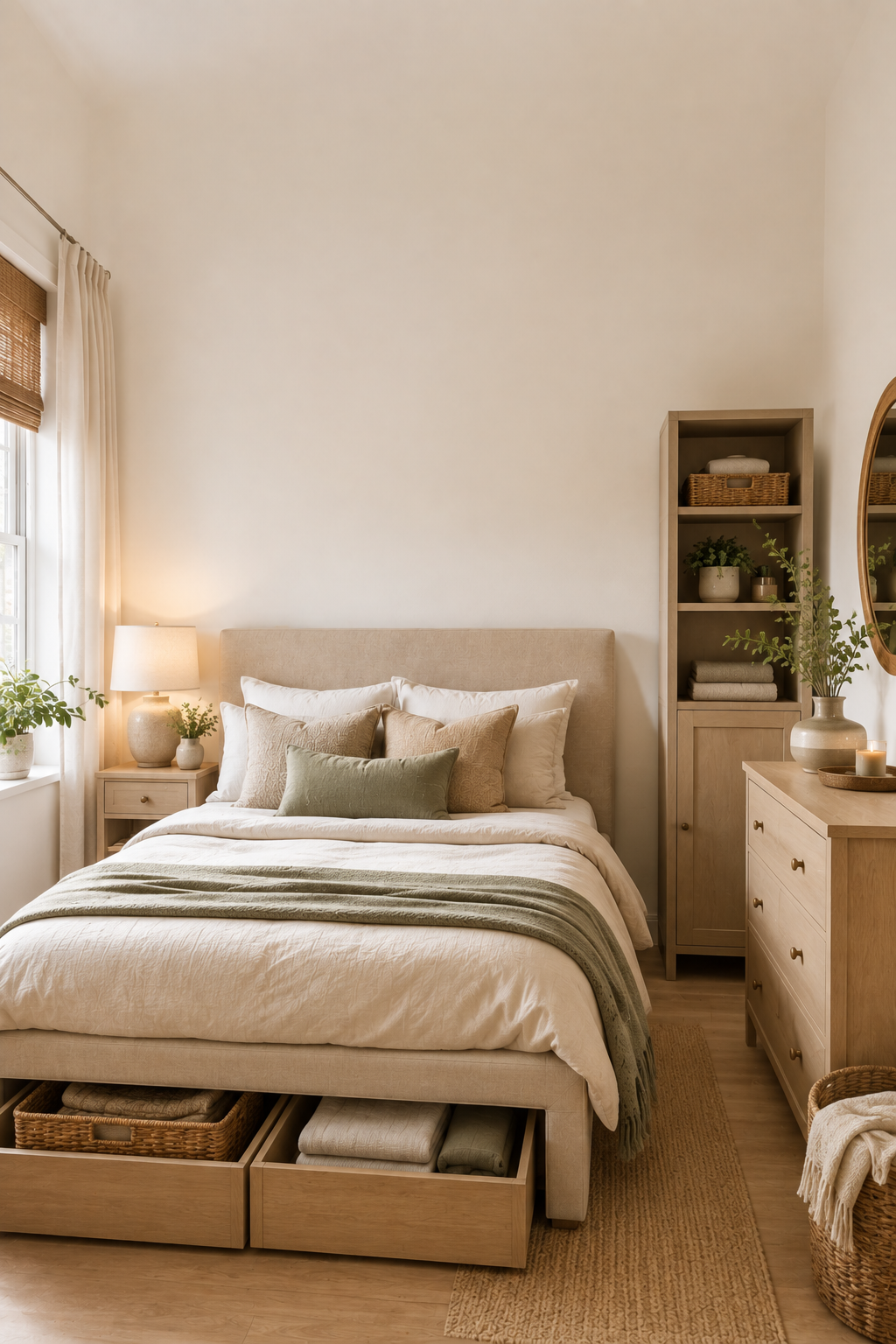
A bedroom should be more than a place to sleep.
It should feel like a space where you can slow down at the end of the day, relax on a quiet morning and enjoy a little time away from everything else.
But comfort isn’t always about buying expensive furniture or completely redesigning the room.
Sometimes, a few carefully chosen additions can make a surprisingly noticeable difference.
A softer throw can make the bed feel more inviting. The right bedside lighting can make evenings feel calmer. A comfortable rug can make the room warmer underfoot, while better curtains can change the atmosphere and sense of privacy.
The best bedroom finds combine comfort, function and everyday practicality.
Here are 10 worth considering if you’re trying to make your bedroom feel more comfortable without completely starting over.
1. Soft, Breathable Bedding
Your bed is the centre of the bedroom, so bedding is one of the first places to consider when improving comfort.
Look for bedding that feels pleasant against your skin and suits the temperature of your room.
Depending on your preferences and climate, breathable natural or blended fabrics can be useful for creating a comfortable sleeping environment.
Consider the complete bedding setup:
- Sheets
- Duvet or comforter
- Pillowcases
- Blanket
- Mattress protector
You don’t necessarily need the most expensive bedding.
The important thing is finding materials and weights that feel comfortable to you.
Keep the bed inviting
Layering a duvet with a lightweight throw or blanket can make the bed look and feel more welcoming.
It also gives you another layer when the temperature drops.
2. Supportive Pillows
Pillows can make a major difference to how comfortable your bed feels.
The right pillow depends on factors such as your preferred sleeping position, body shape and personal comfort preferences.
Some people prefer a firmer pillow, while others prefer something softer.
Instead of buying pillows simply because they look attractive, think about how they actually feel when you’re using them.
Decorative pillows have a different job
Decorative cushions can add color and texture to the bed, but they don’t necessarily provide the support you need while sleeping.
A comfortable arrangement might combine functional sleeping pillows with a small number of decorative cushions.
That gives you both comfort and visual interest without covering the entire bed.
3. A Soft Bedroom Rug
There’s something particularly pleasant about stepping out of bed onto a soft surface rather than directly onto a cold floor.
A bedroom rug can add:
- Warmth
- Texture
- Visual softness
- Acoustic comfort
- A more finished appearance
You don’t necessarily need a huge rug.
A suitably sized rug positioned around the bed can create a softer landing area.
Consider the placement carefully
The rug should work with the size and layout of the bedroom.
A rug that’s too small can look disconnected from the bed, while one that’s too large may interfere with doors or furniture.
Measure before buying.
4. Warm, Layered Bedroom Lighting
Lighting has a huge influence on the atmosphere of a bedroom.
Bright overhead lighting can be useful when you’re cleaning, getting dressed or looking for something.
But it isn’t always the most relaxing option at night.
Adding softer sources of light can create a warmer atmosphere.
Consider:
- Bedside lamps
- Floor lamps
- Wall lights
- Dimmable fixtures
- Subtle accent lighting
Create different lighting levels
Rather than relying on one light source, think about creating layers.
Bright light → practical activities
Moderate light → getting ready or reading
Soft light → relaxing before bed
This makes the bedroom more adaptable throughout the day.
5. Blackout or Light-Filtering Curtains
Window treatments can influence both comfort and atmosphere.
Depending on your needs, blackout curtains can help reduce unwanted light when you’re trying to sleep.
Light-filtering curtains can provide privacy while still allowing natural daylight into the room.
The right choice depends on:
- How much sunlight enters the room
- Your sleep schedule
- Privacy requirements
- Climate
- Your preferred aesthetic
Consider layering
Combining a light curtain with a heavier outer curtain can give you more flexibility.
You can allow natural light in during the day and create a darker, more private environment when needed.
6. A Comfortable Throw Blanket
A throw blanket is one of the easiest ways to make a bedroom feel more inviting.
Drape one over the end of the bed or keep it within easy reach.
It can be useful when:
- Reading in bed
- Relaxing in the evening
- The room gets cooler
- You want an additional layer without changing the bedding
It also adds texture.
A knitted, woven or softly textured throw can make a neutral bedroom feel warmer without requiring major decorative changes.
Choose practicality over decoration
A beautiful throw that feels unpleasant against your skin isn’t a particularly useful comfort upgrade.
Look for something you actually enjoy using.
A place to sit, a little more light
09
7. A Small Bedside Lamp
A bedside lamp is both practical and atmospheric.
It gives you a convenient source of light without requiring you to turn on the main bedroom light.
This is especially useful when:
- Reading before bed
- Getting up during the night
- Waking early
- Relaxing in the evening
A lamp with a soft shade can create a gentler glow than a bright overhead fixture.
Consider the lamp’s size
A huge lamp can overwhelm a small bedside table.
Choose a size that leaves enough room for the other things you genuinely need nearby.
8. A Full-Length Mirror
A full-length mirror can make getting dressed easier while also adding functionality to the room.
In a smaller bedroom, a mirror can also help reflect available light and contribute to a greater sense of openness.
It doesn’t need to be elaborate.
A simple framed mirror that works with the room’s existing style can be enough.
Placement matters
Avoid positioning it where it creates an awkward reflection or interferes with movement.
If possible, consider placing it where it can make useful use of existing natural or artificial light.
9. A Comfortable Bedroom Bench or Ottoman
A small bench or ottoman at the foot of the bed can provide an additional place to sit.
It can be useful when:
- Putting on shoes
- Folding clothes
- Reading
- Getting ready
A storage version can provide an additional benefit by giving you somewhere to keep suitable blankets, pillows or other bedroom items.
This makes it particularly useful for rooms where you want furniture to serve more than one purpose.
Don’t force one into the room
If your bedroom is very small, leaving the area at the end of the bed open may actually make the room feel more comfortable.
Comfort includes having enough space to move around.
10. A Simple Bedroom Scent Solution
Scent can contribute to how a room feels, although this is highly personal.
Some people enjoy a lightly scented bedroom through options such as:
- Reed diffusers
- Scented sachets
- Candles used appropriately
- Other suitable home fragrance products
Choose something subtle rather than overwhelming.
The goal is to create an environment you enjoy returning to—not a room filled with a strong fragrance.
Keep safety in mind
If you use candles or other flame-based products, never leave them unattended and follow the manufacturer’s safety instructions.
For many bedrooms, a non-flame option can be a simpler choice.
How to Make Your Bedroom Feel More Comfortable Without Spending a Lot
You don’t have to buy all ten things.
Start with what your bedroom is currently missing.
If the floor feels cold:
Try a rug.
If the bed doesn’t feel inviting:
Look at your bedding and pillows.
If evenings feel harsh:
Improve the lighting.
If unwanted daylight affects your sleep:
Consider appropriate curtains or blinds.
If the room feels visually cold:
Add texture through a throw, rug or cushions.
The goal is to solve the actual problem rather than simply adding more objects.
Comfort Is About More Than Appearance
A bedroom can look beautiful in photographs while being uncomfortable to live in.
That’s why it’s important to think beyond aesthetics.
Ask yourself:
- Is the bed comfortable?
- Is there enough space to move around?
- Can I easily reach what I need?
- Is the lighting comfortable at night?
- Does the room feel too hot or too cold?
- Do the curtains provide the privacy and light control I need?
- Is there somewhere comfortable to sit?
These practical questions can tell you much more about what your bedroom needs than simply following a trend.
Use Texture to Make a Bedroom Feel Warmer
One of the easiest ways to make a bedroom feel more comfortable is to introduce different textures.
For example:
A textured mix
Smooth bedding + knitted throw + woven rug + natural wood + soft curtains
The combination creates visual depth without requiring lots of decoration.
You can keep the color palette simple while allowing texture to provide interest.
This works particularly well for neutral bedrooms.
Don’t Overfill the Bedroom
Comfort requires space.
It can be tempting to keep adding cushions, furniture, baskets and decorative objects until the room feels “finished.”
But eventually, more can become less.
Too many objects can make the bedroom harder to clean and more difficult to move around.
Instead, choose a few pieces that genuinely improve the room.
A comfortable bedroom should feel welcoming rather than crowded.
Create a Comfortable Bedside Routine
Your bedroom becomes much more enjoyable when the things you use regularly are easy to access.
Consider keeping:
- A good reading light
- Your current book
- Charging access
- A glass or bottle of water
- A small tray for personal items
The objective is to make your nighttime routine simple.
You shouldn’t have to get out of bed repeatedly because the things you use every evening are stored somewhere inconvenient.
Think About the Five Senses
If you’re trying to create a more comfortable bedroom, consider the experience as a whole.
Sight
A calm color palette and reduced clutter.
Touch
Soft bedding, rugs and throws.
Sound
Curtains, rugs and upholstered furniture can help soften the room acoustically.
Smell
A subtle fragrance, if you enjoy one.
Temperature
Appropriate bedding, curtains and airflow for your environment.
When these elements work together, the room can feel considerably more comfortable.
A Simple Bedroom Comfort Checklist
Before buying anything new, walk around your bedroom and check:
- Is the bedding comfortable?
- Are the pillows supportive?
- Is the floor comfortable underfoot?
- Is the nighttime lighting soft enough?
- Can I control the amount of light entering the room?
- Do I have somewhere comfortable to sit?
- Is there enough storage for everyday belongings?
- Are the surfaces reasonably clear?
- Does the room feel too crowded?
- Does the room feel like somewhere I actually want to relax?
This helps you identify the areas that need attention before you start shopping.
Final Thoughts
Creating a comfortable bedroom doesn’t require a complete makeover.
Often, it’s the small improvements that make the biggest difference.
A softer bed.
A warmer light.
A rug beneath your feet.
A blanket within reach.
Better curtains.
A supportive pillow.
A place to sit.
A little less clutter.
These changes may seem simple individually, but together they can transform how the room feels and how you experience it every day.
Smart Space Finds takeaway
A comfortable bedroom isn’t about having more things. It’s about choosing the right things for the way you actually live.
Start with the part of your bedroom that feels least comfortable, solve that problem first, and build from there.
For more ideas in the same spirit, explore the bedroom section, or keep going with our guide to 10 genius small-space storage ideas and the home décor and small spaces sections.