Choosing furniture for a small apartment can be surprisingly difficult.
A piece can look beautiful in a showroom or online photograph but feel completely different once it is inside a compact room. Suddenly, the sofa blocks part of the walkway, the dining table takes up too much space, or there is nowhere left to store the things you actually use.
The answer isn’t always to buy smaller furniture.
Sometimes, the smarter solution is to choose furniture that does more.
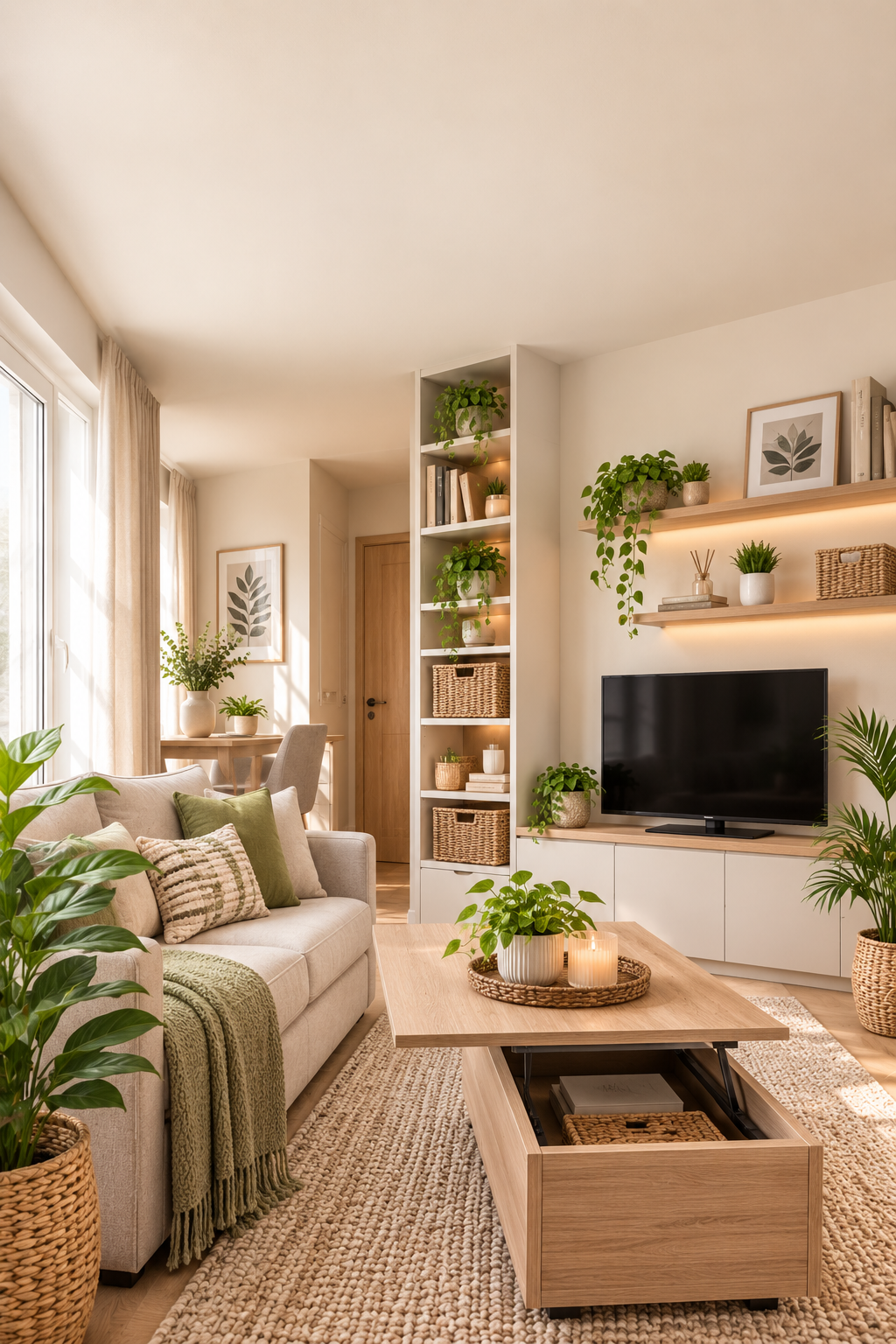
A storage bed can replace a separate chest of drawers. A fold-down desk can create a workspace without permanently taking over the living room. An extendable dining table can stay compact most of the week and expand when guests arrive.
When you’re working with limited square footage, furniture should contribute to the room rather than simply occupy it.
Here are nine space-saving furniture ideas worth considering for a small apartment.
01. Choose a Bed With Built-In Storage
The area underneath your bed is valuable real estate in a small bedroom.
A storage bed allows you to use that otherwise unused space for things such as:
- Spare bedding
- Towels
- Seasonal clothing
- Shoes
- Luggage
- Extra blankets
This can be particularly useful when your bedroom doesn’t have enough wardrobe or cupboard space.
Drawers or lift-up storage?
Both can work, but think about how you’ll access the items.
Drawers are convenient because you can access specific sections without moving anything else. However, they require enough clearance around the bed.
Lift-up storage can provide a large continuous compartment, but you’ll need enough room to raise the mattress mechanism comfortably.
If you plan to store heavy items, also consider how easy they will be to retrieve.
Smart Space Finds tip
Use storage under the bed for items you don’t need every day. Your everyday clothing should remain easier to access.
02. Try a Drop-Leaf or Folding Table
A full-size dining table can take up a surprising amount of space.
If your dining area is also your workspace or part of your living room, a drop-leaf table can give you more flexibility.
Keep it narrow when you’re eating alone or working, then open the additional sections when you need more room.
A folding table can work similarly.
When it isn’t needed, it can potentially be folded away to free up floor space.
Measure the table at both sizes
This is important.
Don’t only measure the table when it is folded.
Measure it fully extended and make sure there is still enough room for:
- Chairs
- People walking around it
- Doors opening
- Other furniture
The table needs to work in real life, not just when it is photographed.
03. Use Nesting Tables Instead of Several Separate Tables
Nesting tables are particularly useful in small living rooms.
Instead of having two or three tables permanently spread across the floor, the smaller tables can slide underneath the larger one when you don’t need them.
When guests arrive, you can separate them and create additional surfaces.
This gives you flexibility without permanently sacrificing floor space.
They’re also useful if you like rearranging your living room because the pieces can be moved around easily.
Keep the design simple
Because nesting tables often sit close together, choosing complementary shapes and materials can make them feel like one intentional furniture arrangement rather than several unrelated pieces.
04. Invest in a Storage Ottoman
A storage ottoman can perform several jobs at once.
It can function as:
- A footrest
- Extra seating
- A coffee-table alternative
- Hidden storage
Inside, you might keep blankets, books, board games, cushions or other living-room items.
This can be especially useful if you don’t have enough cupboard space.
Choose the right size
A large ottoman can become an obstacle in a compact living room.
Before buying, measure the distance between your sofa and other furniture.
You should be able to walk around it comfortably.
If the room is particularly small, consider a smaller storage ottoman that can be moved when necessary.
05. Use a Slim Console Table
A console table can provide useful surface space without requiring the depth of a conventional cabinet.
It can work in:
- Entryways
- Behind sofas
- Narrow hallways
- Living rooms
Use the surface for a lamp, decorative objects, a charging station or a small tray.
If the console has a lower shelf or drawers, it can provide additional storage.
You can also place baskets underneath a simple console.
This creates a surprisingly useful combination of surface + storage without taking up much floor area.
06. Choose an Extendable Dining Table
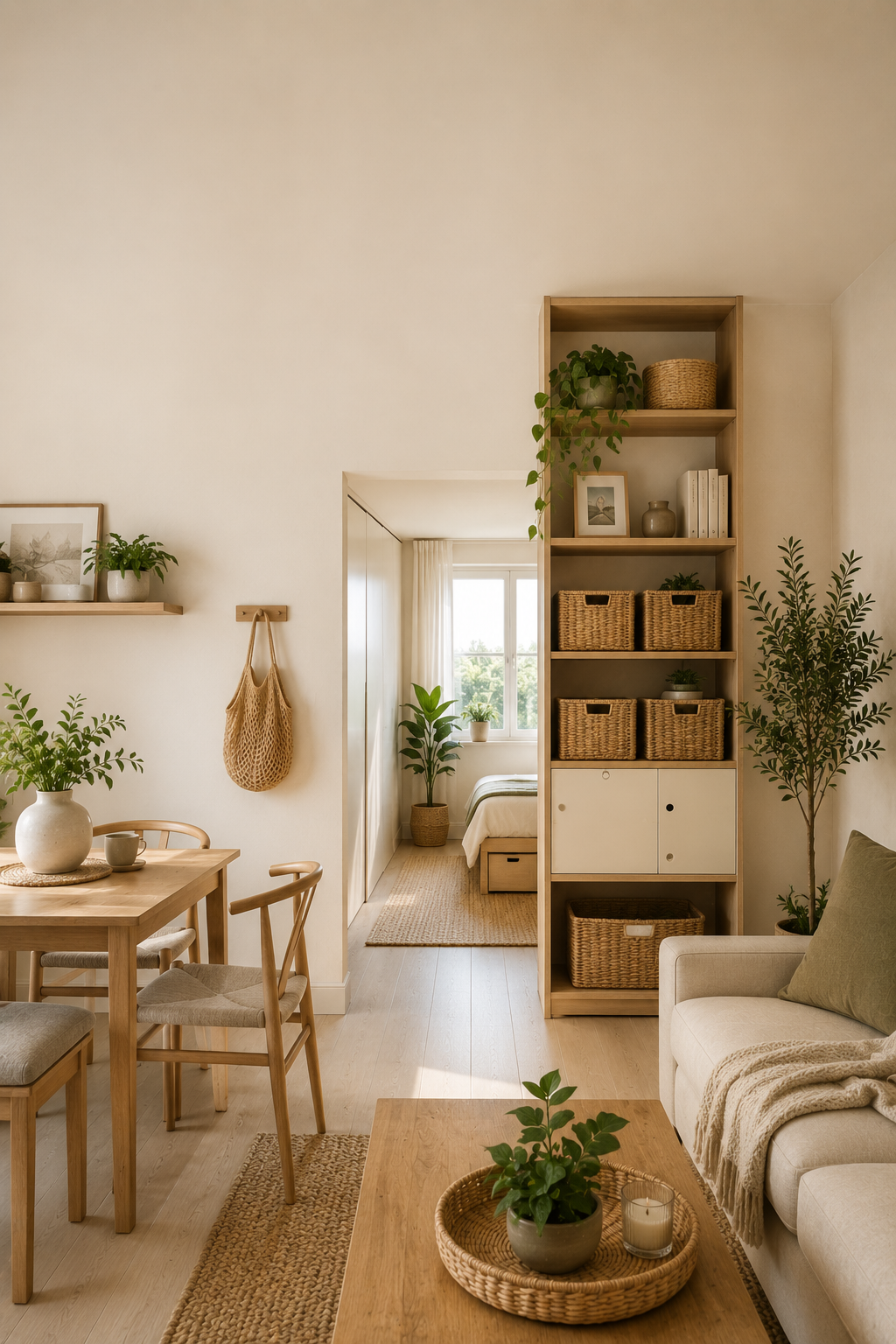
If you occasionally host people but don’t need a large dining table every day, an extendable design can be a smart compromise.
When closed, it can fit comfortably into your everyday dining area.
When guests arrive, you can expand it.
This means you don’t have to dedicate permanent floor space to a table that only reaches its full size occasionally.
Think about chair storage too
An extendable table is only part of the equation.
Where will the additional chairs go?
If possible, choose stackable or easily movable seating that can be stored elsewhere when you’re not entertaining.
The goal is to create a flexible dining area rather than simply a large table.
07. Consider a Wall-Mounted or Fold-Down Desk
Working from home in a small apartment can be difficult when you don’t have a dedicated office.
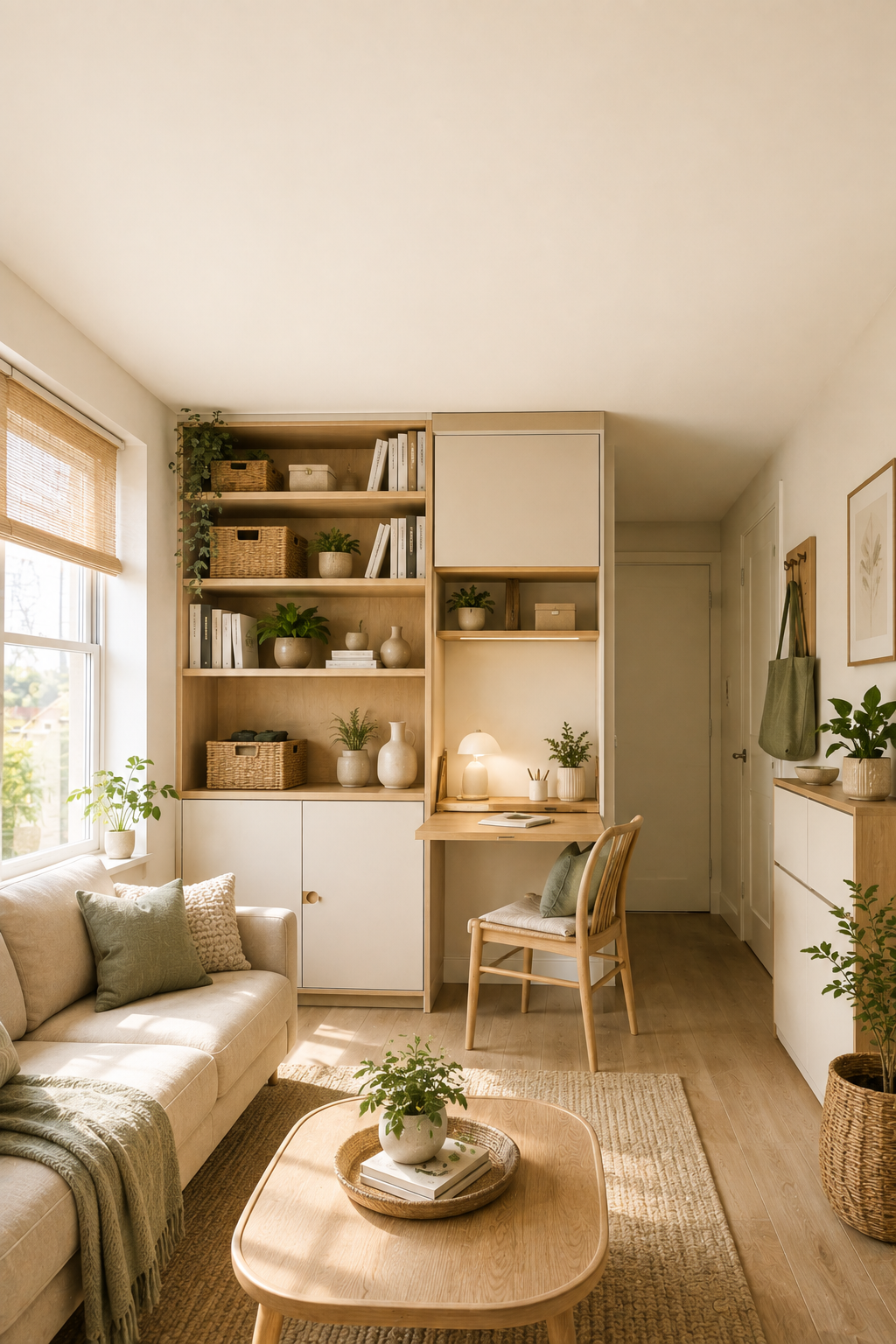
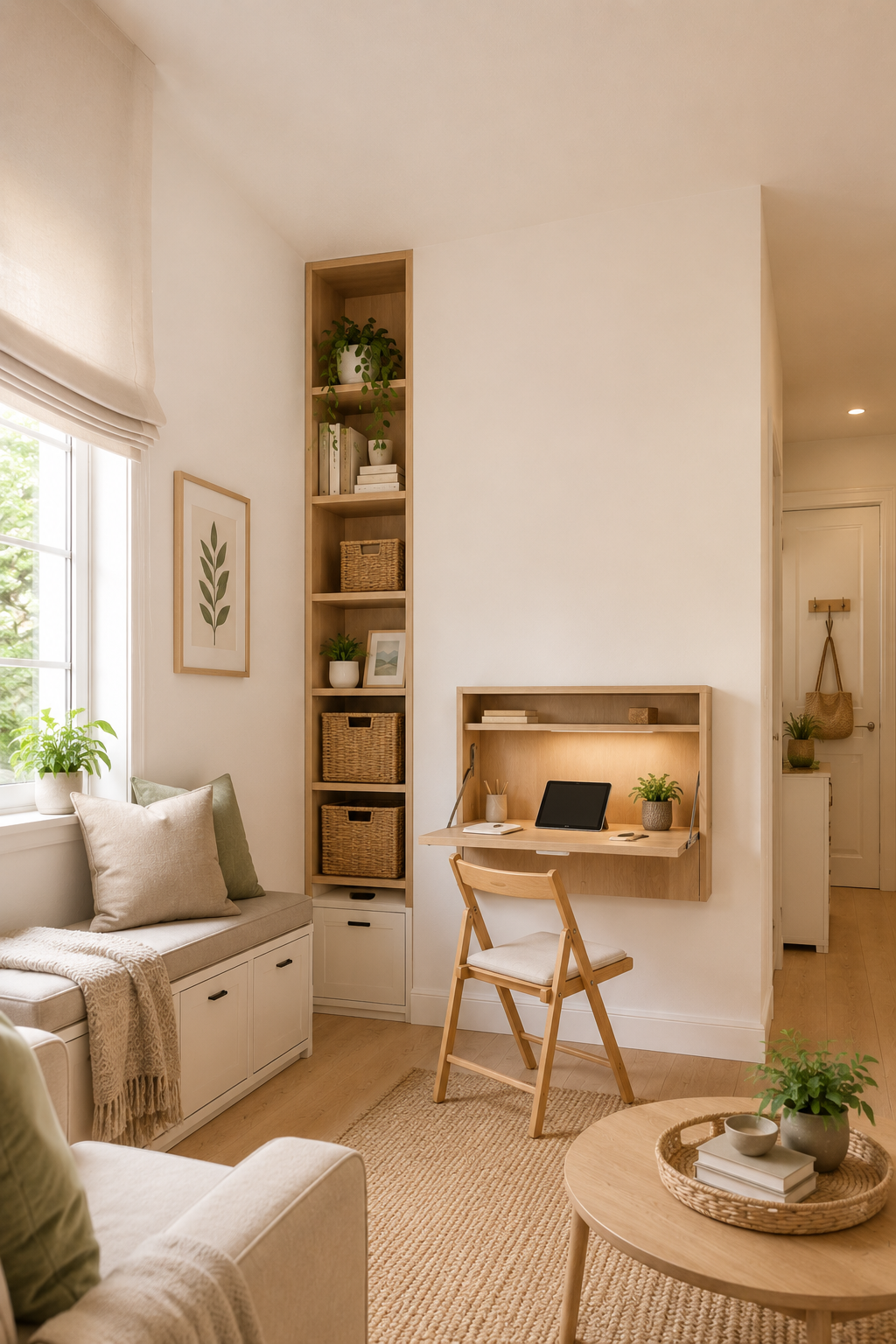
A wall-mounted or fold-down desk can solve part of the problem.
During working hours, it provides a proper surface for your laptop and other essentials.
When your work is finished, a fold-down design can potentially disappear against the wall.
Don’t forget the cables
A desk that folds away isn’t particularly useful if chargers and cables remain scattered around it.
Consider how you will manage:
- Power cables
- Laptop accessories
- Stationery
- Headphones
- Documents
A small nearby shelf or wall organizer can keep these items contained.
08. Use Modular Shelving
Modular shelving is valuable because your storage requirements may change over time.
One year, you may need space for books.
Later, you may need more baskets, office supplies or household storage.
Adjustable shelving allows you to change the configuration instead of replacing the entire unit.
For a small apartment, look for systems that allow you to use vertical height efficiently.
A tall, narrow configuration may be better than a wide unit if floor space is limited.
Keep the lower shelves practical
Place heavier or frequently used items lower down.
Higher shelves are better suited to lighter or less frequently accessed belongings.
This makes the shelving easier and safer to use.
09. Choose a Storage Bench
A storage bench is another example of furniture doing more than one job.
It can provide:
Seating + storage
A bench can work at the foot of a bed, underneath a window, in an entryway or around a dining area depending on the design.
Use the storage compartment for:
- Shoes
- Blankets
- Bags
- Seasonal accessories
- Extra cushions
In an entryway, it can give you somewhere to sit while putting on shoes while keeping footwear contained underneath.
In a bedroom, it can provide a place to sit while also storing soft items.
How to Choose Space-Saving Furniture Without Making a Mistake
Buying multifunctional furniture sounds simple, but there are a few things worth checking before you spend money.
Measure the entire footprint
Don’t only measure width.
Check:
- Width
- Depth
- Height
- Door clearance
- Drawer clearance
- Walking space
A piece needs enough room to operate.
For example, a storage bed with drawers isn’t really useful if another piece of furniture blocks the drawers from opening.
Think about the furniture when it’s being used
This is one of the most overlooked measurements.
A folding desk may be compact when closed but much larger when open.
An extendable table may fit perfectly against the wall but require considerably more room when expanded.
A storage ottoman may look small until you need to walk around it.
Always measure the largest functional footprint.
Don’t sacrifice comfort for space
Space-saving does not mean buying furniture that is uncomfortable.
A sofa that is technically compact but uncomfortable to sit on isn’t necessarily a good purchase.
The same applies to beds, dining chairs and desks.
Your home should work for you—not simply look uncluttered.
Look for furniture that solves a real problem
Multifunctional furniture is useful when the second function actually matters.
If you don’t need hidden storage, you don’t necessarily need a storage ottoman.
If you rarely entertain, you may not need an extendable dining table.
If you work entirely outside the home, a fold-down desk might not be necessary.
Buy based on your lifestyle, not the label “space-saving.”
Common Space-Saving Furniture Mistakes
Buying furniture that is too large
The fact that a piece fits doesn’t mean it fits comfortably.
Choosing too many multifunctional pieces
A room full of clever furniture can still feel complicated and cluttered.
Ignoring access
Storage isn’t useful if you can’t comfortably reach it.
Forgetting the surrounding space
Furniture needs breathing room around it.
Buying before measuring
Always measure first.
Final Thoughts
The best furniture for a small apartment isn’t necessarily tiny.
It’s furniture that works harder without making the room work harder.
A storage bed can eliminate the need for another cabinet. A fold-down desk can give you a workspace without permanently occupying the living room. An extendable table can accommodate guests without taking up valuable floor space every day.
The key is to choose pieces based on how you actually live.
Smart Space Finds takeaway
Think beyond the furniture itself. Think about everything that piece can replace, store, create or make easier.
That’s where genuine space-saving value comes from.
For more ideas in the same spirit, keep going with our guide to 10 genius small-space storage ideas, or explore the small spaces and organization sections.