A beautiful home should do more than look good.
It should make you want to come in, sit down and stay awhile.
That feeling is what makes a space feel cozy.
And creating a cozy home doesn’t necessarily mean buying more furniture or covering every surface with blankets and cushions. In many cases, coziness comes from small details that make a room feel warmer, softer and more comfortable.
Think warm lighting, tactile fabrics, natural materials, comfortable seating and décor that feels personal rather than overly staged.
The best part is that you can create this feeling in almost any home—even a small apartment or a room that currently feels a little plain.
Here are nine simple home décor ideas that can make your space feel noticeably more inviting.
01. Layer Soft Textiles
One of the easiest ways to make a room feel cozy is to introduce more softness.
A room with only hard surfaces can feel functional but somewhat cold. Adding textiles creates warmth and makes the space visually and physically more comfortable.
Consider layering:
- Cushions
- Throws
- Area rugs
- Curtains
- Upholstered furniture
- Soft bedding
- Fabric baskets
You don’t need dozens of textiles.
A few carefully chosen pieces can make a significant difference.
Start with the largest surfaces
If your living room already has a sofa, consider adding a textured throw and a few cushions in complementary shades.
In a bedroom, a soft area rug or layered bedding can immediately change the atmosphere.
The goal is to create layers rather than clutter.
02. Use Warm Lighting Instead of Relying Only on the Ceiling Light
Lighting has an enormous effect on how a room feels.
A single bright overhead light can make even a beautifully decorated room feel somewhat harsh.
For a cozier atmosphere, introduce several smaller light sources around the room.
Consider:
- Table lamps
- Floor lamps
- Wall lights
- Bedside lamps
- Shelf lighting
- Appropriate accent lighting
These different sources create pools of light throughout the room instead of illuminating everything equally.
Create lighting at different heights
A floor lamp provides light from one level.
A table lamp provides another.
A wall or shelf light can create another layer.
This variation adds depth and makes the room feel more intimate.
03. Bring in Natural Materials
Natural materials tend to add warmth and character to interiors.
Wood, woven fibres, linen, cotton, rattan, jute and ceramic can all make a space feel less sterile.
You don’t need to redesign the entire room.
Start with one or two elements.
For example:
Wooden coffee table + woven basket
or
Jute rug + linen curtains
or
Wood furniture + ceramic accessories
The combination of natural materials with soft textiles can create a particularly welcoming atmosphere.
04. Add a Rug to Define the Space
A rug can do much more than protect the floor.
It can visually bring furniture together and make a room feel more grounded.
This is especially useful in open-plan homes or apartments where one room may serve several purposes.
A rug can help define:
- The living area
- A reading corner
- A dining area
- A bedroom zone
- A small home office
Choose the right size
A rug that’s too small can make furniture arrangements feel disconnected.
Where possible, choose a size that allows at least some of the major furniture pieces to sit comfortably on or around the rug.
The correct size depends on the room, layout and furniture, so don’t feel restricted to a particular formula.
05. Create a Comfortable Seating Area
A cozy room needs somewhere that genuinely feels comfortable.
Your seating arrangement can have a bigger effect on the atmosphere than decorative accessories.
Instead of arranging furniture solely around the television, think about how people will actually use the space.
- Can two people comfortably have a conversation?
- Is there somewhere to put a drink?
- Can someone sit and read?
- Is there enough space to move around?
Add small comfort details
A throw placed over the arm of a sofa can make the seating area feel more relaxed.
A nearby side table gives you somewhere for a lamp, book or cup.
A floor lamp can create a dedicated reading atmosphere.
These small details make the room feel designed for living rather than simply for looking at.
06. Use a Warm, Restrained Color Palette
Cozy doesn’t require dark walls or deep colors.
You can create warmth with lighter shades too.
Consider combinations such as:
- Cream + warm beige
- Ivory + soft brown
- Beige + muted green
- Warm white + natural wood
- Taupe + soft terracotta
The important thing is that the colors work together.
Repeat colors throughout the room
If you use muted green in one cushion, you might subtly repeat it in artwork or a small decorative object.
If you have warm wood furniture, you could repeat that material in a picture frame or basket.
These repetitions help the room feel cohesive.
Everyday things, put away beautifully
07. Add Greenery and Organic Shapes
Plants can make a room feel more alive.
But greenery isn’t the only way to introduce an organic feeling.
You can also use:
- Rounded vases
- Curved furniture
- Branches
- Woven baskets
- Organic-shaped artwork
- Ceramic pieces
Straight lines and sharp angles can make a room feel structured.
Adding a few softer shapes can make the space feel more relaxed.
Don’t overfill the room with plants
One large plant can sometimes have more impact than several tiny ones.
Think about scale and placement.
A taller plant beside a sofa or cabinet can fill an otherwise empty vertical area.
08. Give Everyday Items a Beautiful Home
A cozy room can quickly become stressful when everyday belongings are scattered everywhere.
Keys on the table.
Chargers on the sofa.
Blankets piled randomly.
Books stacked in inconvenient places.
Remote controls everywhere.
Good organization can therefore contribute directly to coziness.
Use practical storage such as:
- Woven baskets
- Storage ottomans
- Sideboards
- Closed cabinets
- Decorative boxes
- Coffee tables with shelves
- Baskets beneath consoles
Make practical storage part of the décor
A woven basket beside the sofa can hold blankets.
A beautiful tray can organize small items on a coffee table.
A closed cabinet can hide electronics and everyday clutter.
When useful things have a designated home, the room becomes easier to maintain.
09. Make the Room Personal
Perhaps the most important part of creating a cozy home is allowing it to feel like your home.
A room can be beautifully styled and still feel strangely impersonal if everything looks like it came directly from a showroom.
Introduce things that have meaning to you.
This could include:
- Family photographs
- Books you actually read
- Travel souvenirs
- Artwork you love
- Handmade objects
- Meaningful gifts
- Favorite decorative pieces
These details don’t have to be expensive.
They simply need to have a reason for being there.
Don’t worry about perfect styling
A cozy home should feel lived in.
A throw casually placed on the sofa can feel more inviting than one folded perfectly every time.
A few books on a coffee table can make the room feel active and useful.
The goal is intentional comfort, not perfection.
How to Make a Small Home Feel Cozy Without Making It Feel Crowded
Small spaces need a slightly different approach.
Adding too many cozy accessories can quickly turn into clutter.
Instead, focus on pieces that provide both comfort and function.
For example:
Storage ottoman
Provides seating or somewhere to put your feet while hiding belongings.
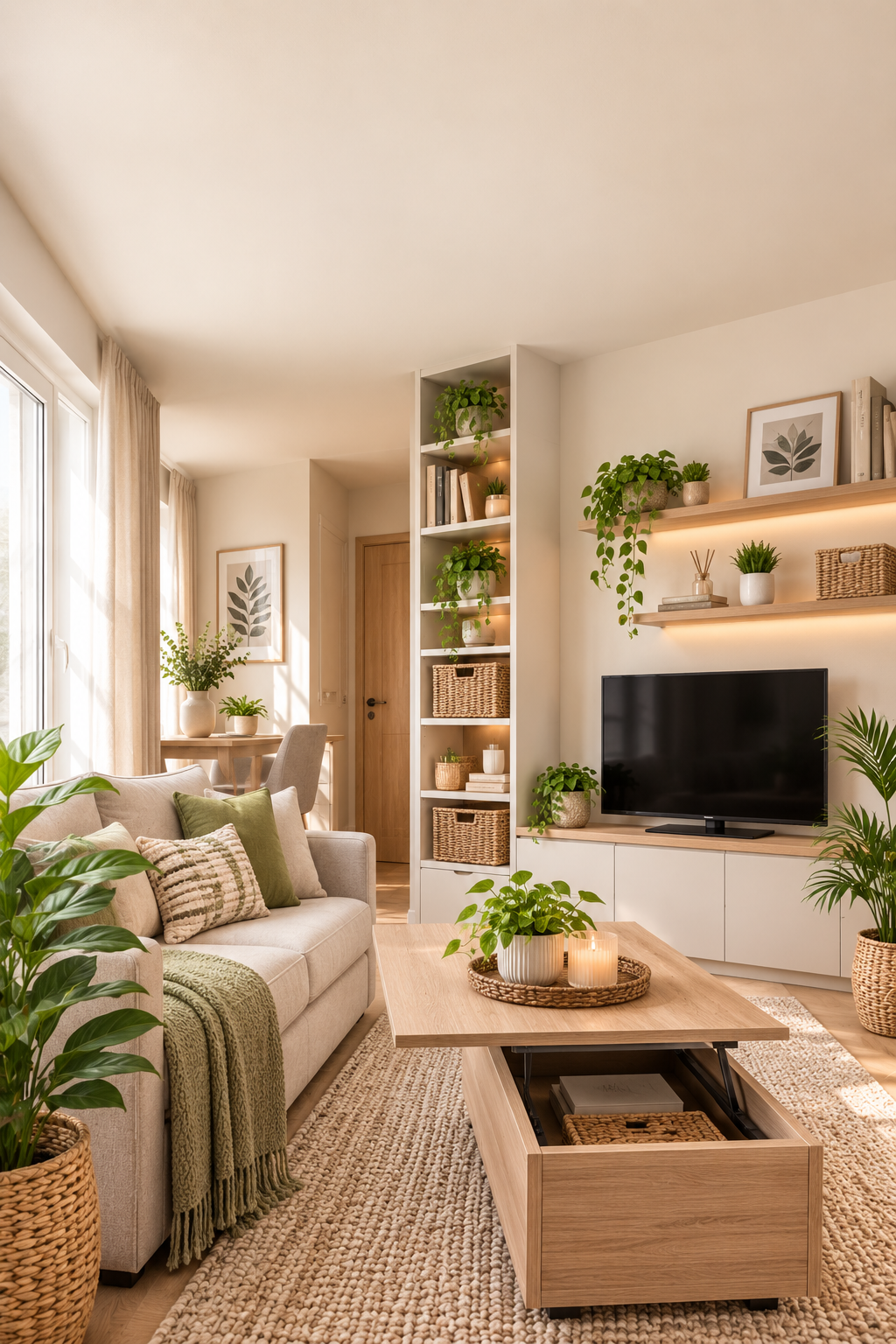
Storage coffee table
Provides a surface while creating additional storage.
Woven baskets
Store blankets and accessories while adding texture.
Floor-to-ceiling curtains
Can add softness while emphasizing vertical height.
Wall lighting
Creates atmosphere without taking up valuable floor or table space.
The key is to make each addition earn its place.
Cozy Doesn’t Mean Cluttered
There’s an important difference between a cozy room and a crowded room.
A cozy room may contain:
- Soft textiles
- Warm lighting
- Books
- Plants
- Artwork
- Comfortable furniture
But everything still has a place.
A crowded room contains so many competing objects that the eye doesn’t know where to rest.
If your room feels overwhelming, try removing something
Before buying another decorative item, remove three things.
Look at the room again.
You may discover that the problem wasn’t a lack of décor.
It was a lack of breathing space.
How to Make a Neutral Room Feel Cozier
Neutral décor can sometimes feel too plain if there isn’t enough variation.
The solution is to focus on texture and warmth rather than adding lots of color.
Try combining:
- Cream upholstery
- warm wood
- woven basket
- textured rug
- soft throw
- warm lighting
This can create a cozy atmosphere while maintaining a calm neutral palette.
Cozy Décor for Different Rooms
Living Room
Focus on:
- Comfortable seating
- Layered lighting
- Rugs
- Cushions
- Throws
- Side tables
- Natural materials
Bedroom
Focus on:
- Soft bedding
- Bedside lighting
- Curtains
- Rugs
- Comfortable textures
- Calm colors
- Convenient storage
Dining Area
Focus on:
- Warm lighting
- Comfortable chairs
- Natural wood
- Simple centerpiece
- Soft surrounding décor
Small Entryway
Focus on:
- A small bench
- Hooks
- Baskets
- A mirror
- Warm lighting
The principles remain the same: comfort, warmth, texture and function.
A Simple Cozy Room Formula
If you’re not sure where to start, use this combination:
1 comfortable anchor
Sofa, bed, armchair or dining seating.
1 soft layer
Rug, throw, curtains or cushions.
1 warm material
Wood, woven fibre, ceramic or natural textile.
1 warm light source
Table lamp, floor lamp or suitable wall light.
1 organic element
Plant, branch or curved decorative object.
1 personal element
Artwork, photograph, book or meaningful object.
This is enough to begin creating a noticeably warmer room without filling it with unnecessary décor.
Common Mistakes That Can Make a Cozy Room Feel Less Inviting
Too much overhead lighting
Bright, uniform lighting can remove the intimate feeling you’re trying to create.
Too many cushions
Cushions should add comfort, not make the sofa difficult to use.
Excessive décor
More accessories don’t automatically make a room cozier.
Ignoring the floor
A bare floor can sometimes make a seating area feel disconnected.
Choosing style over comfort
Beautiful furniture that nobody wants to sit on isn’t helping create an inviting home.
Hiding everything
Organization is important, but a home should still have personality.
How to Create a Cozy Home on a Budget
You don’t need to buy everything at once.
Start with what you already own.
Rearrange the furniture
Improve the flow and create a more comfortable seating arrangement.
Change the lighting
Move lamps to different areas and make better use of existing light sources.
Add textiles
Use existing blankets, cushions and rugs differently.
Declutter
Remove objects that don’t contribute to the room.
Add natural elements
Bring in plants, branches or natural-looking materials.
Create a simple focal point
A piece of artwork, a plant or a carefully styled coffee table can become the visual anchor.
Small changes can make a room feel completely different.
Final Thoughts
Creating a cozy home isn’t about following a strict decorating formula.
It’s about creating an environment that feels comfortable, warm and easy to live in.
Start with soft textures.
Add warm lighting.
Bring in natural materials.
Choose comfortable furniture.
Keep clutter under control.
And most importantly, allow your personality to show.
A home doesn’t need to be perfectly styled to be beautiful.
Sometimes the most inviting spaces are the ones that look polished enough to feel intentional while still feeling comfortable enough to actually live in.
Smart Space Finds takeaway
Cozy décor is less about adding more and more about creating the right combination of comfort, warmth, texture and personality.
Before buying something new, look around your home and ask:
What small change would make this room more comfortable to live in?
That is often the best place to start.
For more ideas in the same spirit, explore the home décor section, or keep going with our guide to 10 genius small-space storage ideas and the organization and small spaces sections.