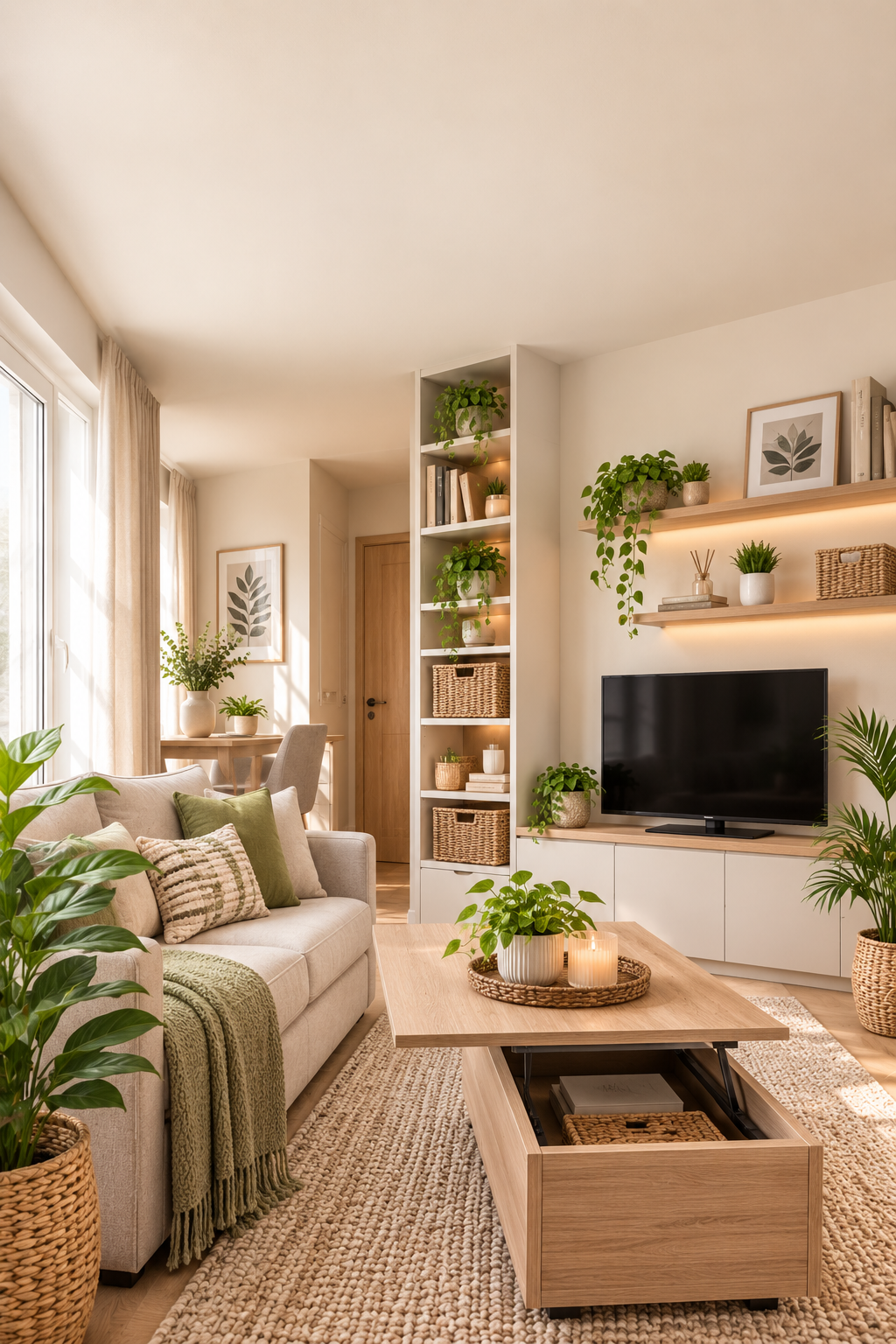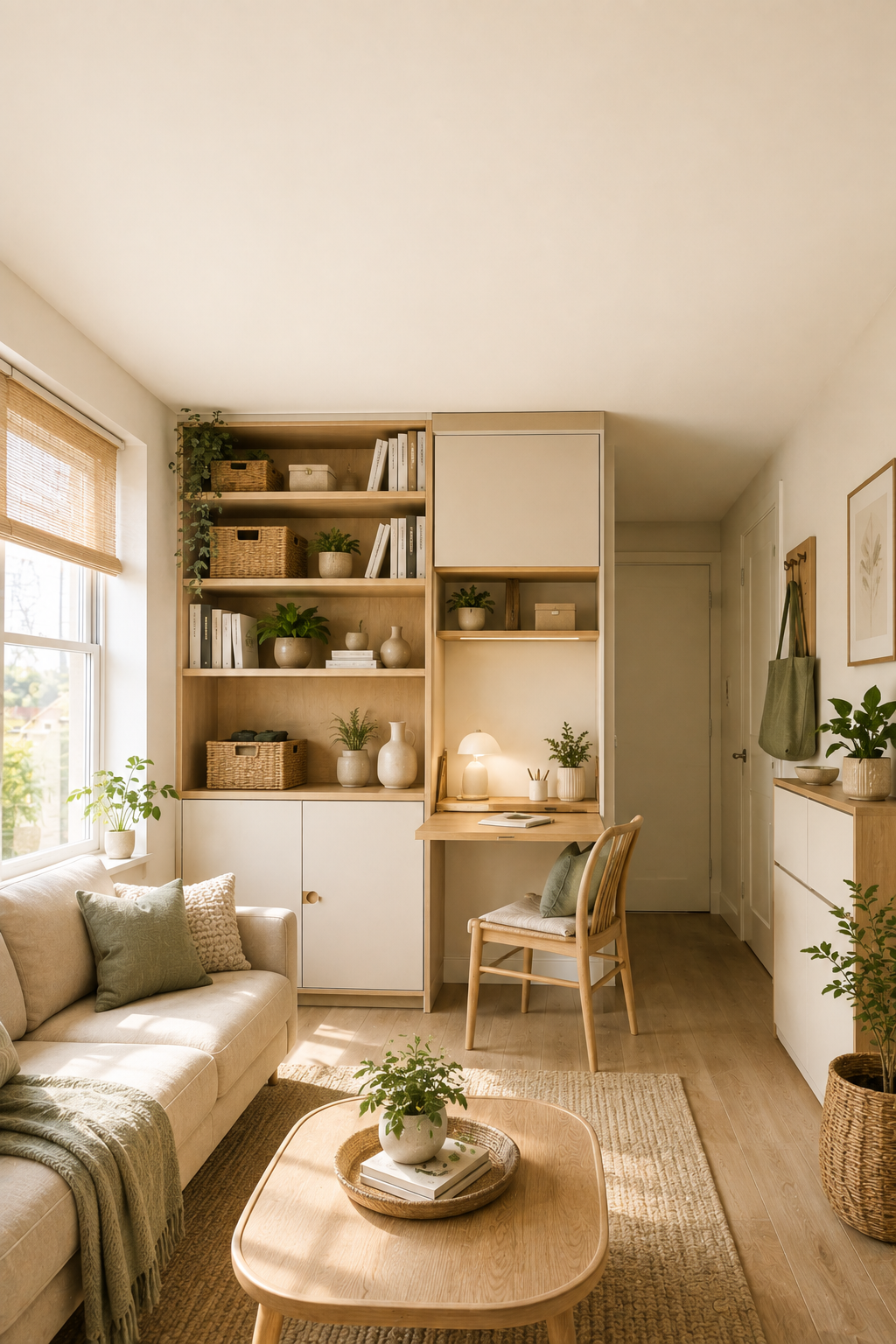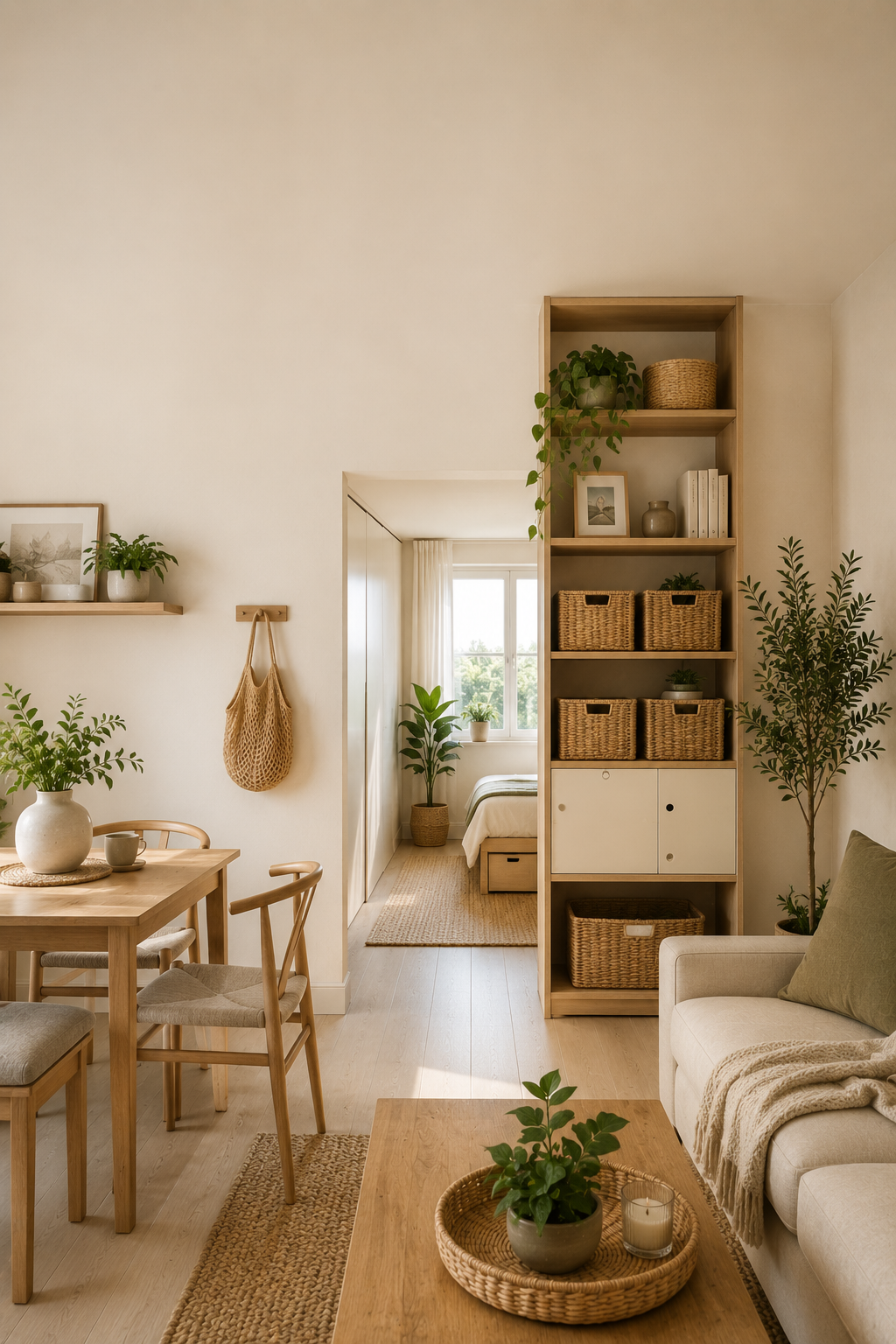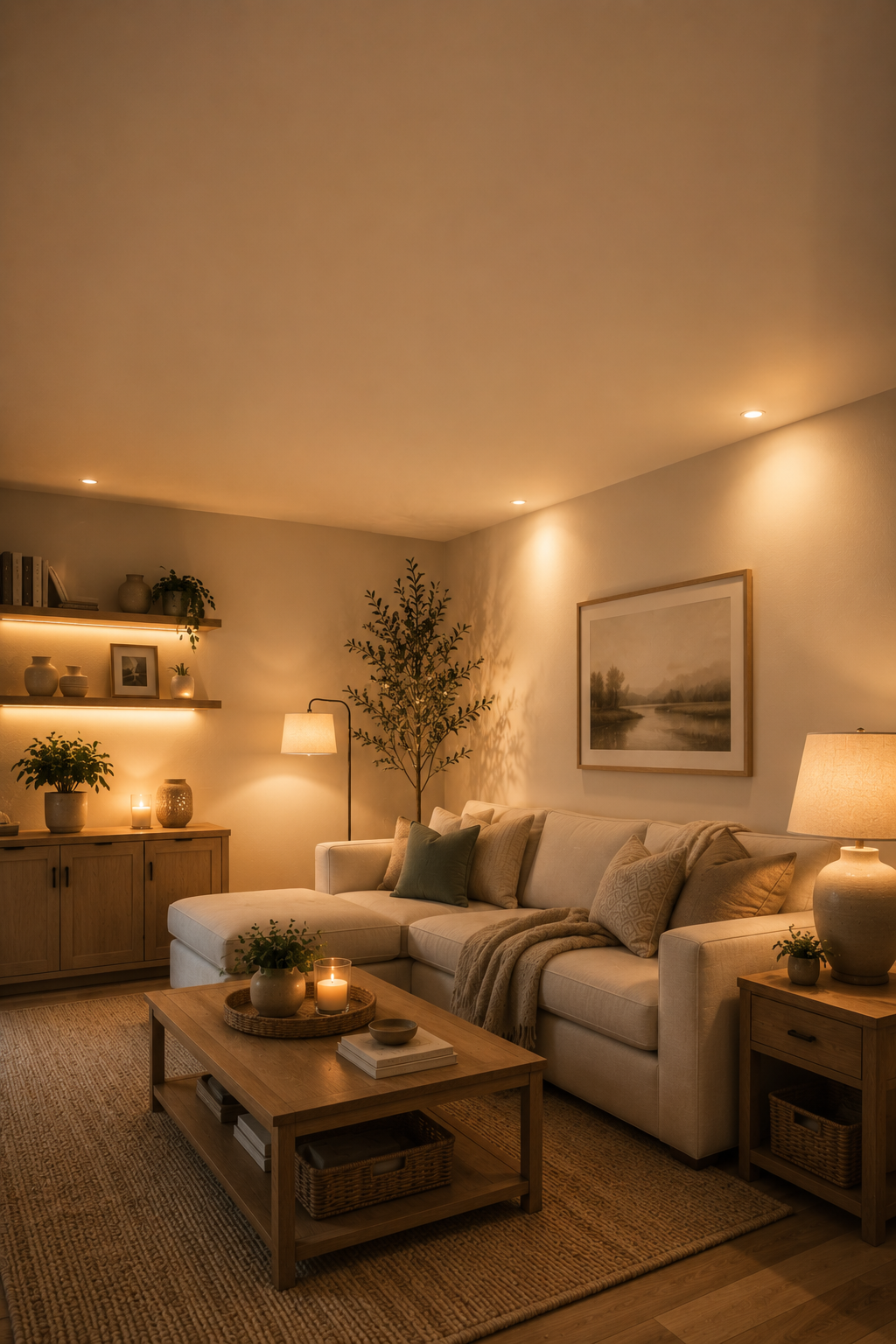
A home doesn’t have to be filled with expensive furniture to look expensive.
In fact, some of the most polished-looking spaces aren’t necessarily the ones with the biggest budgets. They simply make thoughtful choices about proportion, lighting, texture, color, organization and presentation.
A beautiful home often feels intentional.
The furniture works together. The lighting creates atmosphere. Surfaces aren’t overwhelmed with objects. Materials complement one another, and even practical items have a place.
The good news is that many of these principles can be applied without completely redecorating your home.
You don’t need to replace everything you own.
Sometimes, changing how you arrange, layer and present what you already have can make a bigger difference than buying another decorative item.
Here are 12 simple home décor ideas that can help your space feel more elevated, polished and expensive.
01. Create a Cohesive Color Palette
One of the quickest ways to make a room feel more intentional is to limit the number of competing colors.
This doesn’t mean your home has to be entirely beige or white.
Instead, choose a small group of colors that work naturally together.
For example:
Warm white + beige + natural wood + muted green
or
Cream + soft brown + black accents + warm wood
The exact colors don’t matter as much as the relationship between them.
Use the palette throughout the room
Your walls, furniture, curtains, cushions, rugs and decorative accessories don’t have to match exactly.
But they should feel like they belong together.
This creates visual continuity, which can make even relatively affordable pieces appear more considered.
02. Add More Texture
A room made entirely from smooth, flat surfaces can feel unfinished even when the furniture itself is attractive.
Texture adds depth.
Think about combining materials such as:
- Woven baskets
- Linen or linen-look curtains
- Knitted throws
- Textured cushions
- Natural wood
- Ceramic
- Glass
- Bouclé or other tactile upholstery
- Rugs
The beauty of texture is that you don’t necessarily need lots of color to create visual interest.
A neutral room can still feel rich when different materials are layered together.
Try the “three textures” approach
If a room feels a little flat, start by introducing three noticeably different textures.
For example:
Soft upholstery + woven rug + natural wood
You can then add smaller details if needed.
03. Upgrade Your Lighting
Lighting is one of the most overlooked ways to make a home feel more sophisticated.
A room with one bright ceiling light can feel very different from the same room with several thoughtfully positioned light sources.
Consider using:
- Table lamps
- Floor lamps
- Wall lights
- Pendant lights
- Under-shelf lighting
- Appropriate accent lighting
Instead of having every light on at the same intensity, create layers.
Think in three levels
Ambient lighting provides general illumination.
Task lighting helps with activities such as reading or working.
Accent lighting highlights architectural details, artwork, shelving or decorative features.
This creates depth and gives you greater control over the atmosphere.
04. Use Larger Décor Pieces Instead of Lots of Tiny Ones
One common decorating mistake is filling a room with many small decorative objects.
Individually, they may look nice.
Together, they can make a space feel cluttered.
Sometimes, one larger statement piece has more impact than several small ones.
For example:
- One large framed artwork
- A substantial vase
- A large mirror
- One generous plant
- A larger table lamp
This doesn’t mean every object in your home should be oversized.
It’s about creating a few visual anchors.
Give statement pieces room to breathe
Don’t surround a large decorative object with ten smaller objects.
Allow some empty space around it.
That space helps the piece feel intentional.
05. Make Your Curtains Look More Substantial
Window treatments can dramatically influence the overall appearance of a room.
Curtains that are too short, too narrow or poorly positioned can make a room feel less polished.
Where appropriate, hanging curtains higher and allowing them to extend beyond the window frame can create the impression of taller and more generous windows.
Pay attention to length
Floor-length curtains often create a more finished appearance than curtains that stop noticeably above the floor.
However, the correct length depends on the room, window and curtain style.
The key is to avoid a look that feels accidentally undersized.
06. Bring in Natural Materials
Natural-looking materials can add warmth and visual depth to a room.
Consider incorporating:
- Wood
- Woven fibres
- Stone or stone-look surfaces
- Ceramic
- Cotton
- Linen
- Rattan
- Jute
You don’t need all of these.
Even one or two natural materials can soften a room filled with manufactured surfaces.
Natural doesn’t have to mean rustic
A wooden side table, woven basket or ceramic vase can work beautifully in modern, contemporary or minimalist interiors.
It’s the combination and styling that determines the overall look.
Three objects, deliberately placed
07. Style Your Surfaces With Intention
Coffee tables, consoles, shelves and sideboards can easily become dumping grounds.
Mail, remotes, chargers, keys and miscellaneous objects can quickly take over.
A more polished approach is to give surfaces a simple structure.
For example, a coffee table might have:
A tray + vase + candle + one or two books
A console could have:
A lamp + artwork + decorative object
The exact arrangement doesn’t matter.
What matters is that the objects feel deliberately placed rather than randomly collected.
Use trays to create visual boundaries
A tray can group several small objects together.
Instead of having five separate objects scattered across a table, the tray makes them read as one arrangement.
08. Use Mirrors Strategically
A well-placed mirror can do more than help you check your outfit.
It can reflect natural or artificial light and make a room feel more open.
This can be particularly useful in:
- Small living rooms
- Narrow hallways
- Dark corners
- Compact bedrooms
- Small dining areas
Consider what the mirror reflects
Don’t automatically put a mirror on the biggest empty wall.
Look at what will appear in the reflection.
A mirror reflecting natural light, greenery or an attractive part of the room can enhance the space.
A mirror reflecting clutter may simply make the clutter twice as noticeable.
09. Introduce Greenery
Plants can make a room feel more alive and finished.
You don’t need a large indoor jungle.
A few thoughtfully positioned plants can be enough.
Consider:
- A floor plant beside a sofa
- A small plant on a shelf
- A plant on a windowsill
- A trailing plant on a high shelf
If maintaining live plants isn’t practical, choose realistic alternatives or focus on other natural elements.
Think about scale
A tiny plant can disappear in a large room.
Likewise, a huge plant can overwhelm a small space.
Choose a size that works with the furniture around it.
10. Keep Clutter Out of Sight Where Possible
A beautifully decorated room can lose its polished appearance when everyday belongings are scattered everywhere.
This is where attractive storage becomes part of the décor.
Use suitable:
- Baskets
- Closed cabinets
- Storage ottomans
- Decorative boxes
- Drawer organizers
- Shelving systems
The goal isn’t to hide everything.
Open shelving can still display beautiful objects.
But everyday clutter is often easier to manage when it has a concealed home.
Make storage part of the design
A woven basket can store blankets while also adding texture.
A stylish cabinet can hide electronics while contributing to the room’s overall aesthetic.
Good storage doesn’t have to look like an afterthought.
11. Pay Attention to Scale and Proportion
A room can contain beautiful furniture and still look slightly “off” if the proportions aren’t right.
For example:
A tiny coffee table in front of a large sectional may look undersized.
A very small piece of artwork above a large sofa can disappear.
A huge lamp on a tiny side table can overwhelm the arrangement.
Before buying décor, consider the relationship between the item and everything around it.
A simple rule
Don’t evaluate an object by itself.
Evaluate it in the room.
A beautiful vase might look perfect in a shop but completely disappear on your large dining table.
Similarly, an oversized mirror may dominate a narrow wall.
12. Edit the Room Instead of Constantly Adding to It
Perhaps the most effective “expensive-looking” decorating trick is knowing when to stop.
When a room doesn’t feel quite right, the instinct can be to buy something else.
Another cushion.
Another vase.
Another picture.
Another basket.
But sometimes the room needs less, not more.
Walk around the space and remove a few objects.
Look at the room again.
You may discover that the furniture and décor you already have look much better when they’re given enough space.
Create breathing room
Empty space isn’t necessarily unfinished space.
It allows important pieces to stand out.
A clear tabletop can make a beautiful lamp more noticeable.
An uncluttered shelf can make a decorative vase feel more intentional.
How to Make a Home Look Expensive Without Buying Expensive Things
The biggest misconception about an expensive-looking home is that you need expensive products.
You don’t.
What often creates the elevated appearance is consistency.
Think about:
Color
Do the major colors work together?
Scale
Are the furniture and décor appropriately sized?
Lighting
Does the room have more than one lighting level?
Texture
Are there enough different materials to create depth?
Clutter
Are everyday belongings contained?
Styling
Do the decorative objects look intentionally arranged?
Maintenance
Are the furniture, fabrics and surfaces clean and cared for?
These factors can influence how a room feels more than the price tag of individual objects.
The “Expensive-Looking” Home Doesn’t Have to Be Formal
An elevated home doesn’t have to feel cold or untouchable.
You can still have:
- Comfortable sofas
- Family photographs
- Books
- Children’s belongings
- Cozy blankets
- Everyday storage
- Practical furniture
The objective is not to create a showroom.
It’s to make the things you already use feel organized, cohesive and intentional.
A beautiful home should still feel like a home.
A Simple Room Refresh You Can Do This Weekend
If you want to test these ideas without spending much money, try this:
Step 1: Remove obvious clutter
Clear surfaces and return belongings to their proper homes.
Step 2: Edit the décor
Remove a few objects that don’t contribute anything useful or beautiful.
Step 3: Rearrange
Try moving one or two pieces of furniture to improve the room’s flow.
Step 4: Improve lighting
Move lamps or add a suitable secondary light source if needed.
Step 5: Add texture
Bring in a throw, rug, woven basket or other tactile element you already own.
Step 6: Group objects
Use trays or intentional arrangements rather than scattering small items.
Step 7: Step back
Look at the entire room rather than individual objects.
Ask yourself:
- Does the room feel balanced?
- Does anything feel overcrowded?
- Is there enough breathing room?
This simple process can reveal that your home may need fewer new things than you originally thought.
Common Decorating Mistakes That Can Make a Room Look Less Polished
Even good décor can lose its impact when the overall arrangement isn’t considered.
Too many competing colors
A room can quickly feel visually noisy when every item introduces a different color.
Furniture pushed awkwardly against walls
Not every piece needs to be pressed against the wall. Depending on the room, creating intentional groupings can make the layout feel more considered.
Artwork that’s too small
A tiny piece on a large wall can look disconnected.
Poor curtain proportions
Curtains that are too short or narrow can make otherwise beautiful rooms look less finished.
Too many small accessories
A collection of tiny objects can create visual clutter.
No variation in lighting
One bright ceiling light rarely creates the same atmosphere as layered lighting.
Final Thoughts
Making a home feel more expensive isn’t about pretending to have things you can’t afford.
It’s about making thoughtful choices with the space and belongings you already have.
Create a cohesive color palette.
Add texture.
Improve the lighting.
Use appropriately sized décor.
Keep everyday clutter contained.
Give statement pieces room to breathe.
And perhaps most importantly, learn when to stop adding.
A home can feel sophisticated while still being warm, comfortable and practical.
Smart Space Finds takeaway
The most expensive-looking room isn’t necessarily the one with the most expensive things. It’s the one where everything feels intentional.
Start by improving what you already have before buying something new. A little editing, better lighting and thoughtful styling can go surprisingly far.
For more ideas in the same spirit, explore the home décor section, or keep going with our guide to 10 genius small-space storage ideas and the organization and small spaces sections.