A pantry can hold a surprising amount of food, but simply having plenty of shelves doesn’t necessarily make it functional.
Without a good system, pantry shelves can quickly become difficult to navigate.
Packets disappear behind cans. Open bags fall over. Different food categories become mixed together. You buy something you already have because you couldn’t see it at the back.
And when you finally need that ingredient, you have to move half the pantry just to find it.
A functional pantry isn’t necessarily one that looks perfect.
It’s one where you can see what you have, reach what you need and put things back without creating another mess.
The good news is that you don’t need a huge walk-in pantry to achieve that.
Even a small cupboard or a few kitchen shelves can become much more useful with the right storage approach.
Here are 11 practical pantry storage ideas to help you make better use of the space you already have.
1. Group Similar Foods Together
One of the easiest ways to make a pantry easier to use is to stop storing food randomly.
Create broad categories based on the way you shop and cook.
For example:
- Breakfast foods
- Baking ingredients
- Pasta and grains
- Snacks
- Canned foods
- Cooking ingredients
- Tea and coffee
- Sauces and condiments
This means that when you’re looking for something, you already know which part of the pantry to check.
Don’t create too many categories
You don’t need a separate section for every ingredient.
If you create dozens of tiny categories, putting groceries away can become unnecessarily complicated.
Use categories that are broad enough to remain easy to maintain.
2. Use Clear Containers for Loose Dry Goods
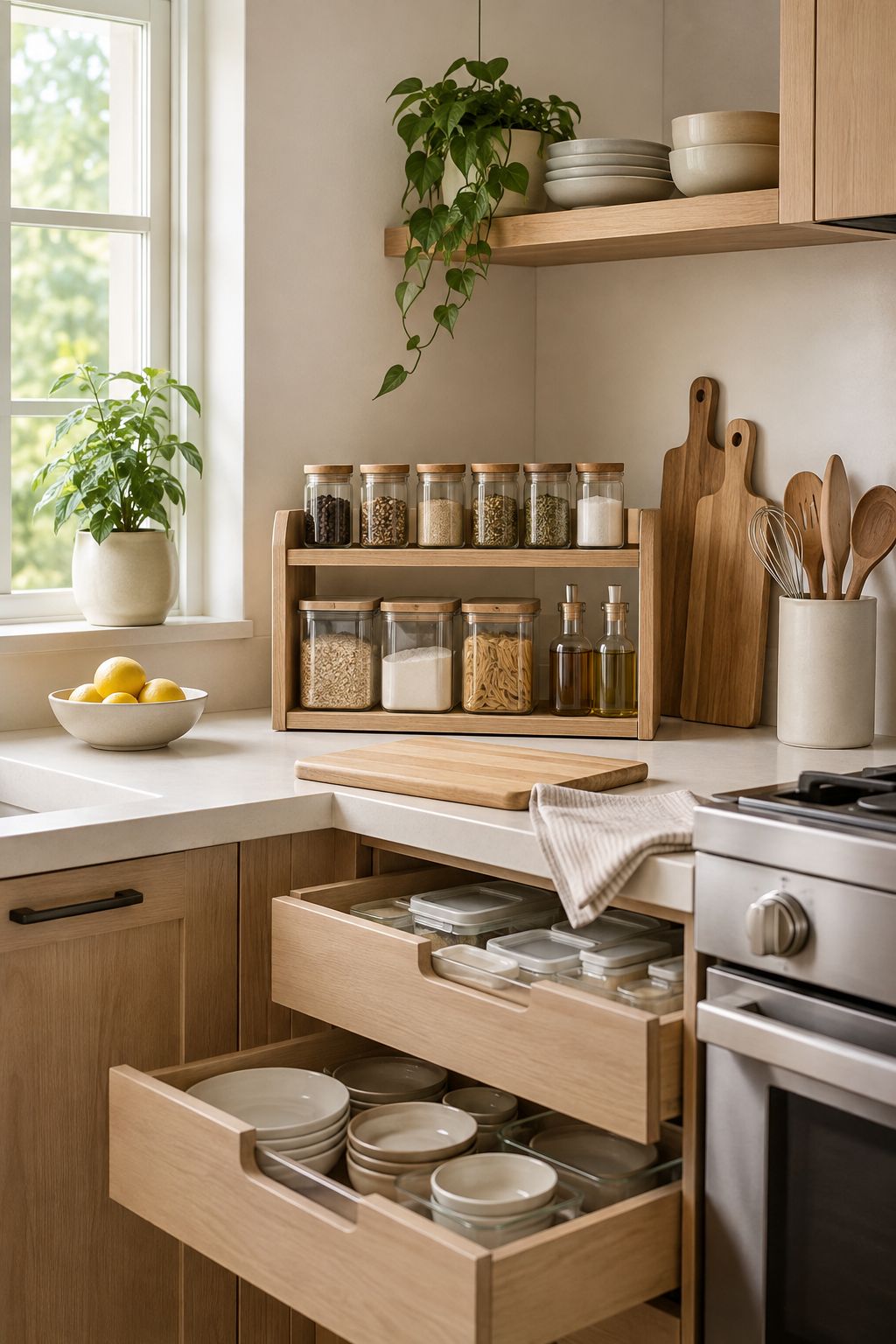
Open bags of flour, rice, pasta, cereal or other dry goods can make pantry shelves look messy and make it harder to see how much you have.
Suitable airtight containers can help create a more consistent storage system.
Depending on the food and container, they can also help protect dry goods from moisture and keep contents contained.
Clear containers have an additional advantage:
You can see what’s inside.
This can make it easier to notice when you’re running low.
Choose containers carefully
Make sure the container is suitable for the food you’re storing and follow appropriate food-storage guidance.
Don’t transfer products into containers if doing so would make important allergen, expiry or preparation information unavailable to you.
Keeping original labels or recording important information can be useful.
3. Use Stackable Containers to Maximize Vertical Space
Pantry shelves often contain unused space above smaller items.
Stackable containers can help make better use of that vertical area.
For example, you might stack compatible containers containing:
- Rice
- Pasta
- Cereals
- Baking ingredients
Instead of spreading these items across the shelf, you’re using the height of the space more efficiently.
But don’t stack too high
A pantry should remain easy to access.
If you have to remove four containers just to reach the bottom one, the system isn’t particularly functional.
A good storage system should balance capacity with accessibility.
4. Add a Lazy Susan to Awkward Corners
Corners and deep pantry shelves can become difficult to use because items at the back are easily forgotten.
A suitable rotating organizer, often called a lazy Susan, can make certain areas easier to access.
You can rotate the organizer to bring items from the back toward you.
This can work particularly well for:
- Sauces
- Condiments
- Oils
- Spices
- Small jars
Think about bottle height
Before buying one, consider the height of the products you want to store.
The organizer should fit comfortably on the shelf and allow the cabinet or pantry door to close.
5. Use Bins to Create Pantry Zones
Storage bins can help contain smaller or irregularly shaped items.
For example, you could have one bin for:
Snacks
Another for:
Baking supplies
Another for:
Packets and pouches
Another for:
Breakfast items
The benefit isn’t simply appearance.
A bin allows you to pull an entire category forward instead of searching through individual items.
Don’t turn bins into junk drawers
Each bin should have a clear purpose.
If everything gets thrown into one container, you’ve simply moved the clutter rather than organizing it.
6. Keep Everyday Ingredients at Eye Level
Not everything in your pantry needs to be equally accessible.
Think about how often you use each category.
Frequently used ingredients should generally occupy the easiest-to-reach areas.
Less frequently used or backup products can go higher or further back.
For example:
- Eye level: everyday cooking ingredients
- Lower shelves: heavier items
- Higher shelves: occasional or backup supplies
This approach can make the pantry feel more intuitive.
You aren’t constantly reaching or searching for the things you use most.
7. Create a Dedicated Baking Zone
If you bake regularly, grouping your baking ingredients can save time.
You might keep suitable items such as:
- Flour
- Sugar
- Baking powder
- Cocoa
- Decorating supplies
- Baking accessories
within the same general pantry zone.
This means you can collect what you need more quickly when preparing a recipe.
Keep rarely used ingredients separate
If you only bake occasionally, don’t give baking supplies the most valuable pantry real estate.
The system should reflect your actual habits.
8. Use a Can Organizer
Cans can be difficult to see when they’re stacked behind one another.
A suitable can organizer can create more orderly rows and make labels easier to see.
Depending on the design, some organizers allow cans to roll forward as one is removed.
This can make restocking easier because you can see what’s available.
Avoid overbuying
An organized pantry can actually make it easier to notice duplicates.
Before buying more canned goods, check what you already have.
Organization should help you buy more intentionally, not simply give you more places to store excess food.
9. Create a “Use First” Area
This is one of the simplest pantry ideas—and one that can help reduce food waste.
Create a small area for foods that should be used soon.
For example, items that:
- Have been opened
- Are nearing their best-before date
- Have only a small amount remaining
- Need to be incorporated into upcoming meals
can be placed together where you’ll see them.
Make it visible
A “use first” area only works if you actually notice it.
It could be a small basket on an accessible shelf.
Before opening another package of the same ingredient, check this section first.
10. Label Containers and Bins Where It Helps
Labels can make a pantry easier to maintain, particularly when containers are opaque or several categories look similar.
You might label:
- Baking
- Snacks
- Pasta
- Breakfast
- Backups
- Use First
But you don’t need labels everywhere.
If a clear container contains pasta and there’s no chance of confusion, adding a large label may provide little benefit.
Keep labels practical
If you change the contents of a container frequently, removable labels can be more convenient than permanent ones.
The organization system should be flexible enough to adapt to your shopping habits.
11. Do a Quick Pantry Reset Before Grocery Shopping
One of the best ways to keep a pantry functional is to check it before buying more food.
You don’t need to completely reorganize the pantry every week.
Simply take a few minutes to look at:
- What is running low?
- What do you already have?
- What needs to be used soon?
- Are there duplicate products?
- Is anything hidden at the back?
This can help you create a more accurate shopping list.
It can also reduce the frustrating situation where you buy something only to discover you already had two packages sitting behind other items.
How to Organize a Small Pantry
You don’t need a dedicated walk-in pantry.
A few shelves can work surprisingly well when they’re organized around accessibility.
Use vertical space
Stack compatible containers and use appropriate shelf risers.
Use the depth carefully
Keep frequently used products toward the front and less-used items further back.
Use containers selectively
Don’t transfer everything into containers simply for aesthetic reasons.
Keep heavier items lower
This can make them easier and safer to retrieve.
Don’t overfill shelves
Leave enough room to remove items without disturbing everything around them.
How to Make Pantry Organization Last
A pantry is only useful if you can maintain it.
The simplest way to do that is to make your system easy enough that you can follow it while unpacking groceries.
When you bring food home:
Bringing food home
Category → Pantry zone → Put away
When you use something:
Using something
Take → Use → Return
When something is running low:
Running low
Add to shopping list
When something needs to be used soon:
Needs using soon
Move to “Use First”
This creates a simple cycle rather than requiring a major pantry reset every few weeks.
Pantry Organization Mistakes to Avoid
Buying too many containers
You don’t need a matching container for every item.
Start with the areas that genuinely need improvement.
Ignoring product rotation
Older items can become hidden behind newer purchases.
When appropriate, move older products toward the front so they are more likely to be used first.
Putting everything at eye level
Eye-level space is valuable.
Reserve it for things you reach for frequently.
Creating complicated categories
If you can’t remember where something belongs, the system is too complicated.
Filling every available space
A pantry needs breathing room.
If shelves are packed completely full, accessing anything becomes difficult.
Pantry Organization Isn’t About Making Food Look Pretty
Beautiful pantry photos can be inspiring, but a real pantry has to work on an ordinary day.
You need to be able to unpack groceries quickly.
You need to find ingredients while cooking.
You need to see what you have.
And you need to put things away without rearranging the entire pantry.
That’s why function should come before aesthetics.
Once the system works, you can make it look beautiful with coordinated containers, baskets and labels if you want to.
Final Thoughts
A functional pantry should save you time rather than create another household project.
You shouldn’t have to empty an entire shelf to find one ingredient.
You shouldn’t repeatedly buy duplicates because you can’t see what you already have.
And you shouldn’t need a major organizing session every time you buy groceries.
Start with simple categories.
Make everyday foods accessible.
Use vertical space intelligently.
Contain smaller items.
And create a visible system for things that should be used first.
Smart Space Finds takeaway
The best pantry organization system is one that makes it obvious what you have, where it belongs and what you should use next.
You don’t need a huge pantry.
You just need to make the space you have work harder.
For more ideas in the same spirit, explore the kitchen section, or keep going with our guide to 10 genius small-space storage ideas and the organization and small spaces sections.