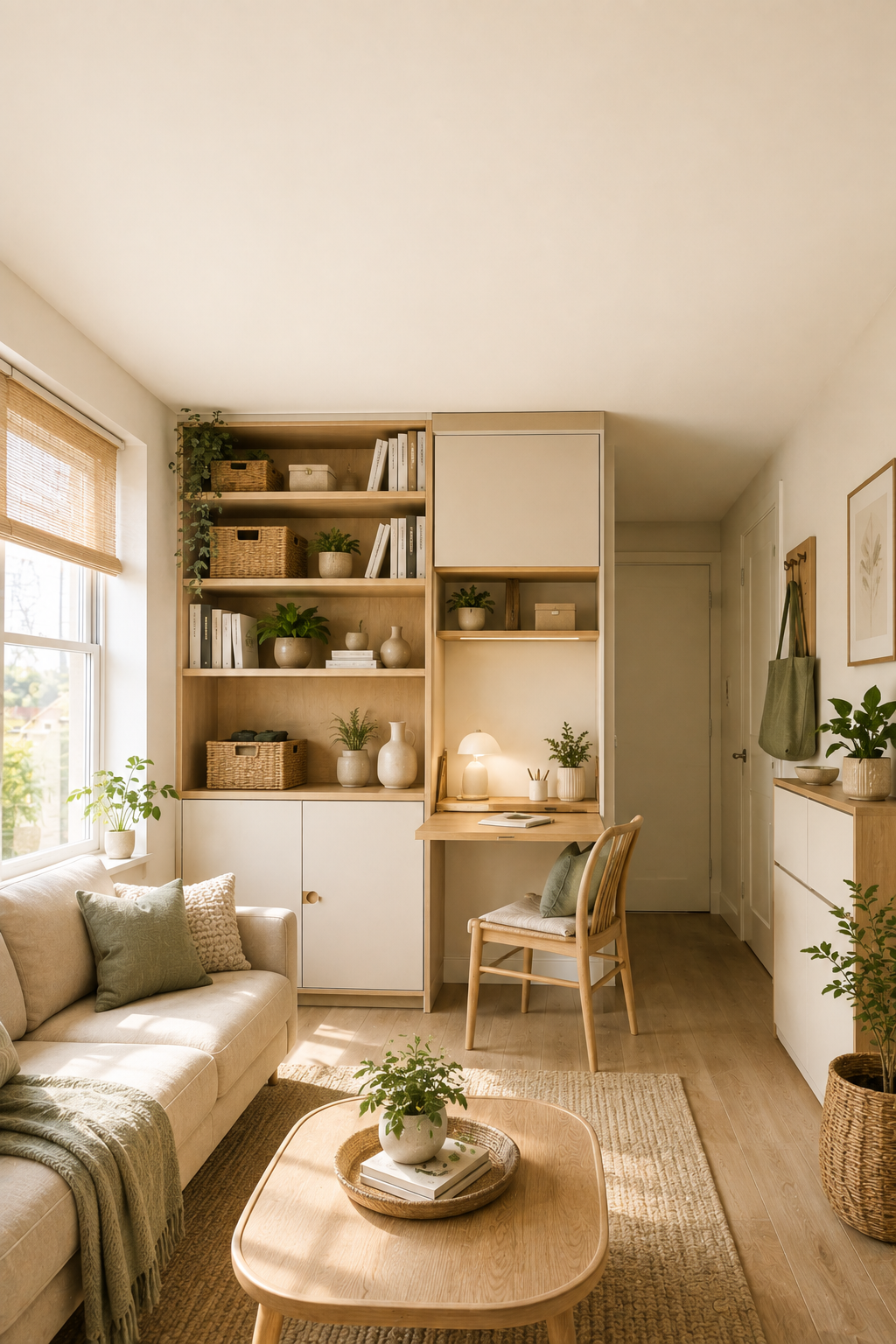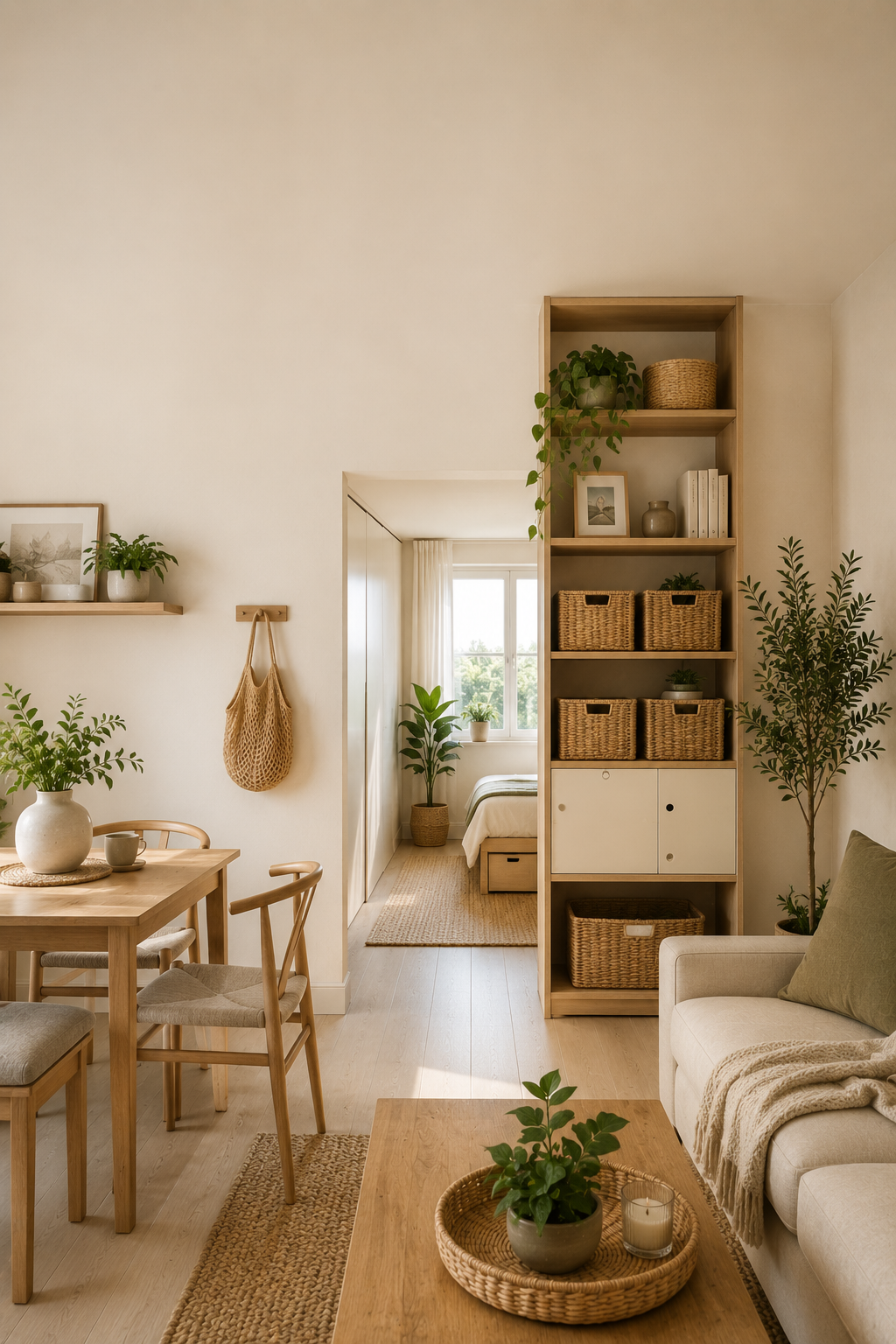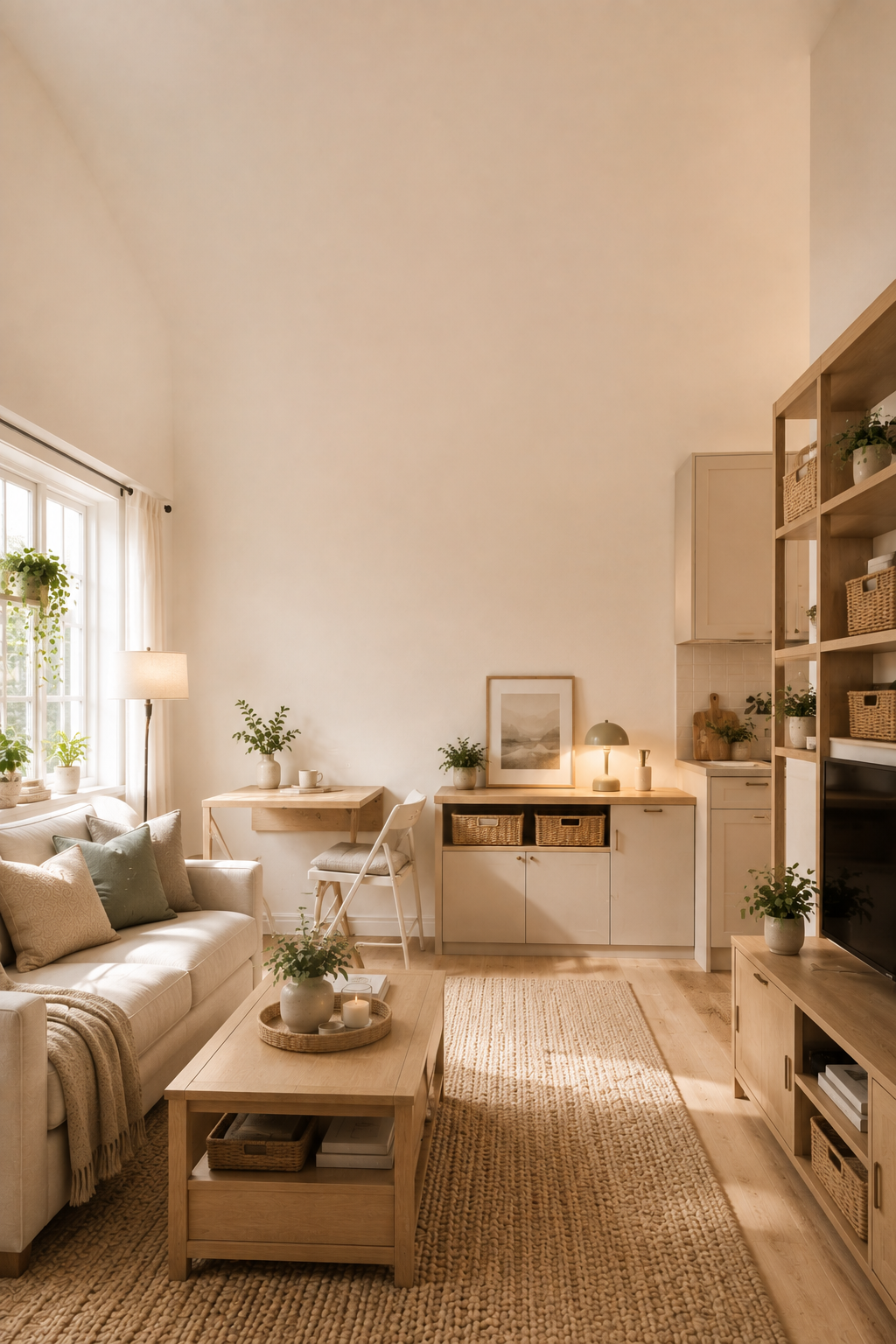
Some of the hardest things to organize aren’t the things you use occasionally.
They’re the things you use constantly.
Your keys.
Your phone charger.
Your handbag.
Your coffee mug.
Your skincare products.
Your reusable shopping bags.
Your headphones.
Your water bottle.
Because these items move through your home every day, they can easily end up on whatever surface happens to be closest.
And when there isn’t a convenient place to put them back, clutter becomes almost inevitable.
The solution isn’t necessarily more storage.
It’s creating small, practical systems around the routines you already have.
Instead of asking, “Where can I store this?” ask:
“Where do I naturally use this, and where would it be easiest to put it away?”
That small change in thinking can make everyday organization much easier.
Here are 10 simple ways to organize the things you reach for most.
01. Create a Dedicated Spot for Your Keys
Keys are one of the classic everyday clutter problems.
You come home, put them down somewhere, and then have no idea where they are the next morning.
Give them one permanent home near the entrance.
This could be:
- A small tray
- A key hook
- A wall-mounted key rail
- A small bowl
- A drawer
The important part is that the location is convenient.
If you have to walk across the house to put your keys away, you probably won’t do it consistently.
Make it automatic
Every time you come through the door:
Keys → same place.
After enough repetition, you won’t need to think about it.
And when you’re rushing out of the house, you won’t have to search for them.
02. Create a Proper Charging Zone
Chargers have a way of travelling around the house.
One is beside the bed.
Another is on the sofa.
One has disappeared behind the television.
And there are cables on practically every surface.
A charging station can help contain the problem.
It could be as simple as a small drawer with cable organizers or a designated shelf near an electrical outlet.
Keep the cables you use regularly together.
You can also separate them by device if that makes sense for your household.
Keep the setup flexible
Don’t create a complicated charging station if you don’t need one.
A simple basket or drawer may be enough.
The objective is:
When you need a charger, you know exactly where to look.
03. Give Your Handbag or Everyday Bag a Home
Bags often end up on chairs, beds and countertops because they’re used constantly.
A suitable hook near the entrance or inside a wardrobe can give your everyday bag a predictable home.
If you own several bags, you don’t necessarily need to keep all of them near the entrance.
Keep the bags you use regularly accessible and store occasional bags elsewhere.
This prevents the entryway from becoming a wall of handbags.
Think about your routine
If you normally pick up your bag as you leave, storing it near the entrance makes sense.
If you prefer to prepare your outfit the night before, bedroom storage may be more convenient.
Again, organization should follow your routine.
04. Organize Your Daily Bathroom Essentials Together
Bathrooms can become cluttered because several products are used every morning and evening.
Instead of spreading everything across the counter, identify the products you use most frequently.
For example:
- Toothbrush
- Toothpaste
- Skincare
- Hairbrush
- Deodorant
- Everyday grooming products
A small tray, drawer organizer or suitable countertop organizer can keep these items together.
Separate everyday products from backups
You don’t need five bottles of shampoo sitting on the counter because they’re all currently in your bathroom.
Keep backup products in a cabinet or separate storage area.
Your daily-use zone should contain what you actually use every day.
05. Create a Small “Grab-and-Go” Zone
Think about the things you regularly pick up when leaving the house.
Maybe it’s:
- Sunglasses
- Keys
- Wallet
- Handbag
- Reusable shopping bag
- Water bottle
Instead of keeping these things in several unrelated places, create a small grab-and-go area.
A tray or shallow shelf near the entrance can work beautifully.
You could even keep reusable shopping bags in a nearby basket.
This reduces the number of last-minute searches before leaving home.
06. Organize Kitchen Items Around How You Cook
Kitchen organization becomes much easier when you stop organizing purely by object type and start thinking about workflow.
For example, if you make coffee every morning, keep your most frequently used coffee items together.
If you regularly prepare breakfast, create a small breakfast zone.
If you bake often, keep baking essentials together.
This doesn’t mean every food category needs its own cupboard.
It simply means the things you regularly use together should be reasonably close together.
Why this works
You’re reducing unnecessary movement.
Instead of opening five cupboards to prepare one meal, the most important items are already within reach.
07. Give Reusable Shopping Bags a Dedicated Home
Reusable shopping bags are useful, but they can quickly become one of those categories that seems to multiply.
They end up:
- Under the kitchen sink
- In the car
- Behind doors
- On countertops
- In cupboards
Create one designated storage area.
A basket near the entrance can work particularly well because that’s where you’ll remember to grab one before leaving.
Fold or roll bags where appropriate so they take up less space.
Keep a realistic number
If you have far more bags than you could reasonably use, consider donating or recycling appropriate extras.
Storage shouldn’t be built around keeping an unlimited supply of duplicates.
08. Give Important Paperwork a Temporary Home
Even if most of your paperwork is digital, physical documents still appear.
Instead of letting them spread across your home, create one temporary paperwork zone.
This could be:
- A tray
- A wall file
- A document holder
- A dedicated drawer
The system can be extremely simple:
Incoming
Paper arrives.
Review
You look at it and decide what needs attention.
Action
You deal with anything requiring a response.
File or recycle
You store important documents appropriately and dispose of anything you no longer need.
This prevents the kitchen counter from becoming an unofficial filing cabinet.
09. Use a “Reset Basket” for Items That Wander
This is particularly useful if several people share a home.
Throughout the day, items naturally migrate.
A book ends up in the living room.
A charger ends up in the bedroom.
A child’s toy appears in the kitchen.
Instead of constantly stopping what you’re doing to return every object immediately, place items that belong elsewhere into a designated reset basket.
Then empty the basket during your daily reset.
One important rule
Don’t allow the basket to become permanent storage.
Its purpose is to temporarily collect misplaced items, not to become another clutter zone.
10. Create a Simple Evening Reset
The most effective organization systems are often the least complicated.
A five- or ten-minute reset at the end of the day can prevent small amounts of clutter from becoming a major problem.
You might:
- Return chargers
- Put shoes away
- Hang bags
- Clear countertops
- Return cups to the kitchen
- Put toiletries away
- Fold or store loose blankets
- Place paperwork where it belongs
You don’t need to deep-clean the house.
You’re simply returning the main spaces to their normal baseline.
Make it a reset, not a cleaning session
This distinction matters.
If you think you have to clean the entire home every evening, the routine can quickly become exhausting.
Instead, focus on restoring order.
How to Make Everyday Organization Easier
Creating the system is only half the job.
You also need to make sure it’s easy enough to maintain.
Keep storage close to where the item is used
If you use something in the kitchen, don’t automatically store it in another room just because there’s an empty cupboard there.
Avoid unnecessary steps
A drawer that requires three separate actions to access isn’t a convenient home for an everyday item.
Keep frequently used items visible or accessible
Everyday belongings shouldn’t be buried behind things you rarely use.
Don’t create too many categories
You don’t need a separate container for every variation of an item.
Reassess occasionally
Your routines change.
Something that made sense six months ago may no longer be the most convenient arrangement.
The “One-Touch” Organization Principle
One useful way to think about everyday organization is the one-touch principle.
When you pick something up, try to make it easy to put it where it belongs without moving it through several temporary locations.
For example:
Instead of
Keys → kitchen counter → bedroom → handbag → entrance
Aim for
Keys → key tray
Instead of
Charger → sofa → bedside table → desk → drawer
Aim for
Charger → charging zone
The fewer temporary stops an item makes, the less opportunity there is for clutter to build up.
What If Your Home Is Already Cluttered?
Don’t try to reorganize everything at once.
Choose one category of everyday items.
For example:
- Day 1: Keys and small entrance items
- Day 2: Chargers and electronics
- Day 3: Bathroom essentials
- Day 4: Kitchen counter
- Day 5: Bags and accessories
Small improvements can quickly create momentum.
Once you have a working system for one category, move to the next.
Final Thoughts
Everyday clutter is rarely caused by one huge organizational failure.
It’s usually a collection of tiny inconveniences.
There’s nowhere convenient to put the keys.
The charger doesn’t have a home.
The shopping bags are scattered.
The bathroom counter has too many products.
Mail has nowhere to go.
Fixing those small friction points can make a surprisingly large difference.
Smart Space Finds takeaway
Don’t try to organize everything. Organize the things that repeatedly cause clutter.
When everyday items have convenient homes, your house becomes easier to reset, easier to maintain and much more pleasant to live in.
For more ideas in the same spirit, keep going with our guide to 10 genius small-space storage ideas, or explore the organization, kitchen and small spaces sections.